Robotic pizza makers have largely failed to deliver consistent, commercially viable results despite multiple past attempts by companies including Picnic and others. Appetronix installed a 24/7 robotic pizza unit for Donatos at John Glenn Columbus International Airport in Ohio. Interest is shifting toward faster repeatable assembly tech and away from full autonomy that could reduce staff, while some founders are still pursuing customer-facing automation even as “human touch” concerns remain.
The article argues that generative AI is reviving an ancient fear of being unable to resist a tempting shortcut, reframed through the sirens myth and compared to past controversies over writing, printing, and calculators. It cites a peak in 1986 when math teacher John Saxon led a protest about calculator use. It concludes that the main change from earlier technologies is that AI offloads thinking and evaluation, splitting people into those who practice and improve versus those who skip practice and drift toward habitual, unthinking use.
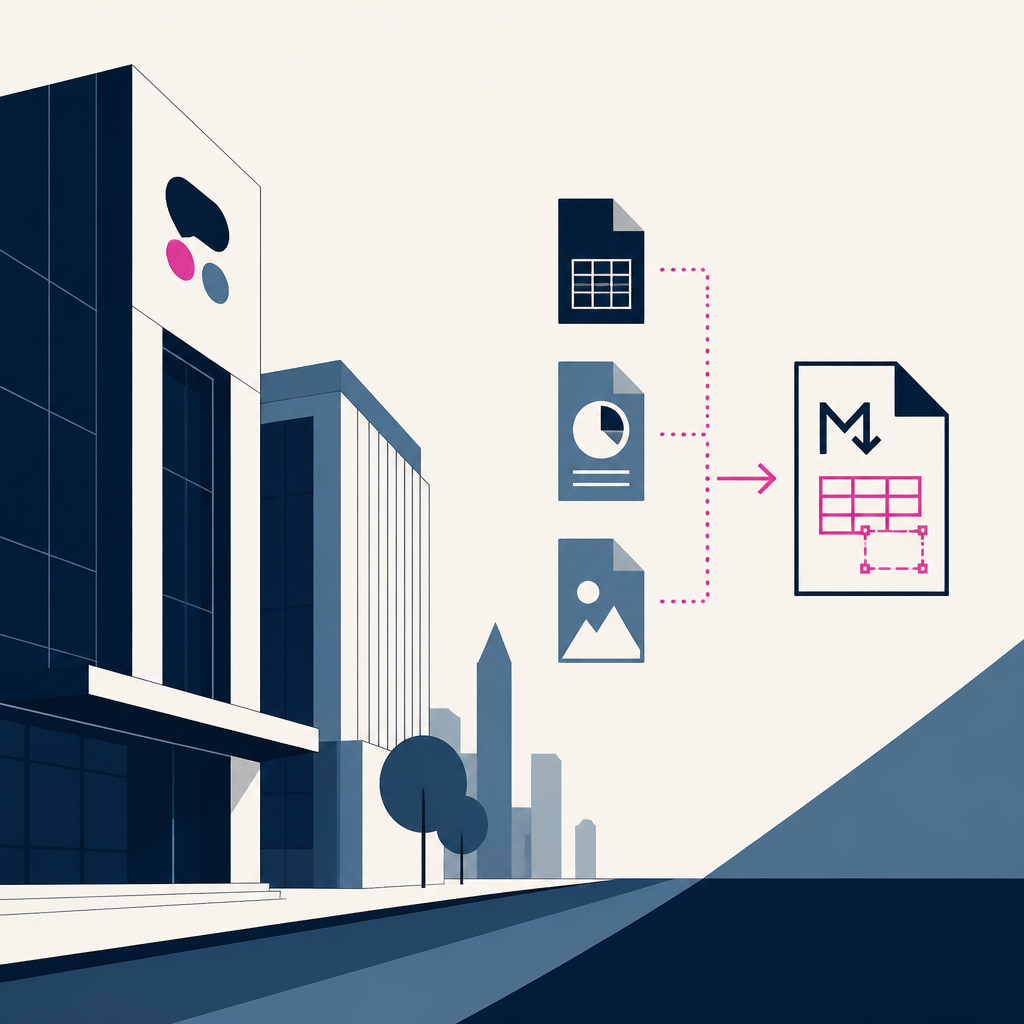
Cohere released Parse (parse-v5.0), a document parsing vision language model that converts PDF, PPT, or JPEG inputs directly into Markdown plus structured outputs like HTML tables and bounding box coordinates with no separate OCR step. The Parse API is priced at $1.50 per 1,000 pages. Pricing and deployment options change for enterprise ingestion as Parse becomes generally available via Cohere’s API and major platforms, with dedicated Model Vault instances for higher-volume workloads.
The author rehired Jonathan after laying him off during a restructuring they linked to efficiency in the age of AI, and Jonathan later noticed the impersonal restructuring email was still in his inbox. In August, he applied for a newly opened role and was rehired. The episode leads the author to argue that leaders should treat people as non-interchangeable and invest in training so existing staff can adapt rather than discard them preemptively as roles evolve.
Nvidia reported fiscal second-quarter results and CFO Colette Kress said about half of its data center revenue comes from customers beyond major hyperscalers. Data Center revenue was $89.0 billion, and Kress said non-hyperscaler growth covers roughly half of the business. The company’s outlook for AI infrastructure demand is framed as increasingly diversified across enterprise and regional/sovereign and edge deployments rather than tied mainly to a few big cloud buyers.
Salem Robotics launched a product that adds task-specific software intelligence to existing mobile robots for hazardous industrial survey and inspection workflows. It offers paid technical validations ranging from tens of thousands up to over $100k, then ongoing deployments from the low hundreds of thousands to about $500k per robot. The company’s approach changes inspection automation by combining AI for semantic/scene understanding with classical constrained geometry planning and joint-level control, plus a feedback loop tied to inspection results.
Businesses used hand-drawn signs and posts to reject AI-generated flyers after AI-made promotional posters became widespread. One example uses a pencil note that says “I will come to this event.” The result is a brief social-media trend that trades standardized AI posters for visibly crude, marker-and-paper messaging, likely to fade quickly.
Publicdesktop.lol promoted a marketplace item on the site’s public computer icon space and also offered a bid to control a public song. The listing highlights a permanent $10 icon location. It changes availability by letting users pay or bid to take over those public slots.
Plaud launched the Plaud One Explorer Edition, AI earbuds that record conversations and turn them into transcriptions and summaries. They can record at a distance of up to two meters. The earbuds’ built-in 4G and onboard storage let users upload and process conversations without using a phone or Wi‑Fi.
A randomized study assessed how students use ChatGPT alongside critical-thinking training on a real university assignment.
It included more than 1,000 students.
The results indicate changes in student thinking and performance tied to ChatGPT use plus the training, rather than a purely technical effect.
Adobe is rolling out an AI-heavy update for Photoshop with a dedicated interface for its AI tools called the AI Assisted Editor view. The beta starts with an optional view that brings all the AI features together in one toolbar. It adds a markup workflow for indicating changes on the image and adds easier access to multiple AI editing tools like prompt-based editing, background removal, and image extending.
The article argues that growing use of AI as a decision-making “co-pilot” can lead to cognitive surrender, where people rely on AI until they cannot think or navigate without it.
It points to a phase “coined in 2206” describing humans submitting cognition to AI and becoming less able to analyze and judge.
As a result, it urges organizations and individuals to keep humans responsible for initial judgment and evaluation of AI reasoning rather than only accepting polished outputs.
PlantVoice, an Italian startup founded in 2023, built an agronomic platform that combines real-time plant physiological sensor data with weather, soil, irrigation, and agronomic models to generate crop-condition recommendations. It uses a biocompatible wood-fibre sensor head inserted by creating a hole and has deployments across multiple countries, including installations in France, Austria, Spain, and Germany. As a result, growers get daily guidance for actions like irrigation timing and stress diagnosis, with the company training and fine-tuning its models using machine learning plus field and open datasets.
Einride co-founders Robert Falck and Linnéa Kornehed Falck, with Robert Westerdahl, launched Navisalma, a venture platform to scale European frontier technology into global leaders. Navisalma plans to raise about €450 million over three years, and it is starting with roughly €40 million. The firm also carved out Einride’s design unit via a transfer at fair market value and keeps a minority stake with a three-year retainer for brand, design, and marketing needs.
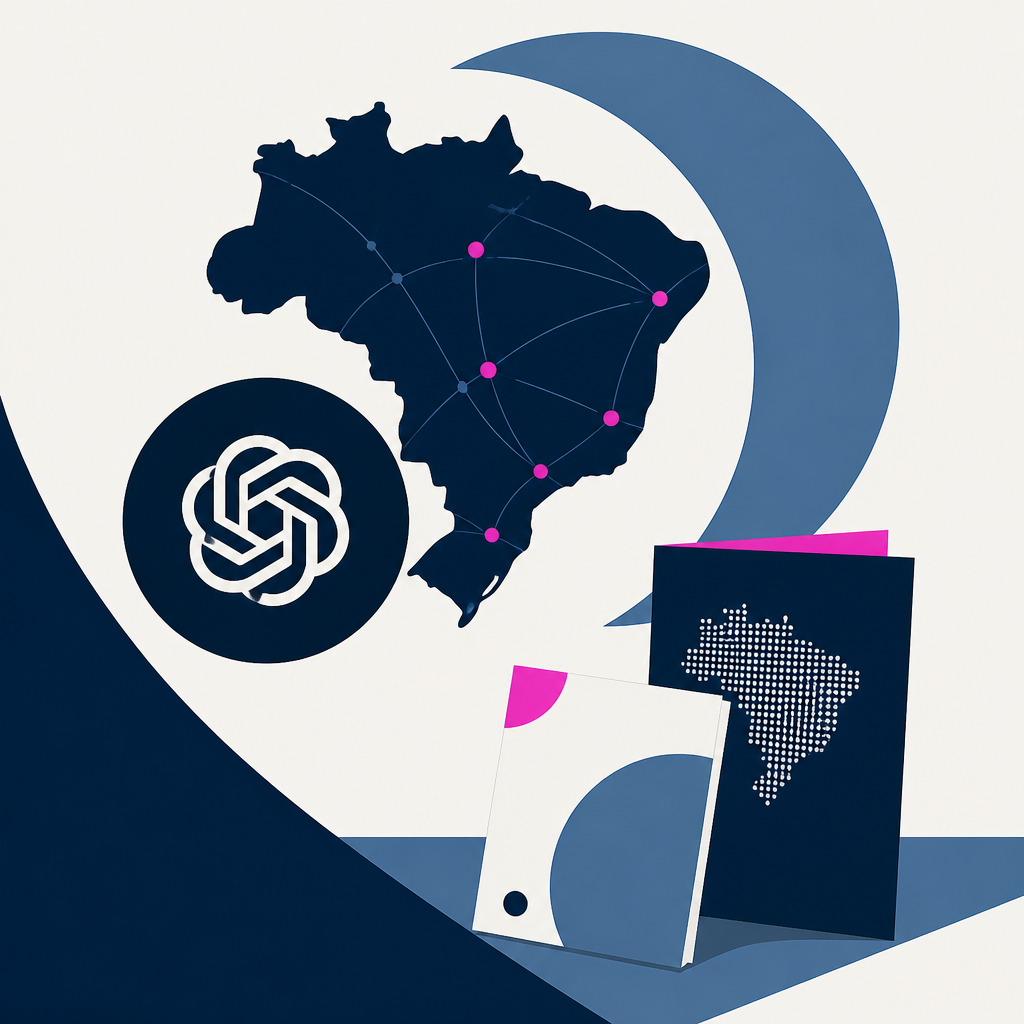
OpenAI is expanding its presence in Brazil by deepening its engagement with developers, businesses, and communities. The article gives no specific date or number for the expansion. As a result, its local outreach is meant to support wider AI adoption across the country.
Databox launched “Routines by Databox” to automate scheduled AI analysis and reporting for teams. The release is Databox’s 9th launch. The change removes recurring manual work by delivering scheduled reports via email, Slack, or in-app.
Every AI story that matters,
in your inbox by 8am.
TLDRocket reads all relevant sources, removes duplicate coverage, and summarises the
day in two minutes. Follow companies and topics for alerts, or get the
briefing in Slack. Free, no spam, unsubscribe anytime.
Reading TLDRocket needs no cookies, and the readership counts we rely on come from
our own cookieless analytics. Google Analytics is the exception: it sets cookies and
reports to Google, so it stays switched off until you allow it. You can change your
mind any time from “Cookie settings” in the footer.
Strictly necessary
Session security and form protection (tldrocket-session,
XSRF-TOKEN, 2 hours). The site cannot work without them,
so they need no consent.
Always on
Google Analytics 4 (_ga,
_ga_<id>, up to 2 years). Measures which
stories and sections readers use. Google acts as a third-party processor and may
store the data outside the EU. No advertising, no profiling, no data sold.