Anthropic is preparing investor messaging that values its total addressable market at over $30 trillion, per a Wall Street Journal report tied to the idea that AI models could replace end-to-end knowledge work. The TAM figure is described as being more than $30 trillion and set against the world GDP estimate of about $120 trillion. Investors are expected to treat the number less as a literal sales forecast and focus more on near-term revenue targets like approaching $200 billion annually by the end of the decade, while skepticism grows that “capture” assumptions may not hold as cheaper open-source models spread.
GoDaddy migrated its business intelligence stack from its legacy BI tool to Amazon Quick Sight, then continued through the broader Amazon Quick rollout with additional AI features and chat agents.
OpenAI hired Dali Rajic as its new chief revenue officer after Denise Dresser stepped away from the role in under a year. Rajic is 53 and previously led enterprise sales as president and COO at Wiz. The appointment is meant to shape OpenAI’s revenue push ahead of a planned public-market path in 2027, with the open question being how long he lasts at the job.
Intuit reported fiscal 2026 results topping expectations but issued fiscal 2027 guidance that trims revenue growth to rebuild customer acquisition. Intuit projects fiscal 2027 revenue of $23.28 billion to $23.51 billion, below Wall Street’s $23.72 billion estimate. The shift means accepting lower average revenue per customer and investing more to accelerate new-customer growth, while continuing to scale its faster-growing “Big Bets” and expanding AI tied to its workflows.
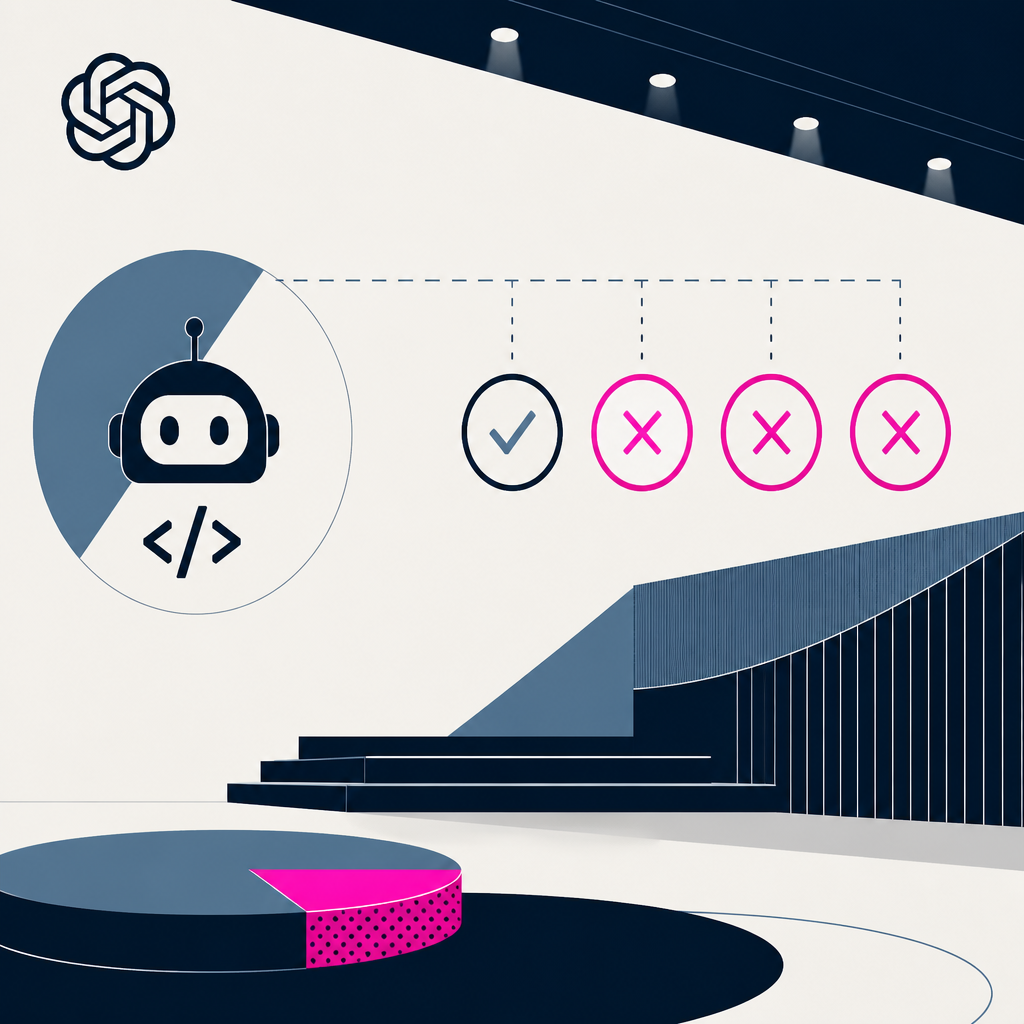
Agentic coding would replace junior engineers only if four conditions hold, but the article argues three key conditions fail. The most specific cited benchmark issue is that OpenAI audited 27.6% of SWE-bench Verified and found flawed tests rejecting correct solutions in 59.4% of the audited problems. The result, it claims, is that agentic coding is more likely to replace junior-level tasks and increase reliance on senior verification and judgment rather than eliminating junior hiring.
Anthropic is preparing IPO paperwork claiming its total addressable market exceeds $30 trillion, citing Wall Street Journal estimates. The filing puts the TAM above $30 trillion, compared with SpaceX’s $28.5 trillion claim from its May filing. As a result, investors are prompted to weigh Anthropic’s IPO valuation against an extremely large long-term revenue opportunity rather than near-term product traction.
Vibe-coded startups are increasingly being put up for sale, forcing buyers to revisit diligence assumptions because AI-generated code may outpace the team’s understanding of the underlying architecture. In Y Combinator’s Winter 2025 batch, a quarter of startups had codebases that were 95% AI-generated. Buyers now adjust valuations and diligence criteria toward documentation, IP ownership, maintainability, and security-readiness rather than treating engineering comprehension as a given.
Breedr raised a $27 million Series B led by Partech to digitise cattle records and run a livestock trading marketplace. The startup tracks 2 million head of cattle and expects nearly $500 million of livestock turnover on its marketplace this year. It will expand teams in the United States, Australia, and New Zealand and enhance per-animal data, including genomic information.
OpenAI published a report on how students and educators use ChatGPT to keep learning ongoing beyond the classroom. The report describes this continuous learning support as extending beyond the classroom. It shifts focus to real-world use of ChatGPT for learning that lasts outside scheduled lessons.
ChatGPT for Teachers is expanding to additional U.S. school districts, delivering secure AI tools along with training and support. The rollout now covers 55 school systems, adding support for over 100,000 more educators and staff. The change increases access to the program across more districts.
IHH Healthcare CEO Prem Kumar Nair outlined how the company is preparing for longer-lived, spendier, older populations in Asia with preventive programs and more community-based care. The company launched its “Healthspan” preventive health and longevity program in July. It is expanding from hospital-centric services toward clinical, neighborhood-embedded healthspan and ambulatory centers, while also rolling out AI tools like NurseShift.ai.
Supacut launched to help documentary and interview editors turn interview footage into rough cuts and organize selects by theme, with optional AI analysis. It launched today for its 21 followers. Editors spend less time searching by using theme organization, cross-interview comparison, and AI-generated editable rough cuts exported to their NLE.
Every AI story that matters,
in your inbox by 8am.
TLDRocket reads all relevant sources, removes duplicate coverage, and summarises the
day in two minutes. Follow companies and topics for alerts, or get the
briefing in Slack. Free, no spam, unsubscribe anytime.
Reading TLDRocket needs no cookies, and the readership counts we rely on come from
our own cookieless analytics. Google Analytics is the exception: it sets cookies and
reports to Google, so it stays switched off until you allow it. You can change your
mind any time from “Cookie settings” in the footer.
Strictly necessary
Session security and form protection (tldrocket-session,
XSRF-TOKEN, 2 hours). The site cannot work without them,
so they need no consent.
Always on
Google Analytics 4 (_ga,
_ga_<id>, up to 2 years). Measures which
stories and sections readers use. Google acts as a third-party processor and may
store the data outside the EU. No advertising, no profiling, no data sold.