PlantVoice is bringing ‘plant intelligence’ to precision agriculture
Tech.eu Cate Lawrence
An Italian startup says the plant itself should guide farm decisions. PlantVoice turns crop signals into advice on watering, stress, and treatments.
Based on reporting by Tech.eu, Cate Lawrence — read the original for the full story.
Summary, retelling and take written by AI under human oversight; images are AI-generated illustrations. How we work · Report an error
Italian startup PlantVoice wants to put the crop, not just the weather, at the center of farm decisions. The company says its agronomic platform combines real-time plant physiology with weather, soil, and field data so growers can read what’s happening inside the plant as well as around it.
PlantVoice was founded in 2023 by Matteo Beccatellia, a chemist who studied biosensors in Parma and the US, and Tommaso Beccatellia, who comes from manufacturing and 3D-printed objects. Its sensor head is made from a biocompatible wood fibre designed to match the plant’s own components. Ferrari says the plant does not treat it as a foreign object; the probe goes in, the material adapts, and the hole closes off from outside conditions.
That matters because a lot of farm tech stops at the perimeter. Weather tools, soil sensors, satellites, drones — all useful, all incomplete. PlantVoice is trying to fill the gap by turning plant response into something a farmer can actually act on. The platform builds a digital picture of crop condition and looks for patterns over time rather than staring at one reading in isolation.
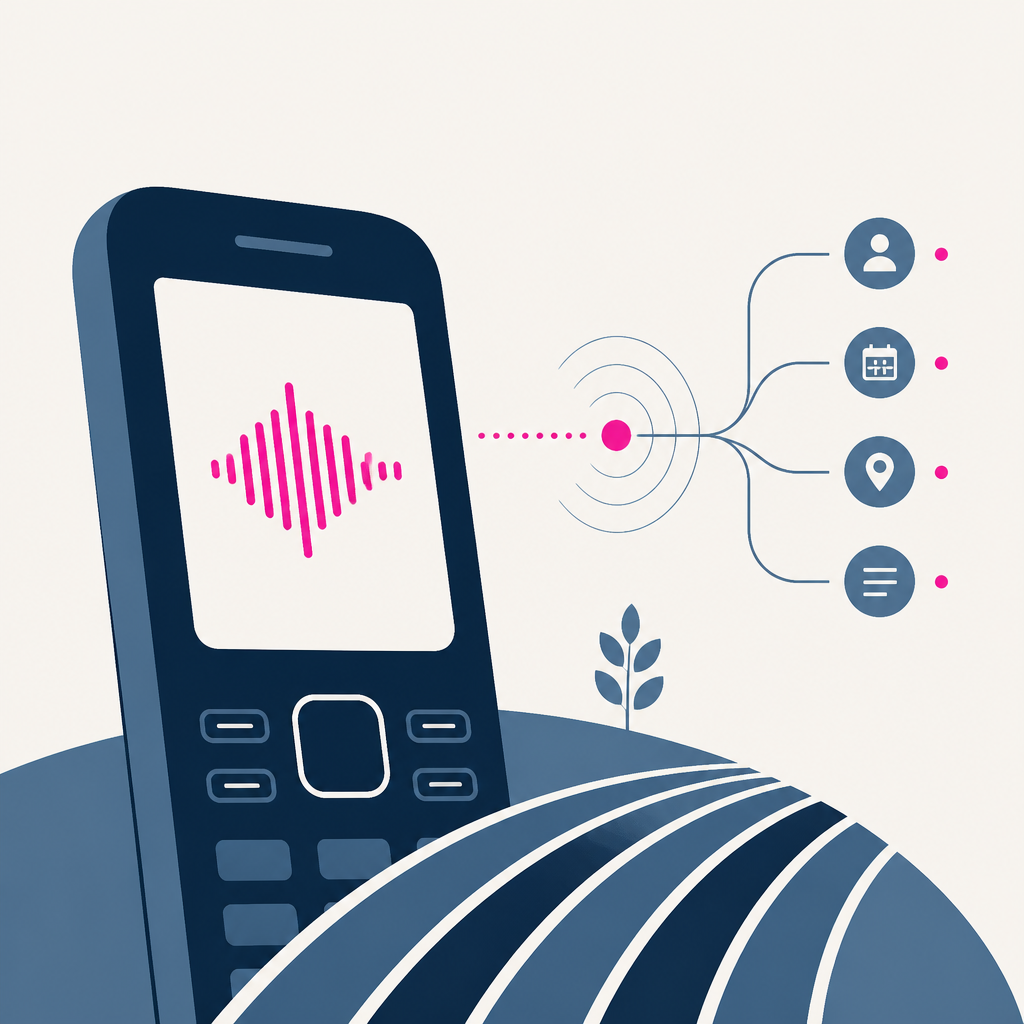
In practice, that can mean spotting water stress early, then pairing that signal with weather forecasts and soil moisture to suggest what is happening and what may happen next. Ferrari says farmers use the system for day-to-day calls on irrigation, water volumes, crop stress, and whether a treatment such as pesticides is working. The company also integrates other tools and devices through APIs and similar connections, so growers are not forced to juggle yet another pile of disconnected dashboards.
PlantVoice trains its models with fine-tuning, using data from its patented biosensors, other field devices, open-source datasets, and scientific research. Agronomists and AI engineers work together to line up those inputs with known relationships between plant responses and factors like temperature, soil moisture, solar radiation, and phenological stage. The target market is high-value perennial crops, especially fruit: apples, olives, cherries, kiwifruit, citrus, and other fruit trees.
PlantVoice says it is already active across Italy and has installations in France, Austria, Spain, Germany, South Africa, and South Korea, plus a dragon fruit pilot in Angola. It is also starting talks in New Zealand, where kiwifruit production is significant. The bigger ambition is simple enough: keep collecting plant data, keep sharpening the models, and make “plant intelligence” a normal part of precision agriculture.
My take — AI-written commentary, not fact-checked reporting
This is the right direction, and frankly overdue. Farmers already swim in weather, soil, drone, and satellite data; adding one more dashboard is not innovation, it’s admin with a nicer font. PlantVoice’s pitch works because it tries to answer the only question that matters: what is the crop telling you right now?
Read more about this at: Tech.eu