
Cohere Releases Parse 5 (parse-v5.0): A 2.3B Vision Language Model That Turns Enterprise Documents Into Markdown
MarkTechPost Asif Razzaq ● Covered by 2 sources

Cohere’s new Parse turns PDFs, slides and images into Markdown in one pass. It’s built for enterprise doc piles, not bragging rights on a leaderboard.
Based on reporting by MarkTechPost, Asif Razzaq — read the original for the full story.
Summary, retelling and take written by AI under human oversight; images are AI-generated illustrations. How we work · Report an error
Cohere has shipped Parse, or parse-v5.0, a document model built for the unglamorous job of turning messy enterprise files into something a machine can actually use. It’s a 2.3B-parameter vision language model with an 8,192-token context window and a footprint of about 4.6GB, built on Cohere Labs’ North-Micro-Vision-Instruct architecture.
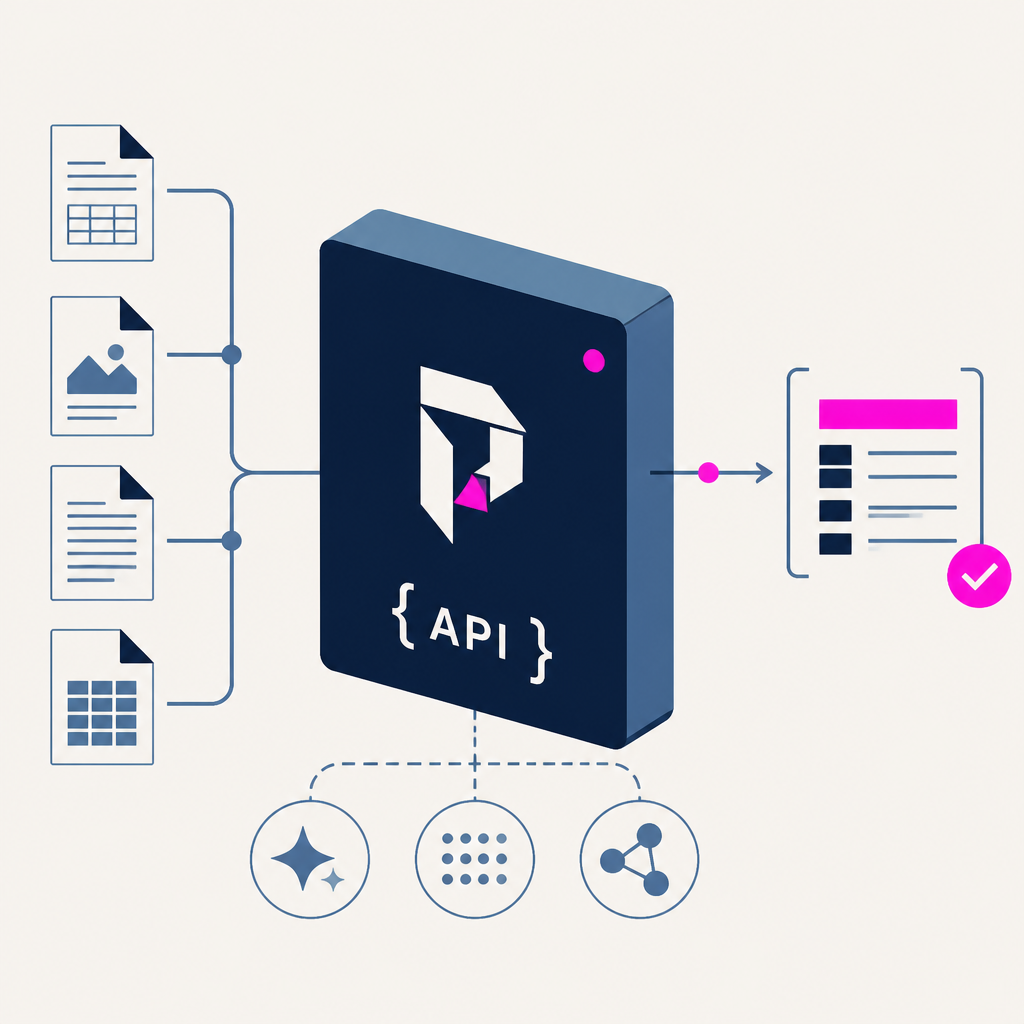
The pitch is simple: send in a PDF, PPT or JPEG page as a base64-encoded data URI and get back Markdown. Tables come out as HTML. Lists, form fields, key-value pairs, image descriptions and bounding box coordinates are all part of the output too. Cohere says there’s no separate OCR stage sitting in front of it, so the model is doing the text recovery, reading order and layout work in one pass.
That matters because the company is not selling Parse as a shiny benchmark winner. It is selling price-performance. Cohere says Parse scores 79.2 on ParseBench, but that number is a vendor-reported average across only three of the benchmark’s five dimensions: tables, content faithfulness and semantic formatting. Charts and visual grounding are left out. On the full public leaderboard, Parse itself is not listed.
The model is already generally available through the Cohere Parse API, Microsoft Foundry, AWS SageMaker and single-tenant Model Vault. There’s no waitlist and no research-only gate. Cohere is aiming it at the places that drown in scanned forms and dense tables: financial services, insurance, healthcare and life sciences, public sector, telecom, energy and manufacturing. The use cases read like a procurement checklist: RAG ingestion, claims and invoice pipelines, contract search, filing search and document context for agents.
Pricing is where the enterprise math gets sharp. The API costs $1.50 per 1,000 pages. Model Vault comes in at $4.00/hour or $2,500/month for Medium, and $7.00/hour or $4,300/month for XL. Cohere’s own crossover math says dedicated capacity only starts to beat metered API pricing at around 1.67M pages a month for Medium, and about 2.87M for XL. Before that, the API is cheaper. After that, the economics tilt the other way — assuming, of course, the usual enterprise reason for moving in the first place isn’t price, but keeping the documents inside the walls.
My take — AI-written commentary, not fact-checked reporting
This is the boring kind of AI product that actually gets bought: not a demo, but a file-eating machine with a price tag and deployment options. The industry keeps rewarding models that can survive procurement, residency rules and ugly PDFs, which is a much healthier signal than another leaderboard victory lap.
Read more about this at: MarkTechPost
Related stories
 Launch HN: Parsewise (YC P25) – Reason Across Documents with an API
Hacker News · 3 months ago ·
42
Launch HN: Parsewise (YC P25) – Reason Across Documents with an API
Hacker News · 3 months ago ·
42
 Cohere Releases Embed 5: How It Compares to Voyage 4 Large, Gemini Embedding 2, and OpenAI
MarkTechPost · 2 weeks ago ·
46
Cohere Releases Embed 5: How It Compares to Voyage 4 Large, Gemini Embedding 2, and OpenAI
MarkTechPost · 2 weeks ago ·
46
 Reducto Releases r-1: A Single Pass Document Parsing Model That Cuts Errors 20% at 1 Cent Per Page
MarkTechPost · 1 month ago ·
39
Reducto Releases r-1: A Single Pass Document Parsing Model That Cuts Errors 20% at 1 Cent Per Page
MarkTechPost · 1 month ago ·
39