The White House launched America.gov, an AI chatbot intended to help people find government services and information. The rollout is set to begin on September 29, 2026. If it works, it replaces many people’s need to search thousands of government websites, but inaccurate responses could still lead to missed deadlines, denied benefits, or penalties.
Amazon Quick documentation explains how prompt engineering affects the quality of AI-powered responses by showing reusable frameworks and prompting principles across Quick’s components.
Condé Nast built an AI-powered multimodal video discovery system with AWS to replace metadata-only searching for its editorial teams. It cut average content discovery time from 250 minutes to about 2 minutes per task, based on a May 2026 benchmarking workshop. The workflow now returns intent-based clips with precise timestamps from video transcripts, visuals, and audio, reducing manual review and estimated annual operational costs by about $800,000.
Instinct founder Noah Shinn said more than 50% of transactions on the invite-only platform are travel-related.
He also said the platform is approaching $1 billion in annual transactions.
Instinct is using this traction to push toward faster, unified booking experiences for urgent travel and more tailored reservation handling for special occasions.
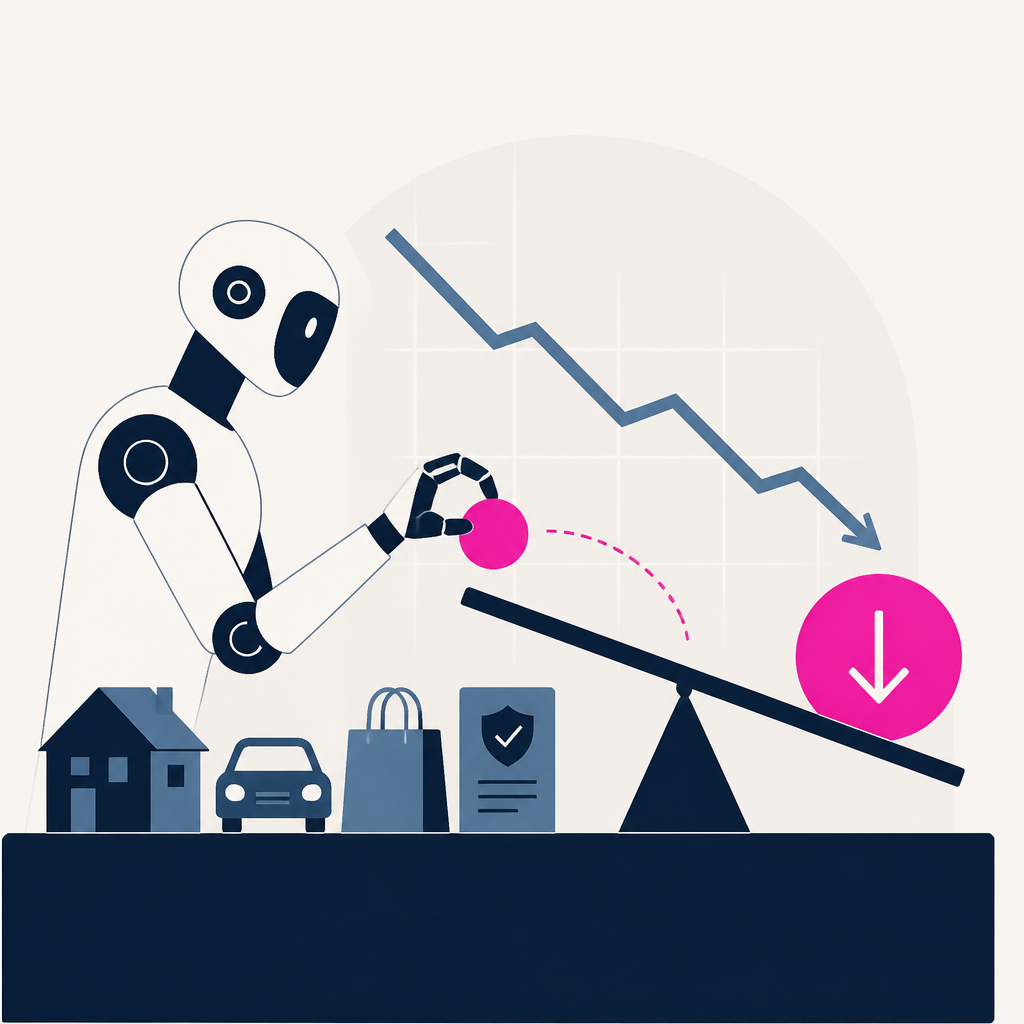
Economists including Wharton’s Jeremy Siegel say AI agents that can comparison-shop, negotiate, and switch providers could make consumer costs lower and potentially ease inflation pressure. U.S. consumers are facing inflation of 3.4%, above the Federal Reserve’s 2% target. If these agents spread widely, competition could increase by removing switching friction tied to “inertial monopolies,” though the OECD warns consumers may need higher AI and financial literacy to use the tools safely.
Secret shoppers in a Sept. 2025 experiment used Instacart to buy the same grocery basket across multiple US cities and found that prices changed between shoppers for the same items. Nearly 75 percent of items varied in price, and a dozen Lucerne eggs at the same Safeway in Washington, DC, ranged from $3.99 to $4.79. The results suggest personalized, data-driven pricing is replacing a standard checkout price, and the article ties this shift to AI pricing systems that automate large-scale experiments.
ADP says payroll and HR automation must be paired with human expertise because automating flawed processes can scale errors instead of removing them. ADP’s Potential of Payroll 2026 research found 68% of payroll leaders incur penalties for noncompliance once or twice a year. ADP argues organizations should adopt AI to streamline routine work while keeping oversight and context checks by people, especially as regulations and exceptions remain complex.
CFOs reported rising optimism about their own companies while growing more cautious about markets, with many tying that mindset to how they allocate capital toward technology and AI. Seventy-three? (No) 83% of CFOs said U.S. equity markets are overvalued, up from 49% in the prior quarter. As a result, they plan to “search for the highest use of capital” and focus more on moving AI from experiments to operational, governed use while managing related cyber risk.
The article argues that enterprise leaders should thoroughly evaluate whether to build software with AI instead of buying third-party products like workflow and HR systems. It cites that companies building an LLM-based solution typically spend 5 to 10 times more than using a workflow automation platform, and warns that a CIO rewrite project could take 18 to 24 months to save about 0.5% of annual operating budget. As a result, leaders are urged to decide case-by-case by weighing competency, true total cost, security and governance, continuity if the CIO leaves, and whether proprietary data enables differentiation.
EliseAI raised $350 million in new funding to value the company at $4 billion after nearly doubling its valuation from a year earlier. The round was led by Andreessen Horowitz and Bessemer Venture Partners and includes Ontario Teachers’ Pension Plan, coming about 13 months after a $250 million Series E valued EliseAI at $2.2 billion. The money will go toward product development and expanding engineering, deployment, and sales teams, including plans for a second San Francisco engineering hub.
Marissa Mayer’s Dazzle launched as a personal AI assistant that builds context from a user’s camera roll instead of text-based apps like email and calendars. It raised an $8 million seed round in December. The app scans recent photos for tasks like calendar/event and repair suggestions and mines the full library for personalized ideas, while claiming to discard sensitive flagged information for privacy.
Apple’s new CEO John Ternus wants the company to launch phones and laptops more frequently rather than relying on its usual fall and spring events. Apple typically holds iPhone launches in September. This would push Apple to speed up development and introduce products more quickly, with more experimentation as it targets competitiveness in the AI era.
America.gov launched as a single destination where you can ask questions in plain language to get answers from across U.S. federal agencies.
The site is available in 3 languages: English, French, and Spanish.
It adds chat-based access to government information and plans new in-chat features for applications, enrollment, and progress tracking.
DailyHelm launches as an AI business reviewer that monitors analytics, ads, SEO, and store data overnight and outputs prioritized fixes for founders and growth teams. It says it has 9 followers. Teams now get a ranked to-do list of issues and opportunities instead of interpreting standard dashboards.
MIT Technology Review·2 weeks ago·
48
● 15 sources
HPE argues that as AI workloads move from pilots to always-on production portfolios, enterprises should stop focusing only on token prices and instead plan how to run AI economically with predictable capacity. The article cites that worker access to AI rose 5% in 2025 and says the share of companies with at least 40% of AI projects in production is expected to double within six months. It recommends shifting from consumption-only purchasing to investing in dedicated capacity when steady demand reaches a utilization “crossover point,” supported by adoption and governance to keep that capacity productive.
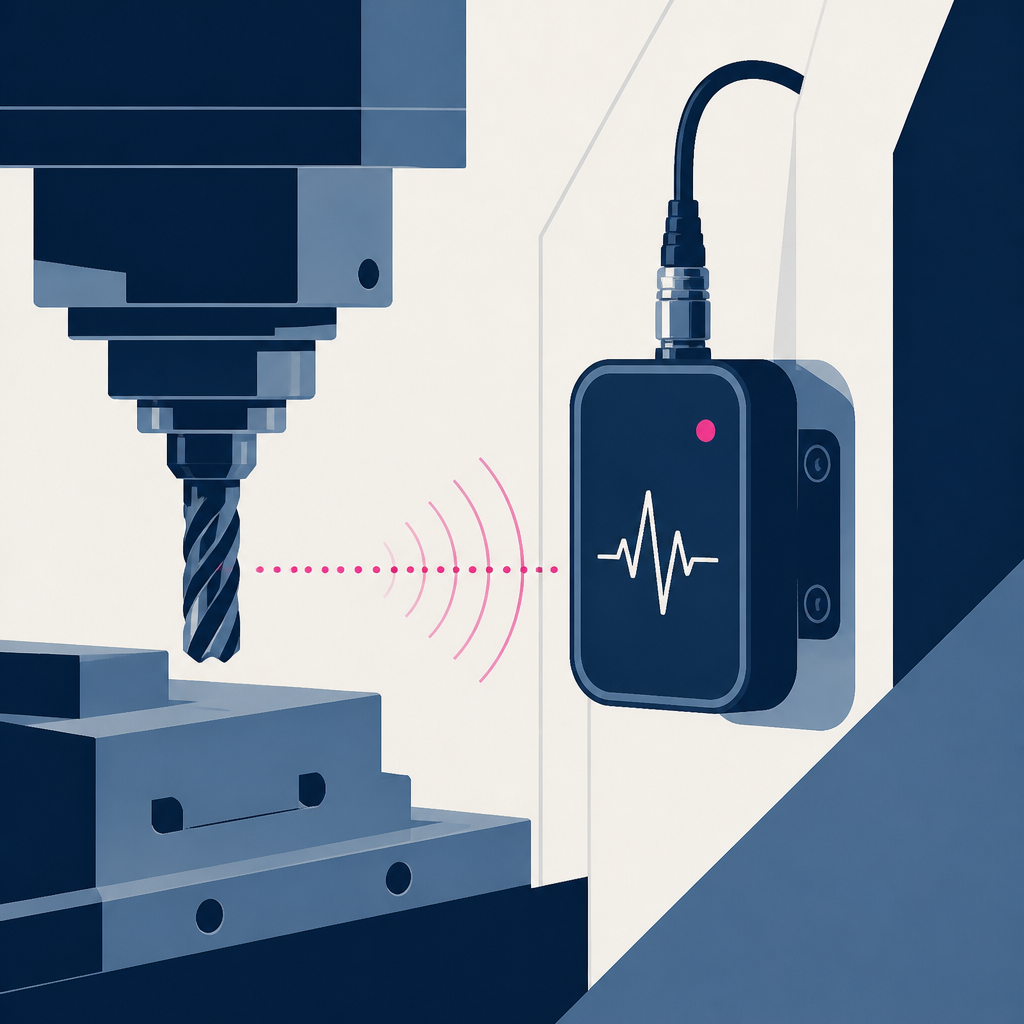
IPercept raised a $16.5M Series A funding round to expand its machine fitness tracker for predictive maintenance of CNC machines. The round was led by Isogon Ventures and 2150 and includes participation from Luminar Ventures, RunwayFBU, J12 Venture, and AI.Fund. The startup plans to launch in the US with first local hires and use the money to improve its AI technology already used by Airbus, Bosch, and Volvo.
Checkout.com reported that its annualised net revenue rose 28% year over year to $750m and said it expected $150m in profit for 2026. The article cites $480bn as the expected payment volume for full-year 2026. It will use the renewed profitability to fund expansion in money management and to speed up its AI strategy for agentic commerce and payments.
Prefer launched today as an AI-focused SEO tool that aims to turn AI search mentions into execution steps for brands. It is shown with 103 followers on its page. As a result, it positions its approach as less reporting and more action using autonomous agents to improve visibility in how ChatGPT, Claude, Gemini, and Perplexity describe brands.
IPercept, a Stockholm startup, raised a Series A to add diagnostics for CNC machines on factory floors without needing access to their controllers. The company secured $16.5 million, with Isogon Ventures and 2150 co-leading. It plans to use the funding to grow, make its first dedicated US hires, and expand through industrial service partners.
hello again closed a growth financing round led by Munich private equity firm EMERAM for a double-digit million euro amount.
The undisclosed investment is reported to be well above 10 million euros and EMERAM takes a stake of more than 25%.
The funds will be used to expand in the DACH region, move into more European countries, and add new AI features, while the founders and initial investors keep majority control.
Cupola is a Mac productivity app positioned as an AI coworker that works across Apple Calendar, Reminders, and Notes. It offers a 7-day free trial and then costs $20 once. After trying it, users either pay for a $20 license or stop using it.
The author of an AI company article argues that Anthropic’s push into financial-adviser tooling is unlikely to hurt their startup and frames their view around the Future Proof adviser event. The piece cites “59” as part of the author’s timeline for why the competitive move won’t derail plans. As a result, the author keeps focusing on their own product work and positioning rather than changing course.
Every AI story that matters,
in your inbox by 8am.
TLDRocket reads all relevant sources, removes duplicate coverage, and summarises the
day in two minutes. Follow companies and topics for alerts, or get the
briefing in Slack. Free, no spam, unsubscribe anytime.
Reading TLDRocket needs no cookies, and the readership counts we rely on come from
our own cookieless analytics. Google Analytics is the exception: it sets cookies and
reports to Google, so it stays switched off until you allow it. You can change your
mind any time from “Cookie settings” in the footer.
Strictly necessary
Session security and form protection (tldrocket-session,
XSRF-TOKEN, 2 hours). The site cannot work without them,
so they need no consent.
Always on
Google Analytics 4 (_ga,
_ga_<id>, up to 2 years). Measures which
stories and sections readers use. Google acts as a third-party processor and may
store the data outside the EU. No advertising, no profiling, no data sold.