The European Commission’s AI Office is set to host the Apply AI Summit in Brussels to focus on moving AI from pilots to scaled adoption across Europe’s sectors. It will take place on 17 November 2026, with about 900 people attending in person and up to 2,500 joining online. The event will spotlight real-world AI use cases and connect policy, funding, workforce, infrastructure, and cybersecurity/safety discussions with concrete adoption measures and startup awards.
Plug and Play Tirana Expo 2026 will bring startups, investors, corporate leaders, and ecosystem experts to the Pyramid of Tirana as it culminates the second Plug and Play Tirana Accelerator Programme. The two-day event runs October 7–8, 2026. The expo will add startup pitches and investor networking sessions focused on areas including AI-powered B2B SaaS & Enterprise, aiming to connect Western Balkans founders with international capital and partners.
Microsoft Research Asia – Singapore opened as Microsoft’s first research lab in Southeast Asia and reported its first year of activity focused on AI research, partnerships, and talent development. It cites that it has supported 9 new research projects with NUS and NTU in its first year and has grown to more than 75 Singapore institution projects since 2004. The lab’s work is shifting deeper into a research-to-impact loop through deployments and joint initiatives aligned with Singapore’s AI strategy, healthcare and other sector collaborations.
New York Climate Week became dominated by the AI boom as climate tech startups pivoted energy- and AI-adjacent pitches to attract funding for data center power buildouts. Venture deal value in climate tech rose for four straight quarters, reaching $14 billion in the first quarter of this year, driven largely by data center-related sectors. Some founders worry the focus on AI and power distracts from other climate segments as money and customer interest fluctuate and could fade after the data center rush.
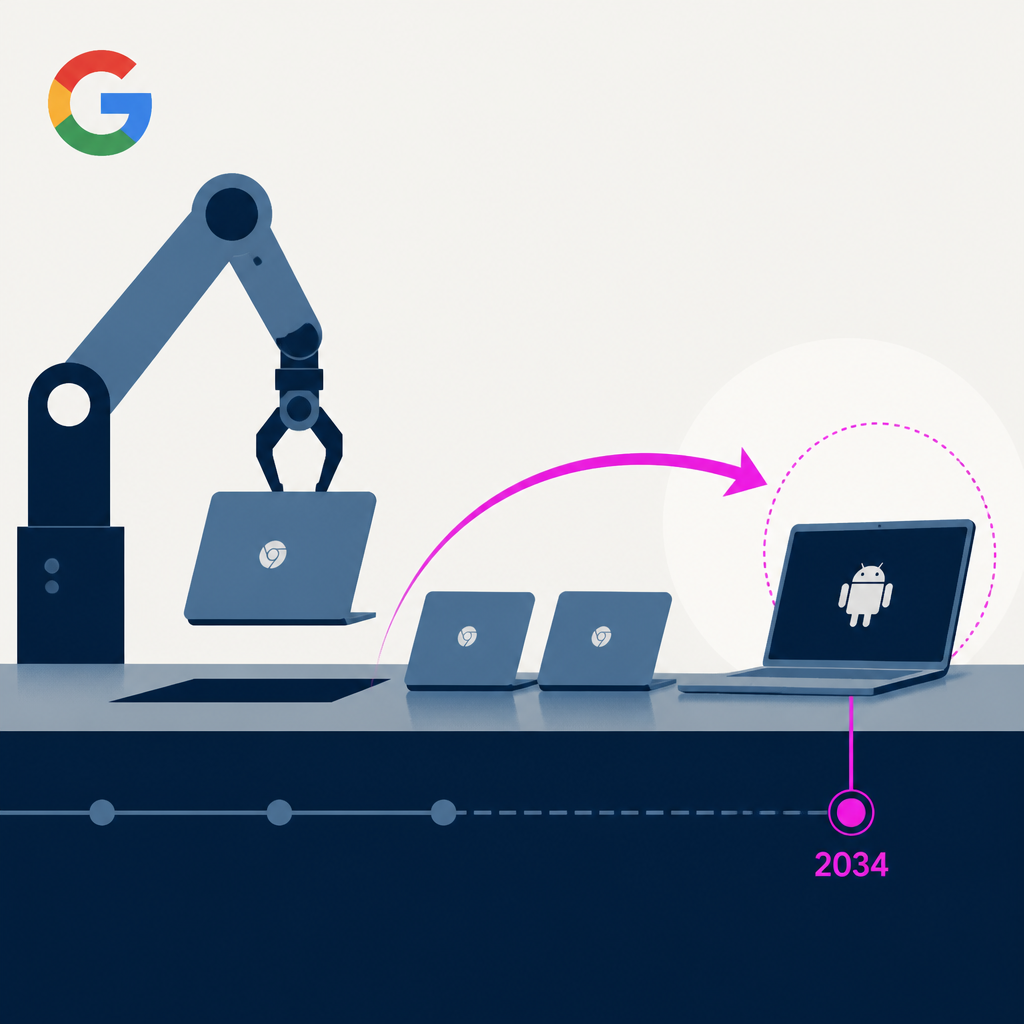
Google plans to end support for ChromeOS by continuing it through mid-2034 rather than indefinitely. The support page says the target end date is mid-2034. As a result, newer Chromebooks will rely on different “Googlebook OS” (Android-based) laptops with 10 years of software support instead of continuing ChromeOS support.
An AI analyst says that his writing about AI changed from optimism to a darker, more anxious view as AI capability advances accelerated into what he calls faster-than-absorbed change. He points to a shift “past year” in which progress has become so front-page and rapid that skepticism now requires more effort than the labs must spend to improve models. As a result, he argues AI’s impact may become both more evenly distributed across people and more psychologically destabilizing, with his own sense of safety and preparation no longer feeling secure.
Amazon Textract adapter lifecycle management is being automated across AWS accounts using infrastructure templates, a documented promotion process, and centralized adapter IDs in AWS Systems Manager Parameter Store. As part of the approach, asynchronous StartDocumentAnalysis supports multi-page TIFFs and PDFs up to 3,000 pages, with XFA-based PDFs not supported. Updating the production adapter reference by changing the SSM parameter enables zero-downtime adapter promotion without application redeployment, while adding a routing step upstream to select the right adapter per document.
School districts in the US are expanding beyond installing security cameras and are instead seeking systems that can handle monitoring, searching, alerts, and management at scale with AI-assisted investigation and central administration. A Georgetown County School District deployment used more than 1,000 cameras across a district serving about 9,500 students and staff. The result is a shift in procurement toward evaluating 10 specific K-12 platforms (starting with Coram) based on existing-camera compatibility, investigation speed, alerts, access-control integration, and privacy controls.
Lightspeed launched an AI venture fund for India and Southeast Asia called Lightspeed India Partners V. The fund is expected to begin investing within two months and is set to have a two-and-a-half-year investment period. This shortens the timeframe for making investments compared with prior funds as the firm aligns its India fundraising with its global cycle.
Bank of America introduced Payments Insights within CashPro to analyze payment efficiency, cross-border flows, and working-capital performance against industry peers. The system processed 213 million payments in the first half of 2026, 10% more than a year earlier. As a result, treasury teams can spend less time assembling data and more time on analysis, while staff focus on retraining and workflow redesign around embedded AI analytics.
A programmer argues that using LLMs for software work should be structured so developers keep writing and understanding code rather than handing off most implementation to agents.
A product leadership trainer argues that AI is changing how software gets built while product management remains necessary. The replay is available free until 11:59 PM PDT on September 30, 2026. As a result, teams are urged to shift from deciding what to build toward deciding what’s worth shipping, adding more prototypes, testing, and “don’t ship” curation where customer-value judgment happens at human speed.
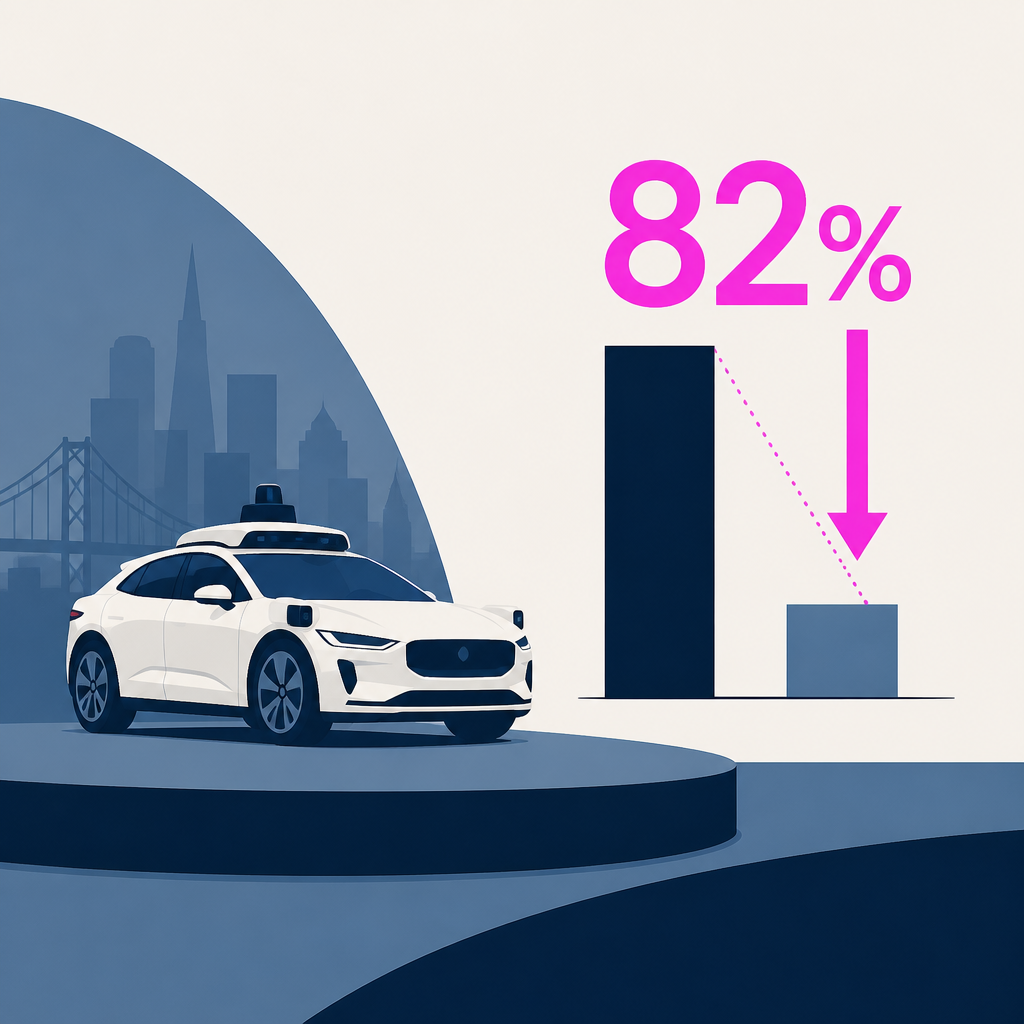
Waymo reports that its fully autonomous driving caused 82% fewer injury-causing crashes than human drivers. The comparison is based on data from over 270 million miles across five metropolitan areas. The result is that Waymo uses these safety figures to position its autonomy as producing fewer serious injuries and pedestrian incidents than human driving.
Atlassian CEO Mike Cannon-Brookes argued that AI will change how Atlassian’s enterprise collaboration and work-management tools handle business processes without eliminating the need for human oversight. He said many businesses already use AI to automate about 80% of steps, while complex, judgment-heavy exceptions still require people. As a result, work systems are expected to become faster and more consistent but still rely on humans for initiation, intuition, and final decisions rather than frontier models running entire businesses end to end.
Omnia launched Omnia Agent, its third release, described as an AI agent for managing brand work in AI search and GEO-related tasks.
The launch is billed as happening today.
The result is that brands can use the agent to identify competitor-winning prompts and execute approved actions via tools they already use, without hiring a GEO expert.
Philips has released the Sonicare Next-Generation DiamondClean 9900 Prestige smart toothbrush with motion tracking that uses AI to guide brushing. The new model launched in the US and Europe at $379.99. A broader global rollout is expected in 2027, and the older discounted version still remains available for $429.99.
Klang, a Swedish AI startup, raised 1.5 million euros at about a 15 million euro valuation and used the funding plan to expand into DACH. Its five-person team already generated about 1.8 million euros in annual recurring revenue. It will invest in proprietary speech and language models, ramp hiring, and broaden sales beyond Japan toward the German-speaking market.
The U.S. Air Force took delivery of its first two Collaborative Combat Aircraft wingman drones, the Anduril YFQ-44A Fury and the General Atomics YFQ-42A Vengeance, and sent them to the Experimental Operations Unit at Creech Air Force Base. The Air Force set a target unit price averaging $20 million (about 17 million euros) and says the drones cost about one third of an F-35A. This shifts the CCA effort from testing into operational fielding for uncrewed AI-controlled combat aircraft that fly alongside crewed fighters.
Tech funding in Europe totaled 65+ deals worth over €2 billion alongside more than 4 exits and M&A transactions. Robotics received €508.3 million in the biggest share of capital raised. Investment shifted toward robotics and artificial-intelligence-linked startups, with exits including acquisitions by Mistral AI and Luno.
Walmart’s CEO John Furner said the company’s rollout of digital price labels and its AI shopping assistant Sparky do not use personal information to set prices. Walmart said 2,300 Walmart U.S. locations already use digital shelves, and chain-wide coverage is expected within the next year. The company is positioning its pricing as consistent with its “every day low prices” model and is aiming to reduce customer and regulator concerns about personalized pricing.
OpenAI is expanding the Lenfest AI Collaborative and Fellowship Program with additional support. The expansion includes $5 million in funding and up to $5 million in software credits and engineering support. As a result, participating fellows and collaborators get more financial backing plus increased engineering and software resources for the program.
Every AI story that matters,
in your inbox by 8am.
TLDRocket reads all relevant sources, removes duplicate coverage, and summarises the
day in two minutes. Follow companies and topics for alerts, or get the
briefing in Slack. Free, no spam, unsubscribe anytime.
Reading TLDRocket needs no cookies, and the readership counts we rely on come from
our own cookieless analytics. Google Analytics is the exception: it sets cookies and
reports to Google, so it stays switched off until you allow it. You can change your
mind any time from “Cookie settings” in the footer.
Strictly necessary
Session security and form protection (tldrocket-session,
XSRF-TOKEN, 2 hours). The site cannot work without them,
so they need no consent.
Always on
Google Analytics 4 (_ga,
_ga_<id>, up to 2 years). Measures which
stories and sections readers use. Google acts as a third-party processor and may
store the data outside the EU. No advertising, no profiling, no data sold.