
OpenClaw 2.0 multiplayer AI agents livestream
YouTube 1 month ago 41 ● 3 sources
OpenClaw 2.0 promoted a multiplayer AI agents livestream as a companion to its demo and discussion.
774 summarised stories about Agentic AI, each linking back to the original source. Browse all topics →
YouTube 1 month ago 41 ● 3 sources
OpenClaw 2.0 promoted a multiplayer AI agents livestream as a companion to its demo and discussion.
The Neuron 1 month ago 44 ● 3 sources
OpenClaw chief architect Vincent Koc described how the project is shifting from single-agent, single-task demos to a system where many agents share sessions, context, and control across machines. In his own setup, he reported running about 60 to 70 agents across 6 to 7 machines and averaging 5B to 10B tokens per day (peaking at 54B in a single day) while deliberately stress-testing the architecture. The result is an agent “multiplayer” approach with a shared control plane, persistent intent and memory, interchangeable remote compute via Crabbox, and a focus on security and model routing to manage cost and risk.
Amazon Web Services 1 month ago 33
Salesforce Agentforce for Public Sector is being extended to process unstructured evidence by storing files in Amazon S3, running Amazon Bedrock Data Automation, and exposing extracted results back to users through MCP in the Salesforce console. The integration triggers processing via S3 event notifications and uses DynamoDB and Lambda, including a second Lambda step that saves outputs to a dedicated S3 output bucket. This shifts evidence handling from manual review and extraction to automated, event-driven multimodal processing with natural-language retrieval from Salesforce.
IEEE Spectrum 1 month ago 46
Paper2Agent converts academic papers plus their code and supplemental materials into interactive AI agents that can extract workflows and run the methods from the paper on new data. The team says it generated 22 validated AlphaGenome tools in about 45 minutes for under US$15 of compute cost. As a result, researchers can ask in plain English and get runnable analyses and visualizations, and multiple paper-derived agents can collaborate to propose and test hypotheses.
TechCrunch 1 month ago 32
AstroForge is developing an autonomous spacecraft control stack, “Solo,” to reduce reliance on Earth-based flight controllers. The company plans to fly its first autonomous spacecraft in 2027 with its launch partner Stoke Space. It is combining traditional control algorithms with transformer models trained on test data and sensor inputs, aiming for onboard anomaly resolution while also limiting early missions (e.g., “shadow mode” and no radios for Autonomy-1).
SiliconANGLE 1 month ago 15
Teradata expanded its Tera AI assistant with a context engine and execution system aimed at helping governed data agents carry out enterprise tasks. In company testing on SWE-bench Pro with the same Opus 5 model, Tera used 73% fewer tokens and finished tasks 42% faster than Claude Code. The update adds traced, policy-aware context for agent requests, tool execution with human approval controls, reusable agent skills, and new capabilities scheduled for availability in Q4 2026.
SiliconANGLE 1 month ago 16
Baselayer, a business identity and risk infrastructure startup, shifted its focus to AI agents by launching its Agentic Identity Suite after raising early-stage funding. The company raised $35 million and said it has already reviewed more than 10 million applications and blocked over $1 billion in fraudulent transactions. The move retrofits its identity and trust tooling for “agentic commerce,” and adds cryptographic traceability plus supporting tools like a Model Context Protocol server and Agentic Search to ground agent decisions in verified business data.
brookslybrand.com 1 month ago 22
The article argues that even with agentic programming and LLMs making frontend coding feel less important, the question of whether web frameworks still matter remains unresolved and worth rethinking. It notes the author has worked on open source frameworks for 3 years to investigate this issue. It concludes that frameworks still add value by providing abstractions, structure, and constraints that help developers and agents produce maintainable, secure results, rather than making framework choice irrelevant.
htmx.org 1 month ago 46
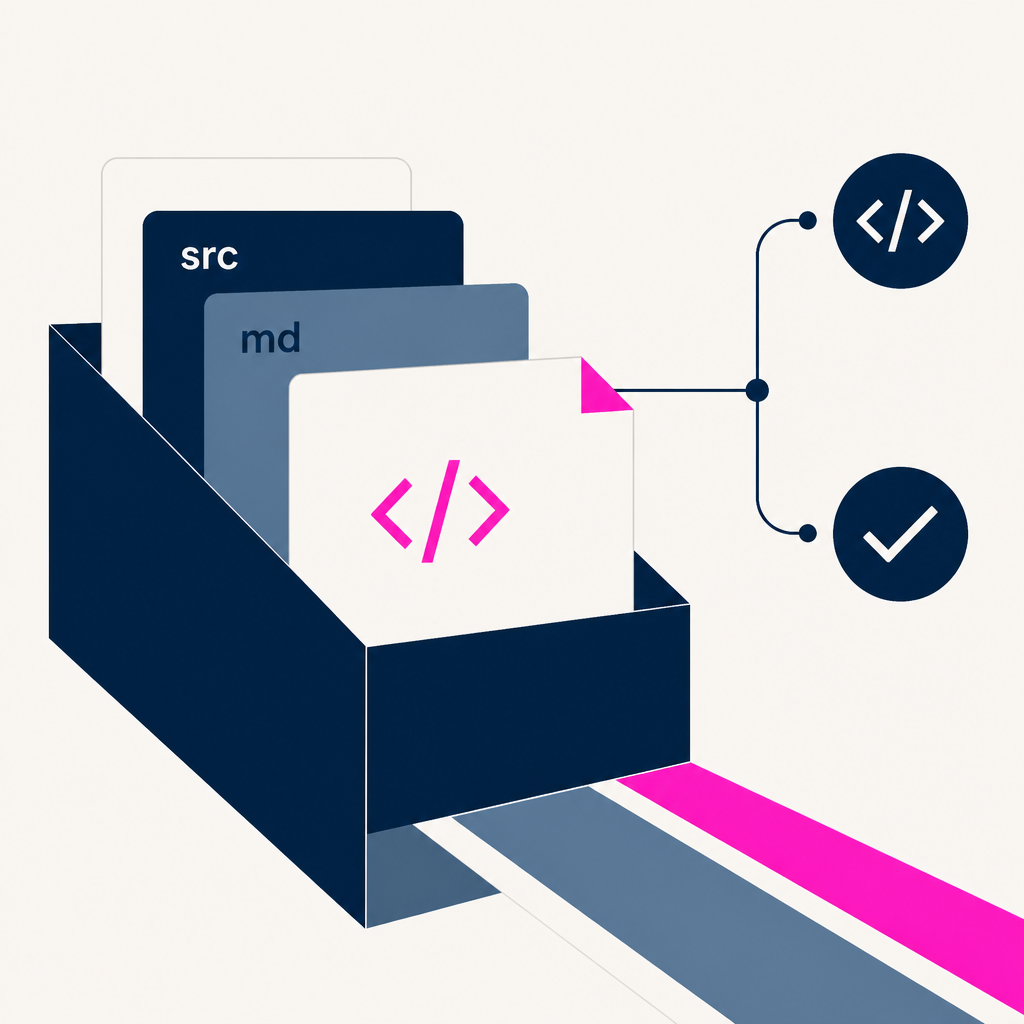
Carson Gross argues that agentic coding workflows should treat Markdown as source code by checking Markdown into /src alongside the code it describes, so it becomes the main basis for derived code and tests. He proposes a specific path change: creating a new /src/md directory to store curated, lower-level specifications instead of relying on ephemeral prompt sessions. This shifts teams from generating code/tests from prompts to maintaining and updating Markdown as a shared intent layer that humans and agents can both read in-repo.
GeekWire 1 month ago 33 ● 26 sources
Amazon blocked Meta’s Muse personal AI agent from shopping on Amazon.com after Meta failed to exclude Amazon from the experience and, Amazon says, Muse accessed accounts and appeared to capture credentials without approval. Amazon says people using Muse saw a popup on Sunday night stating continued access by an unauthorized AI agent violates its Conditions of Use. As a result, Muse users can’t complete purchases on Amazon through the agent unless Meta changes how it operates or Amazon reverses the block.
Trending Topics 1 month ago 45 ● 9 sources
SpaceXAI released Grok 4.7, moving the company’s model into the top group of frontier labs on the Artificial Analysis Intelligence Index. Grok 4.7 scored 46 points, up 2 points from Grok 4.6, placing it fourth using the xhigh reasoning setting. The update improves agentic knowledge work and coding-agent benchmarks but increases compute to about 81,000 output tokens per task and rolls out a new safety stack and invite-only red-team access.
Tech.eu 1 month ago 11
Biolevate raised a €30 million Series A to expand its life sciences AI platform for automating scientific and regulatory workflows and supporting international growth. The round includes a capacity claim of up to 100,000 agents running concurrently. The funding enables broader coverage across the life sciences value chain and accelerates US expansion in Boston, along with headcount growth and patent filings.
The daily briefing
TLDRocket reads all relevant sources, removes duplicate coverage, and summarises the day in two minutes. Follow companies and topics for alerts, or get the briefing in Slack. Free, no spam, unsubscribe anytime.
 TLDRocket
25 October 2026
The biggest AI story today isn’t a model release—it’s the map. As the US and China harden into rival AI blocs, “swing countries” are trying to keep options open, and Kazakhstan’s moves show how fast the chessboard is shifting. After trips and talks on both sides, it signed an investment deal worth up to $10 billion with Nvidia for a “data center valley,” while still engaging with Chinese frameworks via initiatives like China’s World AI Cooperation Organization. The underlying point is blunt: when chip access, open-source choices, and procurement rules tighten, governments can’t play both sides indefinitely—and they’re already rebalancing around what they can plausibly run.
Read the full briefing →