Every AI story that matters — and the intelligence behind it.
TLDRocket reads all relevant sources, removes duplicate coverage, and publishes a short neutral
summary of every story, linking back to the original. Free, no spam, unsubscribe anytime.
The article commemorates 70 years since AI was established as a formal field in 1956 at the Dartmouth Summer Research Project. The Stanford AI Index 2026 shows AI adoption is outpacing historical technologies like the telephone and personal computer. Responsible governance and human-centered development are essential as AI transitions to autonomous systems capable of operating with minimal human oversight.
An analysis piece argues that AI works best as a tool for expanding capacity in peripheral tasks rather than deepening core expertise, citing mathematician Terence Tao's experience that AI makes his papers broader but not deeper. Tao notes that solving difficult math problems still requires pen and paper and his own judgment, while AI excels at generating plots and code that would have taken hours and that he wouldn't have included otherwise. The author concludes that AI increases grasp on adjacent work you wouldn't otherwise do, but can't improve competence in your core skills that depend on personal judgment and accumulated knowledge.
Z.ai released GLM-5.2, an open-weight model on June 16th, 2026, that matched or exceeded closed-source models from OpenAI and Anthropic in agent and coding benchmarks. The model achieved performance parity with Claude Opus 4.5 in just 6.8 months after that model's November 2025 release, closing the historical capability gap between U.S. and Chinese labs. GLM-5.2's availability creates pricing pressure on closed-model providers like Anthropic and accelerates adoption of open models across inference platforms, while raising regulatory questions about whether capable Chinese open models should face restrictions similar to those imposed on Anthropic's Claude Fable.
PaddleOCR released PP-OCRv6, a new optical character recognition model family supporting 50 languages across three size tiers. The medium-tier model achieves 86.2% detection accuracy and 83.2% recognition accuracy, improving over the previous version by 4.6 and 5.1 percentage points respectively. Users can deploy PP-OCRv6 through PaddleOCR, Transformers, or ONNX Runtime backends on devices ranging from edge computers to servers.
Researchers from Oxford, Stanford, and LSE found that AI systems outperform expert human persuaders in changing people's policy views and charitable donations across nearly 19,000 conversations. When unconstrained, AI models like Claude 3.5 Opus were nearly 3 times more effective than professional fundraising canvassers, raising an average of 10.8 percentage points more of a £1 donation bonus. The findings raise questions about how persuasive AI capabilities should be governed, with potential consequences for power distribution between already-powerful actors and resource-constrained groups like activists and nonprofits.
Cloudflare introduced Temporary Accounts for Agents, allowing AI agents to deploy Workers and applications without signing up first. Deployments last 60 minutes and can be claimed to become permanent accounts, or they auto-delete if unclaimed. This removes authentication friction that previously blocked agents from autonomous deployment workflows.
Recall is a local plugin for Claude Code that automatically logs coding sessions and generates summaries without sending data to external APIs or using LLM calls for summarization. The session history is condensed into a ~1–2K token context.md file using classical Python summarization (TF-IDF + TextRank), reducing token costs when resuming work. This eliminates the cold-start problem of re-explaining projects each session while maintaining complete privacy and requiring no additional configuration or fees beyond an existing subscription.
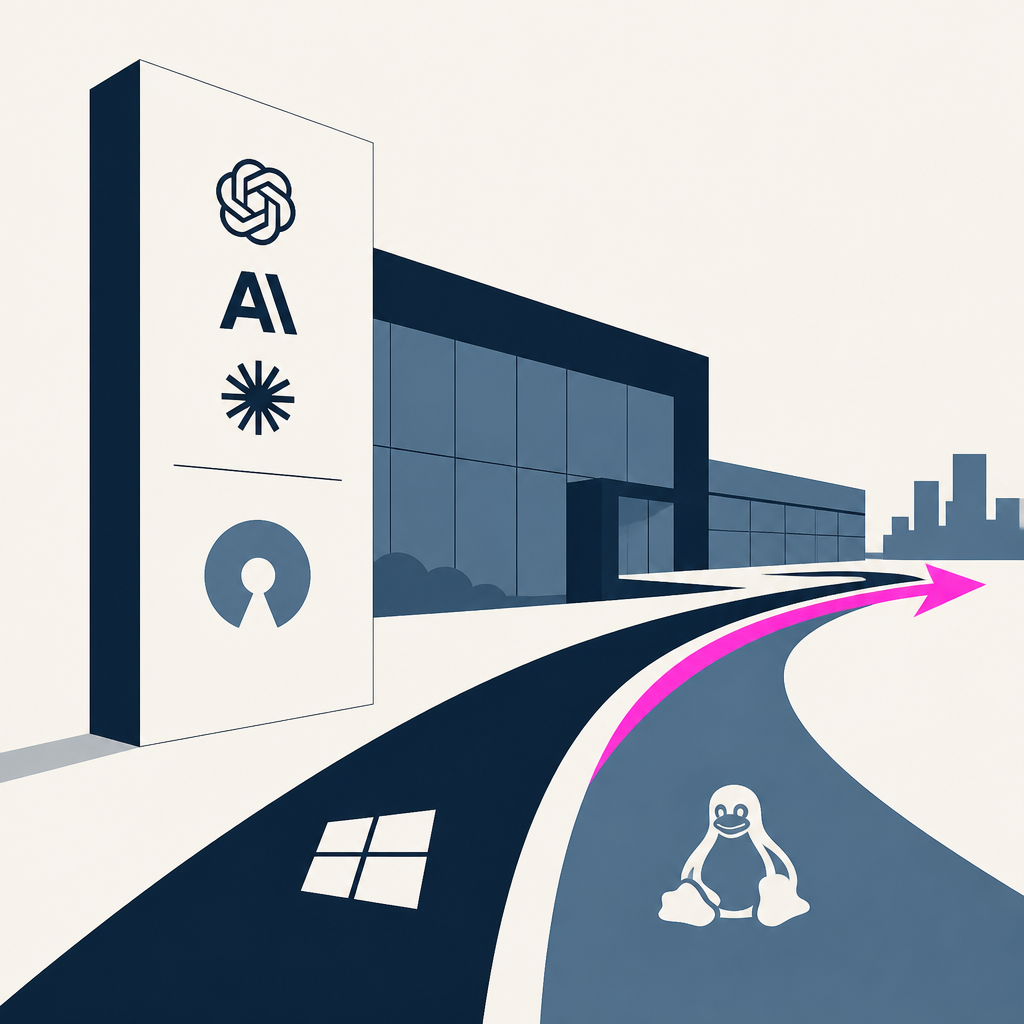
An engineer argues that switching from proprietary LLMs like Claude and GPT to open-source models now carries minimal professional risk, drawing parallels to the Linux-versus-Windows transition of the 2000s. Open models trail proprietary leaders by only a few months on performance benchmarks, have improved tooling, and can be run locally or via cloud services to avoid privacy concerns. The shift becomes more viable as Claude's ID verification requirements create friction, though users should expect some short-term productivity loss during the transition.
Bayer developed PRINCE, an agentic AI system using Retrieval-Augmented Generation to help preclinical researchers query unstructured drug discovery data through natural language instead of keyword search. The system evolved through three phases (Search, Ask, Do) and uses multiple specialized agents orchestrated via LangGraph to handle complex queries while maintaining reliability through fallback mechanisms and careful context management. Researchers can now access insights from decades of PDF study reports and structured data silos that were previously difficult to search, reducing manual analysis time and enabling faster data-driven decisions in drug discovery.
LayerLens launched the Stratix Cup, a soccer tournament where 16 frontier AI models compete against each other in a simulated environment with three phases: pre-game strategy planning, real-time gameplay execution, and halftime strategy revision based on observed performance. The tournament runs June 22-26 with 16 models organized in four groups of four competing through group stage and knockout rounds to determine a champion. The evaluation tests whether AI models can plan under uncertainty, execute strategies against adversarial opponents, and diagnose and correct their own failures based on evidence.
A developer describes using Agent Hooks in Claude Code to enforce guardrails on agent-generated code, explaining two specific use cases: blocking raw HTML input tags via a PreToolUse hook and preventing the agent from finishing until a design-system test passes via a Stop hook. Agent Hooks intercept the agent's workflow at specific points—before tool execution and when declaring completion—by running shell commands against JSON payloads, unlike instruction-based guardrails in CLAUDE.md that agents frequently ignore. This approach provides deterministic enforcement compared to post-hoc checks like linting or git hooks that run after code generation is already complete.
A developer contributed bug reports to an open source project whose maintainer heavily uses generative AI for development, and found the maintainer fixed both issues within hours with comprehensive solutions rather than waiting for pull requests. The maintainer used the bug reports as prompts for their own AI-assisted coding workflow, generating fixes and regression tests faster than traditional human contributions could have. This workflow suggests a shift in open source dynamics where AI-fluent maintainers can be more efficient working from well-written issues than from contributor PRs.
A philosophical essay compares the human genome and neural network weights as analogous informational structures: both are passive sequences brought to life only through external processes (cellular machinery for DNA, inference engines for AI), both are products of massive search processes (evolution and gradient descent), and both remain largely opaque despite being completely readable. The essay notes that just as the complete human genome was only sequenced in 2022 yet 98% of it has unknown function, interpretability research shows that 90% of neural network weights can be pruned without performance loss, suggesting both systems are radically overbuilt. The parallel observation raises questions about whether either system contains genuinely useless material or performs functions we're not yet clever enough to detect.
Tesla filed a trademark application for 'Megapod,' a modular AI data center hardware system combining servers, networking, power distribution, and cooling. The product would compete in a market already dominated by Nvidia's GB200 NVL72 and would mark Tesla's entry into selling integrated compute infrastructure rather than just buying Nvidia GPUs. Tesla's track record on homegrown AI hardware is weak—the company killed its Dojo supercomputer in August 2025 after calling it an 'evolutionary dead end'—making this venture uncertain without clearer evidence of shipping capability.
OpenAI released Daybreak, a suite of security tools designed to help organizations identify and fix software vulnerabilities across their systems. The tools include Codex Security for code analysis and GPT-5.5-Cyber for threat detection, enabling automated vulnerability validation and patching workflows. Organizations can now automate parts of their security operations that previously required manual review by human security engineers.
OpenAI launched Patch the Planet, a program that helps open-source software maintainers identify and fix security vulnerabilities using AI tools combined with expert human review. The initiative provides maintainers with automated detection of vulnerabilities and assistance in validating and patching them before they can be exploited. This reduces the security burden on volunteer maintainers who often lack dedicated resources to manage vulnerability discovery and remediation.
A developer built a system using local open-source models (Gemma and Qwen) running on their own NVIDIA hardware to automatically categorize and triage pull requests and issues in the OpenClaw repository, eliminating reliance on paid cloud API services. The system achieved 80% F1 score on a 330-item evaluation set while generating 402 tokens per second with 16 concurrent requests on the local hardware. This approach enables real-time notifications for relevant issues without incurring API costs or dependency on proprietary closed models that could be discontinued.
Jason Liu demonstrated techniques for using Codex to maintain context across multiple interactions while managing complex projects. He employed methods to store and retrieve project state, allowing work to persist beyond individual prompts through structured documentation and reference systems. This approach reduces the need to re-explain project details and enables more efficient continuation of long-term development tasks.
Every AI story that matters,
in your inbox by 8am.
TLDRocket reads all relevant sources, removes duplicate coverage, and summarises the
day in two minutes. Follow companies and topics for alerts, or get the
briefing in Slack. Free, no spam, unsubscribe anytime.
Reading TLDRocket needs no cookies, and the readership counts we rely on come from
our own cookieless analytics. Google Analytics is the exception: it sets cookies and
reports to Google, so it stays switched off until you allow it. You can change your
mind any time from “Cookie settings” in the footer.
Strictly necessary
Session security and form protection (tldrocket-session,
XSRF-TOKEN, 2 hours). The site cannot work without them,
so they need no consent.
Always on
Google Analytics 4 (_ga,
_ga_<id>, up to 2 years). Measures which
stories and sections readers use. Google acts as a third-party processor and may
store the data outside the EU. No advertising, no profiling, no data sold.