
Amazon cut 30,000 corporate jobs to focus on AI. Now it’s promising 30,000 entry-level roles in the UK by 2030
Fortune HR Brew
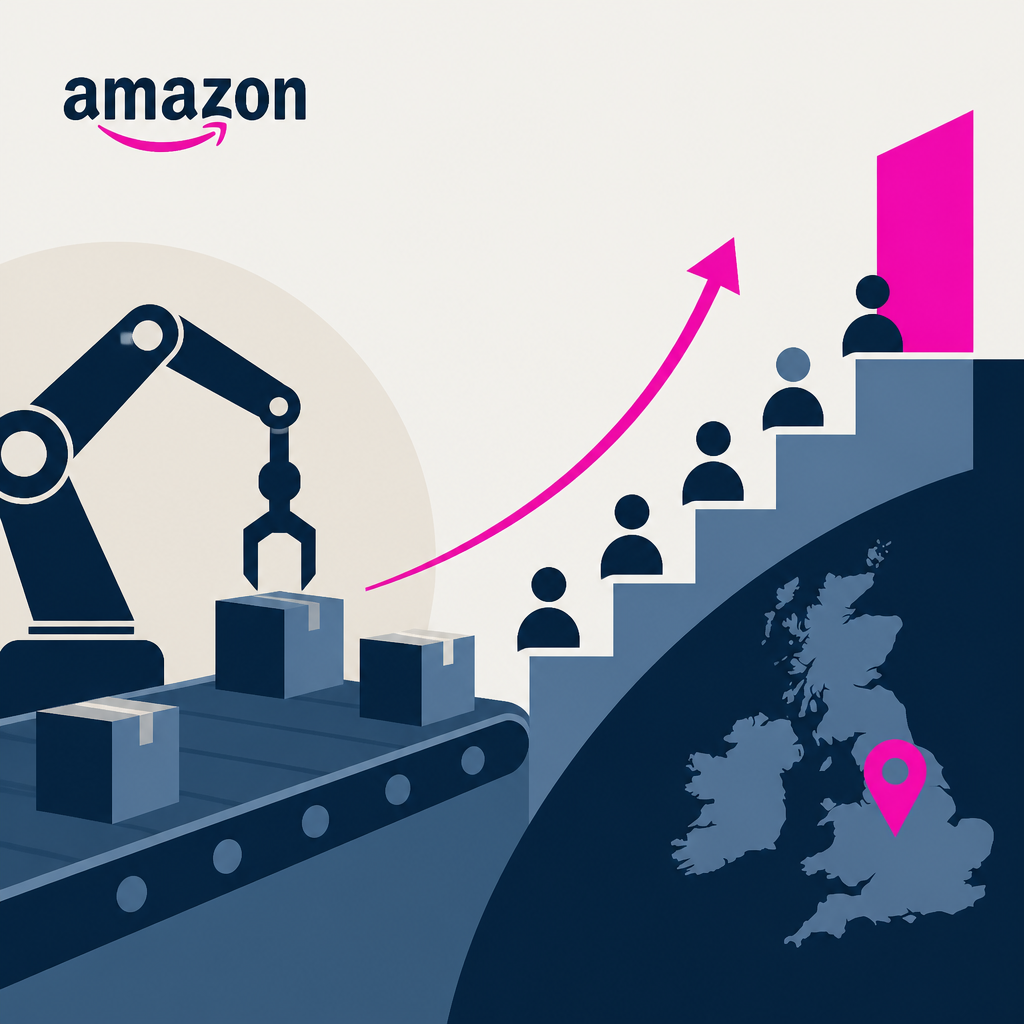
Amazon says it’ll add 30,000 entry-level UK jobs by 2030. It comes after 30,000 corporate cuts, as the company keeps shifting toward AI.
Based on reporting by Fortune, HR Brew — read the original for the full story.
Summary, retelling and take written by AI under human oversight; images are AI-generated illustrations. How we work · Report an error
Amazon is trying to play both sides of the labor story. On Oct. 20, it announced the Amazon Youth Promise, a plan to create 30,000 new entry-level jobs in the UK by 2030, according to the Independent. The company says the roles are aimed at young people and at those who are not in education, employment or training, often called Neets.
The starting salary will be 31,000 British pounds, or about $41,500. John Boumphrey, Amazon’s UK country manager, said many young people he meets at the company’s sites arrive without a CV or work experience, but with a willingness to learn. That framing matters, because the UK has been dealing with worse joblessness among young workers than older ones.
Amazon is not making this pledge in a vacuum. The company has also said it plans to hire 300,000 seasonal workers for the holidays. At the same time, it has been cutting white-collar roles, including about 1,000 workers in India, the UK and its retail business in early October, Business Insider reported.
Those cuts came on top of 30,000 jobs Amazon eliminated over the past year as it reshaped the business and leaned harder into AI. The new promise also fits into the UK government’s Youth Guarantee push, where companies including Microsoft, Cisco and IBM have pledged to create more opportunities for young Britons. Pat McFadden, the UK work and pensions secretary, said the point is to get Britain working and back employers who will help create opportunity across the country.
My take — AI-written commentary, not fact-checked reporting
Amazon’s message is simple: AI gets the layoffs, youth gets the PR. That may still be a useful trade if the jobs are real and lasting, but companies love promising ladders after they’ve already pulled some rungs away. The UK government clearly wants employers to help, and it should keep an eye on whether these pledges become hiring or just headlines.
Read more about this at: Fortune