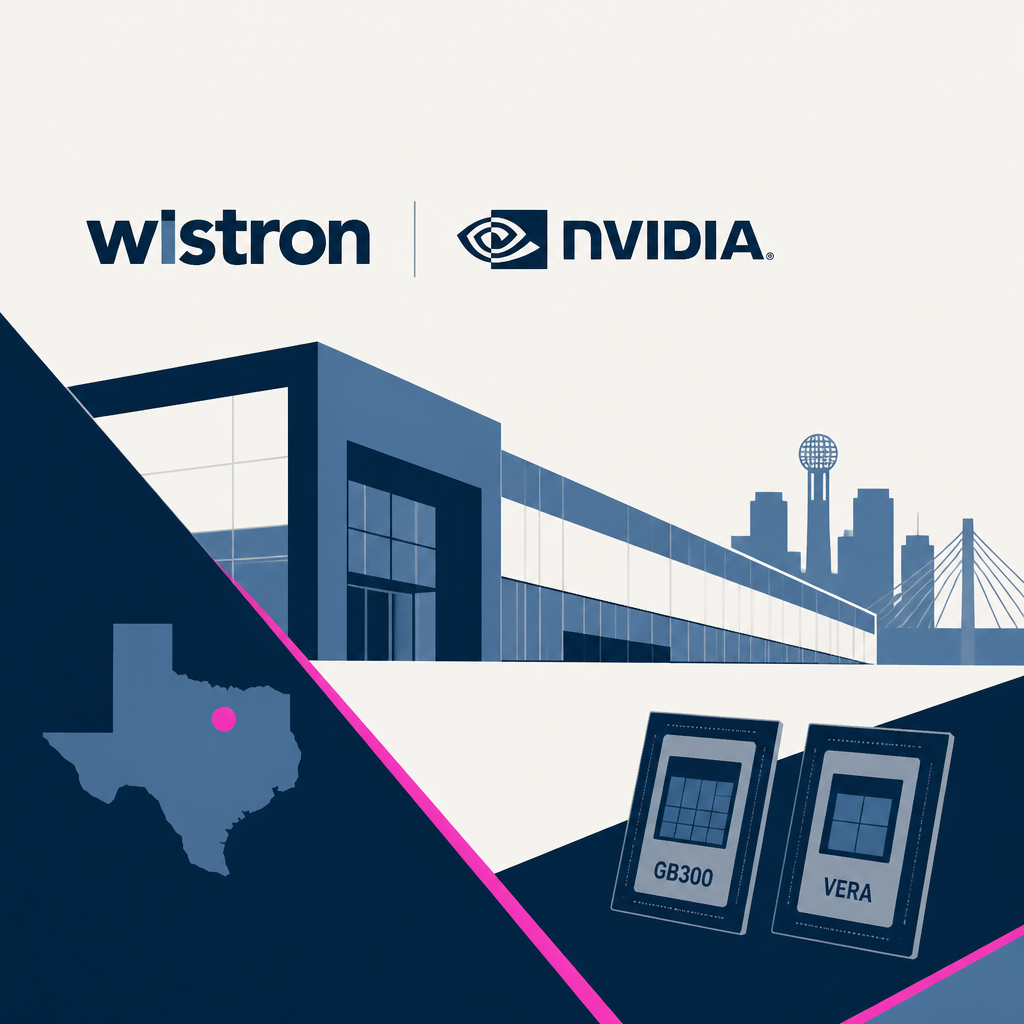
Wistron opened a 324,000-square-foot manufacturing plant in Fort Worth to produce NVIDIA's advanced AI superchips, representing a $700 million investment. The facility currently runs two production lines for the GB300 Grace Blackwell and Vera Rubin superchips, with plans to produce tens of thousands of boards per month and scale to 1,000 employees by year-end. The plant strengthens domestic AI infrastructure and supply chains while creating jobs across manufacturing, construction, and skilled trades.
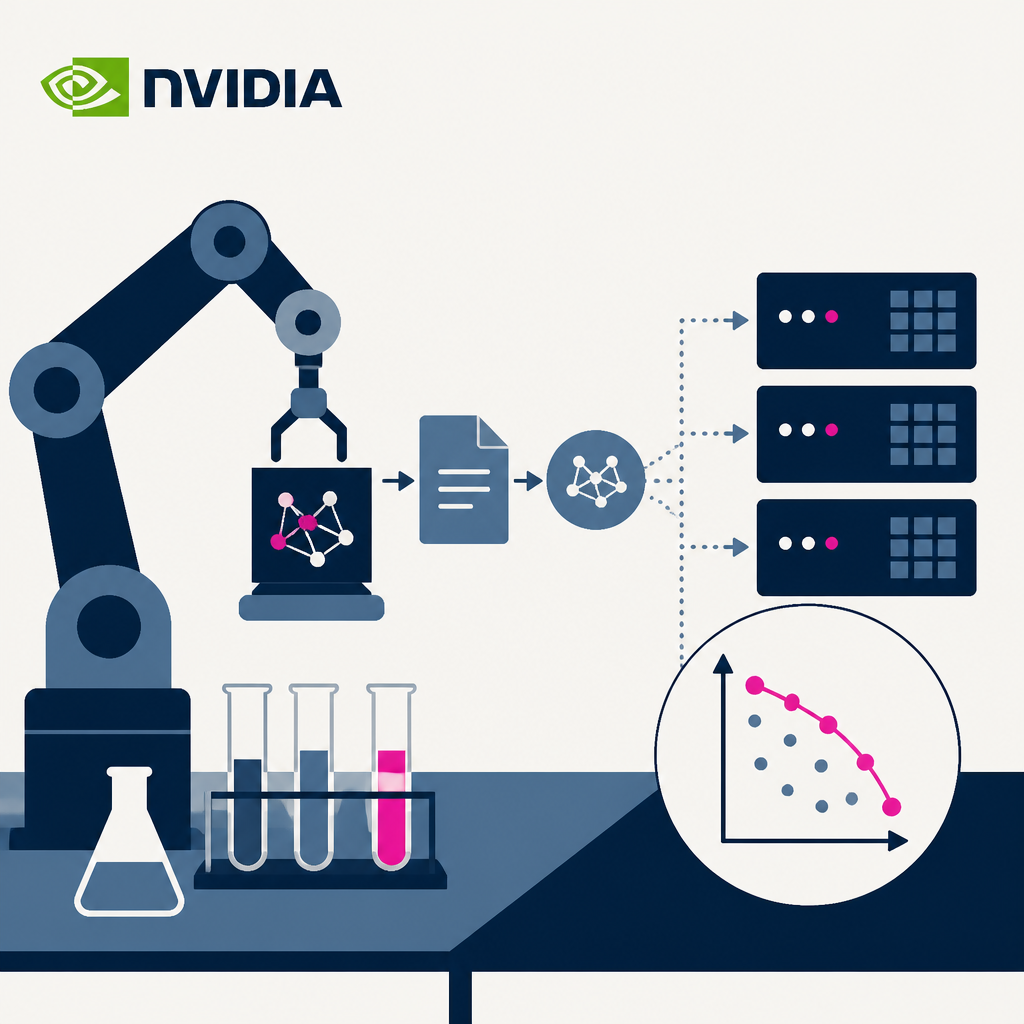
NVIDIA's srt-slurm framework automates the creation and validation of distributed LLM serving benchmarks by converting YAML configurations into reproducible SLURM workflows. The tutorial demonstrates using srtctl to define cluster configurations, execute parameter sweeps across DeepSeek-R1 models with disaggregated prefill-decode deployments, and analyze throughput-versus-latency trade-offs through Pareto frontier visualization. Validated recipes can then be submitted to real GPU clusters with preflight checks, monitoring, and reproducible experiment comparison.
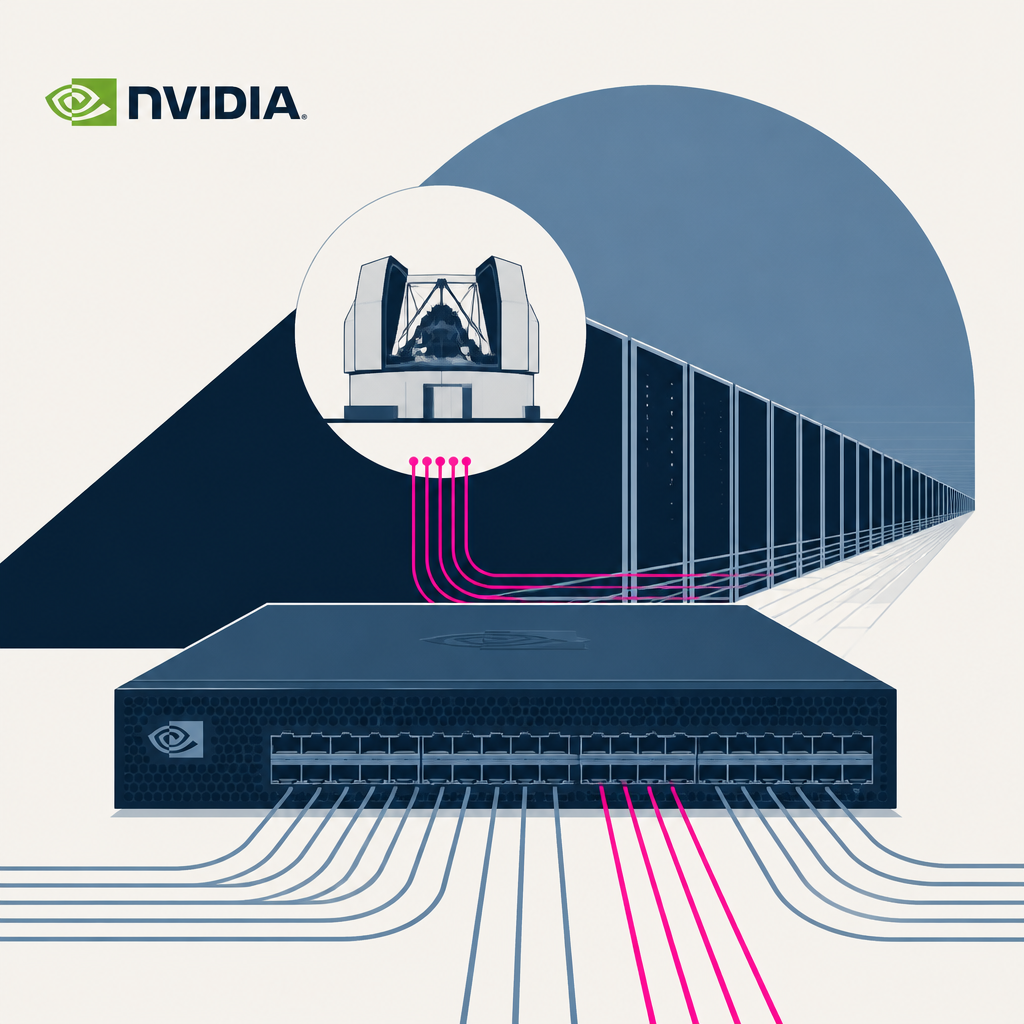
NVIDIA released Spectrum-6, a 102.4-terabit-per-second Ethernet switch system that doubles the capacity of previous-generation switches, designed to connect hundreds of thousands of GPUs in large AI training facilities. CoreWeave, Microsoft, Nebius, SpaceX AI and Tesla are among the first to deploy Spectrum-6 as part of NVIDIA's Vera Rubin platform. The switch enables better coordination between GPUs during large-scale training and inference, reducing bottlenecks that occur when GPUs need to exchange data continuously at gigascale.
AMD launched Helios, its first rack-scale AI system, with Microsoft as a major new customer joining Meta, OpenAI, and Oracle. The Helios system is estimated to cost between $5 million and $5.5 million, compared to Nvidia's Vera Rubin at $3.5 million to $4 million, and AMD will begin shipping later this year. AMD's entry into rack systems could increase its data center GPU market share from 4.5% to potentially 20-25%, challenging Nvidia's 95% dominance in this segment.
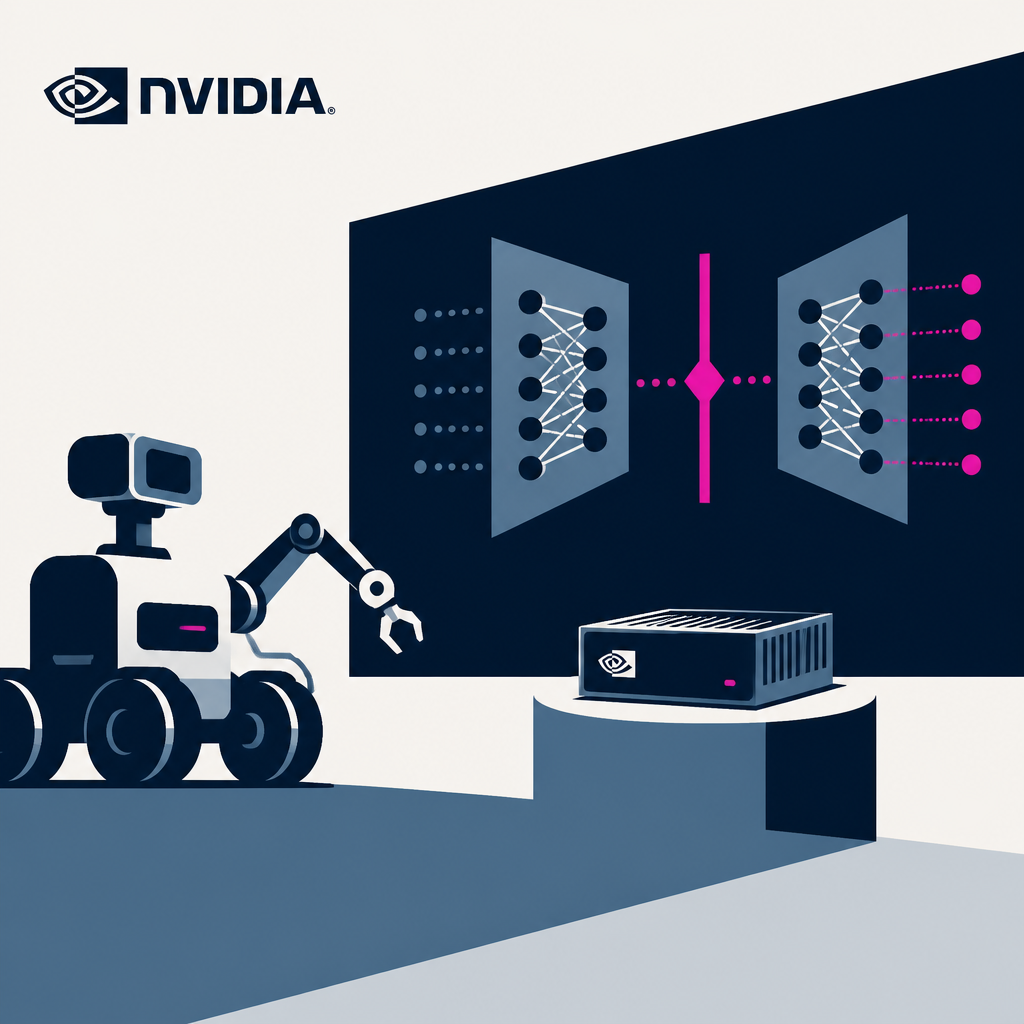
NVIDIA released Cosmos 3 Edge, a 4-billion-parameter world model designed to run on edge devices like robots and vision agents. The model uses a Mixture-of-Transformers architecture with separate reasoning and generation towers, achieving 15 Hz real-time control at 640×360 resolution on NVIDIA Jetson Thor hardware. This enables robots to understand their environment, reason about actions, and generate control outputs locally without relying on data centers.
Every AI story that matters,
in your inbox by 8am.
TLDRocket reads all relevant sources, removes duplicate coverage, and summarises the
day in two minutes. Follow companies and topics for alerts, or get the
briefing in Slack. Free, no spam, unsubscribe anytime.
Reading TLDRocket needs no cookies, and the readership counts we rely on come from
our own cookieless analytics. Google Analytics is the exception: it sets cookies and
reports to Google, so it stays switched off until you allow it. You can change your
mind any time from “Cookie settings” in the footer.
Strictly necessary
Session security and form protection (tldrocket-session,
XSRF-TOKEN, 2 hours). The site cannot work without them,
so they need no consent.
Always on
Google Analytics 4 (_ga,
_ga_<id>, up to 2 years). Measures which
stories and sections readers use. Google acts as a third-party processor and may
store the data outside the EU. No advertising, no profiling, no data sold.