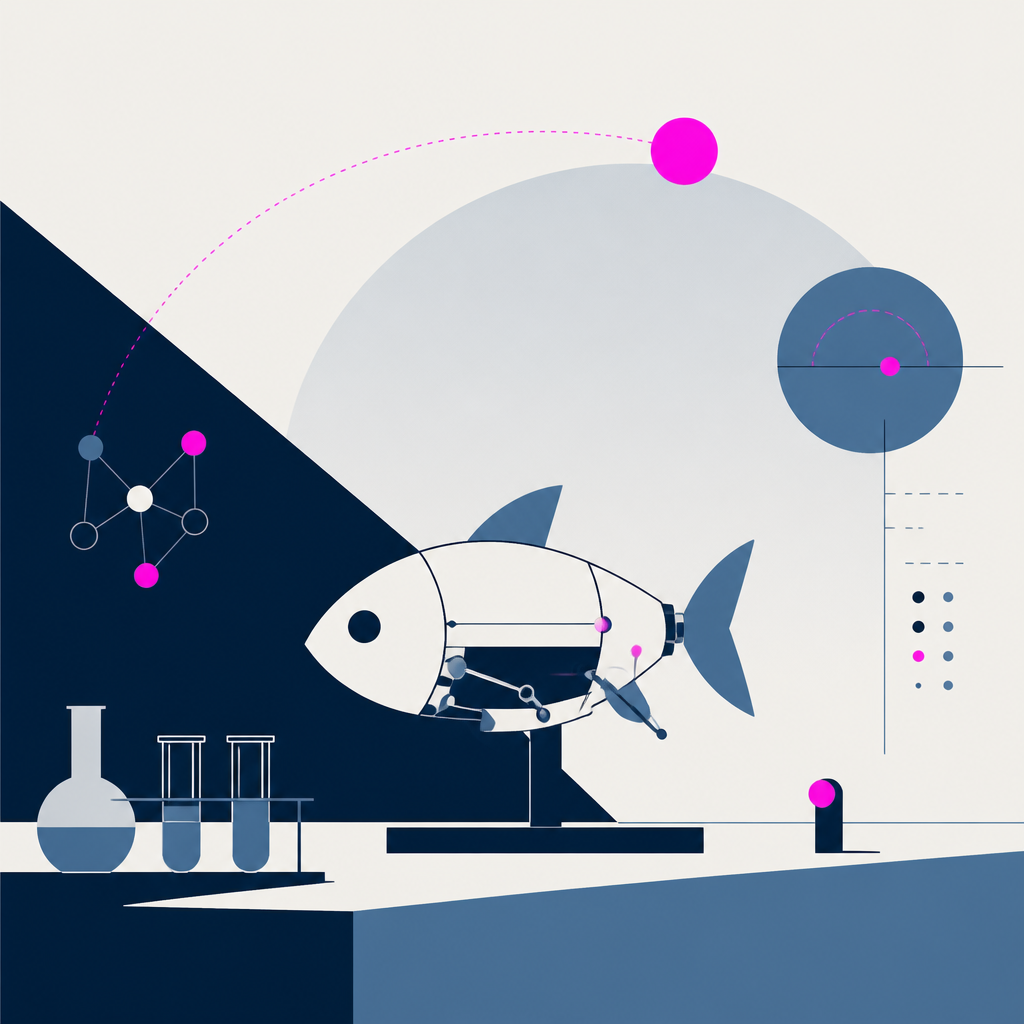
Sakana AI announced the creation of its Frontier Intelligence Group (FIG) to foster long-term, speculative AI research aimed at alternative paradigms beyond scaling today’s dominant approach. FIG is described as starting from a weekly chat between two researchers at the beginning of Sakana AI that later grew into the group. FIG will hold regular meetings, invite external researchers, and emphasize research freedom and investigating core questions about intelligence rather than prioritizing benchmark gains.
TypeSafe AI released Jev, a transformer-based AI model that outputs calibrated decision probabilities instead of text. The company reported that replacing an OpenAI model with Jev made results 5 to 18 times faster with greater accuracy. Jev is being used for software automation and can serve as a cheaper check on LLM agents, including model routing.
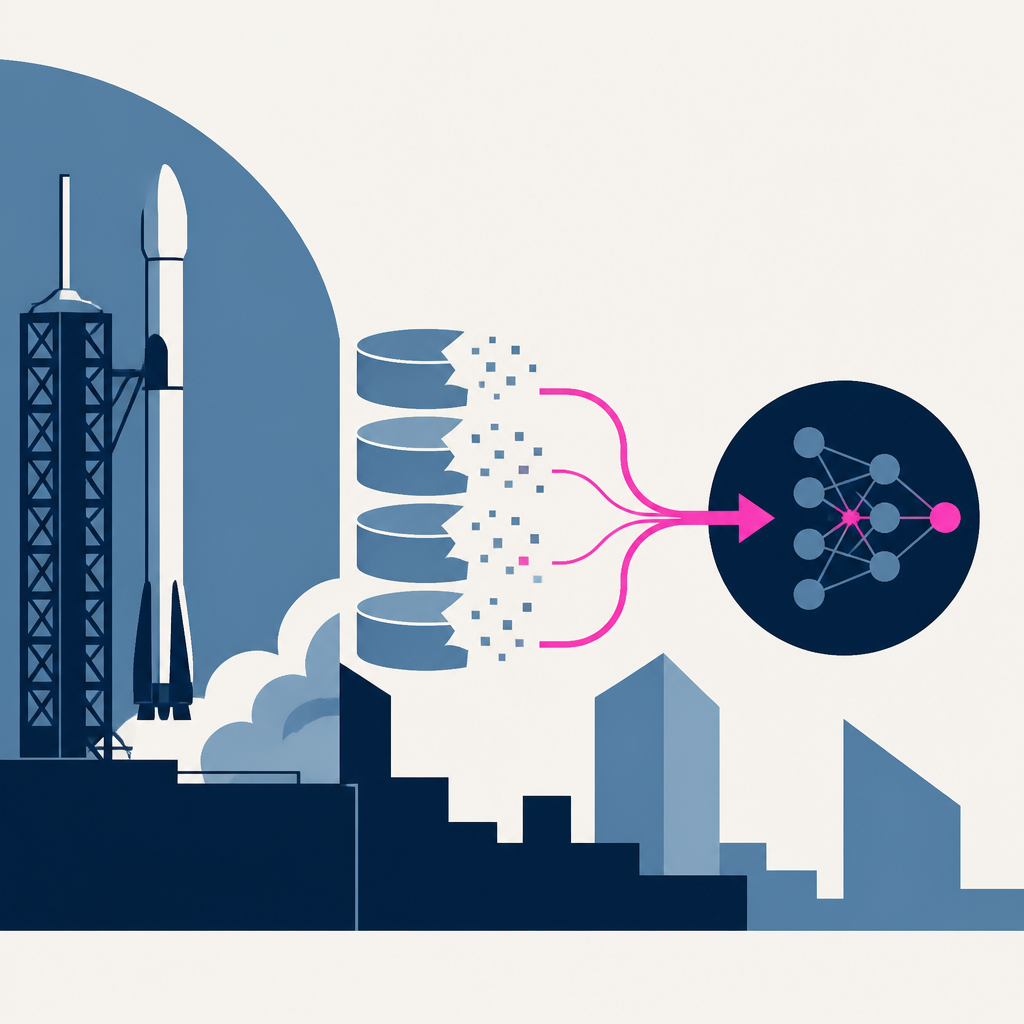
SpaceX discussed buying data from failed startups to train AI models, according to Bloomberg.
The report centers on AI model training data sourced from failed companies.
This highlights a shift toward more direct data acquisition for training rather than relying only on existing datasets.
Figure introduced Helix 2.5, a humanoid robot neural network that performs full-body household tasks in homes it has never seen by using Index pretraining instead of environment-specific data. Helix 2.5 completed tidying living rooms, folding towels, and making beds in 30 unseen Bay Area homes with zero data collected in those locations, reaching 56% success versus 9% for a scratch-trained policy. The work shifts humanoid robotics toward zero-shot whole-body generalization driven by broad pretraining, reducing required task-specification data and making deployment less dependent on per-home retraining.
Every AI story that matters,
in your inbox by 8am.
TLDRocket reads all relevant sources, removes duplicate coverage, and summarises the
day in two minutes. Follow companies and topics for alerts, or get the
briefing in Slack. Free, no spam, unsubscribe anytime.
Reading TLDRocket needs no cookies, and the readership counts we rely on come from
our own cookieless analytics. Google Analytics is the exception: it sets cookies and
reports to Google, so it stays switched off until you allow it. You can change your
mind any time from “Cookie settings” in the footer.
Strictly necessary
Session security and form protection (tldrocket-session,
XSRF-TOKEN, 2 hours). The site cannot work without them,
so they need no consent.
Always on
Google Analytics 4 (_ga,
_ga_<id>, up to 2 years). Measures which
stories and sections readers use. Google acts as a third-party processor and may
store the data outside the EU. No advertising, no profiling, no data sold.