
Figure’s Helix 2.5 Completed Whole-Body Household Chores in 30 Unseen Homes
FigureAI
Figure says its Helix 2.5 did whole-body chores in 30 homes it had never seen. That’s a big step for robots, since they usually have to relearn each place.
Based on reporting by FigureAI — read the original for the full story.
Summary, retelling and take written by AI under human oversight; images are AI-generated illustrations. How we work · Report an error
Figure is claiming a notable first: Helix 2.5 handled whole-body household tasks in 30 Bay Area homes it had never seen before, with no data collection, fine-tuning, or adaptation in those homes. The jobs were the kind of domestic grind that expose robotic weaknesses fast: tidying living rooms, folding towels, and making beds.
The company’s pitch is not that robots suddenly understand houses. It’s narrower and more interesting than that. Helix 2.5 was pretrained on Index, Figure’s large dataset of human behavior, and that broad foundation was then adapted into three behaviors. Those behaviors had to combine walking, reaching, two-handed manipulation, active perception, and whole-body control. In other words: a robot that can’t treat motion and manipulation as separate problems.
Figure says the jump in zero-shot performance mostly came from Index pretraining. When it compared two policies trained on the same task data, the one starting from random weights succeeded on 9% of zero-shot trials. The Index-pretrained version reached 56%. That’s a sharp difference, especially because the evaluation was strict: every toy had to be put away, every towel folded, or the whole bed made. No partial credit.
The company also says Helix 2.5 needed half as much task-specific data as a representative Helix 02 behavior, yet still generalized across the 30 unseen homes. And it argues the robot could self-correct in ways that matter in real rooms, stepping back, shifting its stance, or walking around a bed to fix a mistake and keep going.
The bigger claim is about scaling. Figure says increasing Index data improved downstream action prediction smoothly enough to forecast its largest run’s loss to four decimal places before training. It’s using that to argue for a familiar AI recipe: pretrain broadly, specify a behavior once, then let deployment do the rest. The company says Index now generates roughly 35 minutes of new human experience every second, and it has committed $3.5B of compute to training Helix.
My take — AI-written commentary, not fact-checked reporting
This is the right direction for robotics: stop teaching every house one by one and learn from human behavior at scale. The glossy part is the demo; the important part is the transfer. Also, $3.5B is the sort of number that tells you this field has fully entered its “please clap, the capital stack is performing” era.
Read more about this at: FigureAI
Related stories
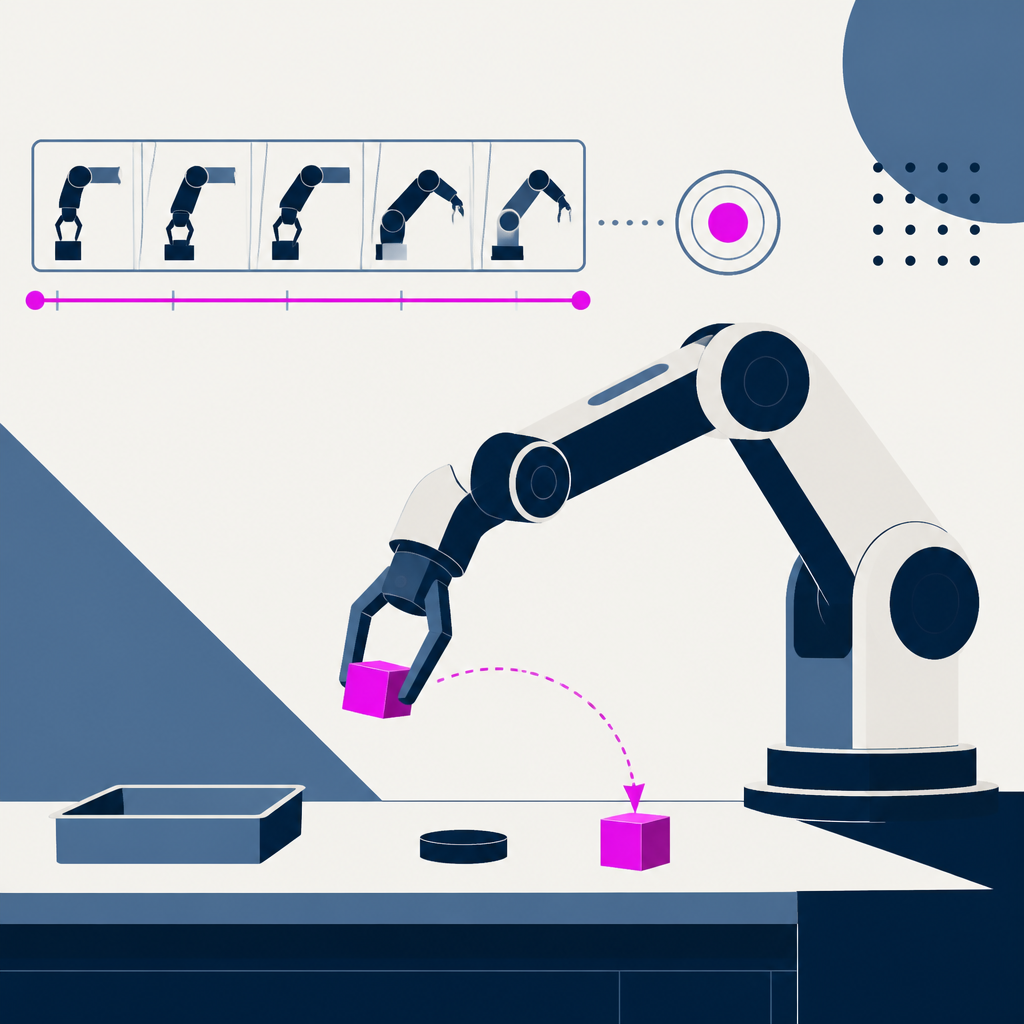 Generalist AI Releases GEN-1.5: A Robot Foundation Model That Learns New Tasks From One 3–12 Second Demo
MarkTechPost · 3 weeks ago ·
8
Home robots already walk. 1X's new hands try to solve the part that actually matters
TNW · 2 months ago ·
16
Generalist AI Releases GEN-1.5: A Robot Foundation Model That Learns New Tasks From One 3–12 Second Demo
MarkTechPost · 3 weeks ago ·
8
Home robots already walk. 1X's new hands try to solve the part that actually matters
TNW · 2 months ago ·
16
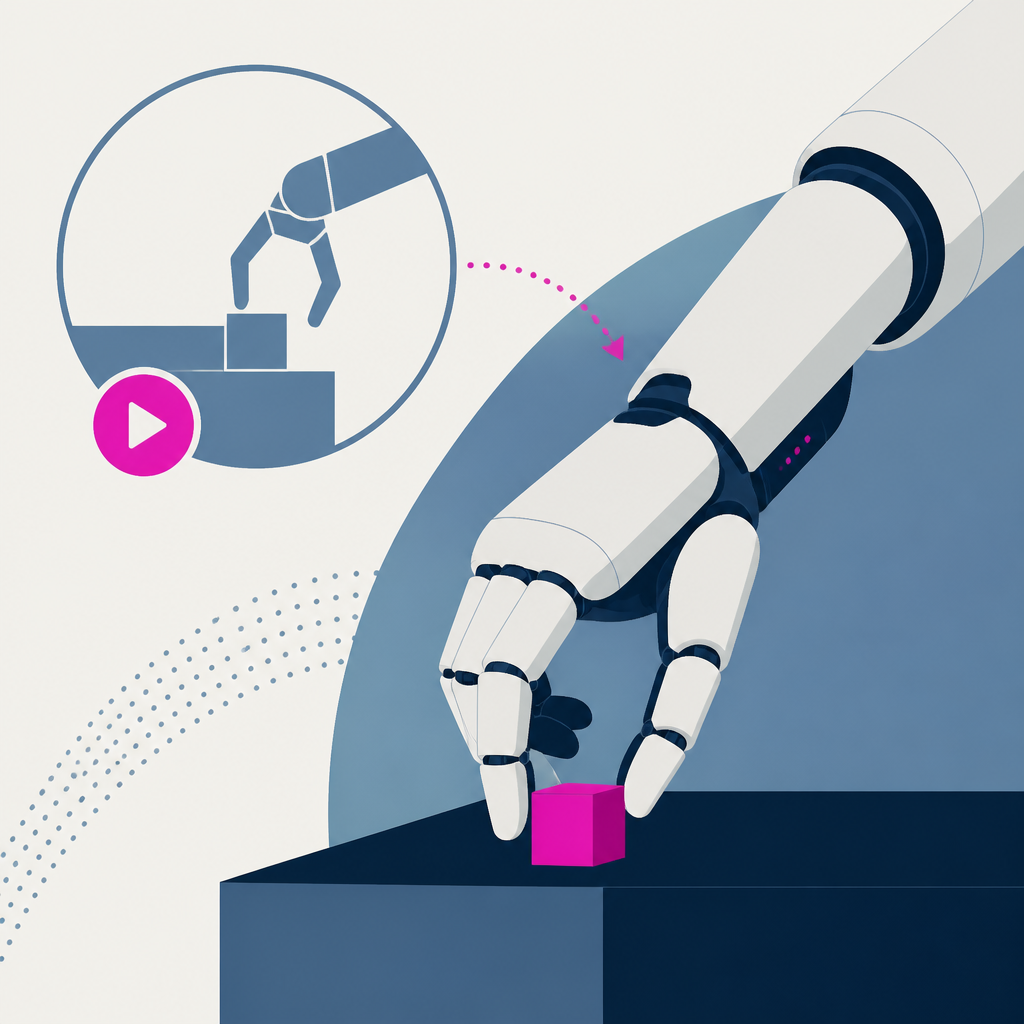 Skild AI Taps NVIDIA Physical AI to Teach Robots New Tasks From a Single Video
NVIDIA Blog · 1 week ago ·
45
Skild AI Taps NVIDIA Physical AI to Teach Robots New Tasks From a Single Video
NVIDIA Blog · 1 week ago ·
45