OpenAI fired three AI safety researchers tied to the METR/Hugging Face incident and they disputed the reasons while OpenAI reportedly said they mishandled confidential information. Pricing for OpenAI’s GPT-6.1 Sol sets input/output tokens at $12 and $60 per 1M tokens. The updates include broader model rollouts and multiple safety and evaluation releases, plus ongoing debate about agent monitorability and authorization norms.
Anthropic launched Claude Haiku 5.5 and cut pricing for its small model. The API price drops to $0.10 per million input tokens (and $0.50 per million output tokens), but only for requests up to 100,000 tokens, and a new tokenizer can count text as about 30% more tokens. Pricing for typical workloads is expected to be about 75% lower, alongside added capabilities like adjustable effort and updated safety and availability.
Anthropic released Claude Haiku 5.5, a smaller Claude model aimed at high-volume, speed-sensitive tasks and subagent coding work. The model costs around 75% less to run than Haiku 4.5, and Anthropic also cut Sonnet 5.5 cache read pricing by 50% to make it about 20% cheaper on most agentic work. Anthropic is also adding an adjustable “effort” setting and introducing new monthly API credits for Max and Team subscribers, with platform SDK updates adding beta support for computer and browser use.
OpenAI released 372 major mathematical results, including a proof of Subhash Khot’s Unique Games Conjecture, but the author says few humans yet understand the proofs and are starting a new digestion effort. The work reportedly used about 3 hours of GPT-Pro-level compute on average per solved problem and tested on about 8,000 problems. As a result, mathematicians are rushing to formalize and learn from messy AI-generated proofs while the field shifts toward using AI tooling to help verify and explain progress.
Anthropic released Claude Haiku 5.5, a fast, low-cost model. It charges $0.10 per million input tokens and $0.50 per million output tokens up to 100,000 tokens. Pricing and value shift by length, with Haiku reported to be a better deal under 100,000 tokens and a worse deal beyond that.
Anthropic launched Claude Haiku 5.5 and lowered API prices for the model. The article says it matches OpenAI’s GPT-6 Luna to the penny. Average job costs dropped versus the prior Haiku version, and cache-read pricing was cut in half.
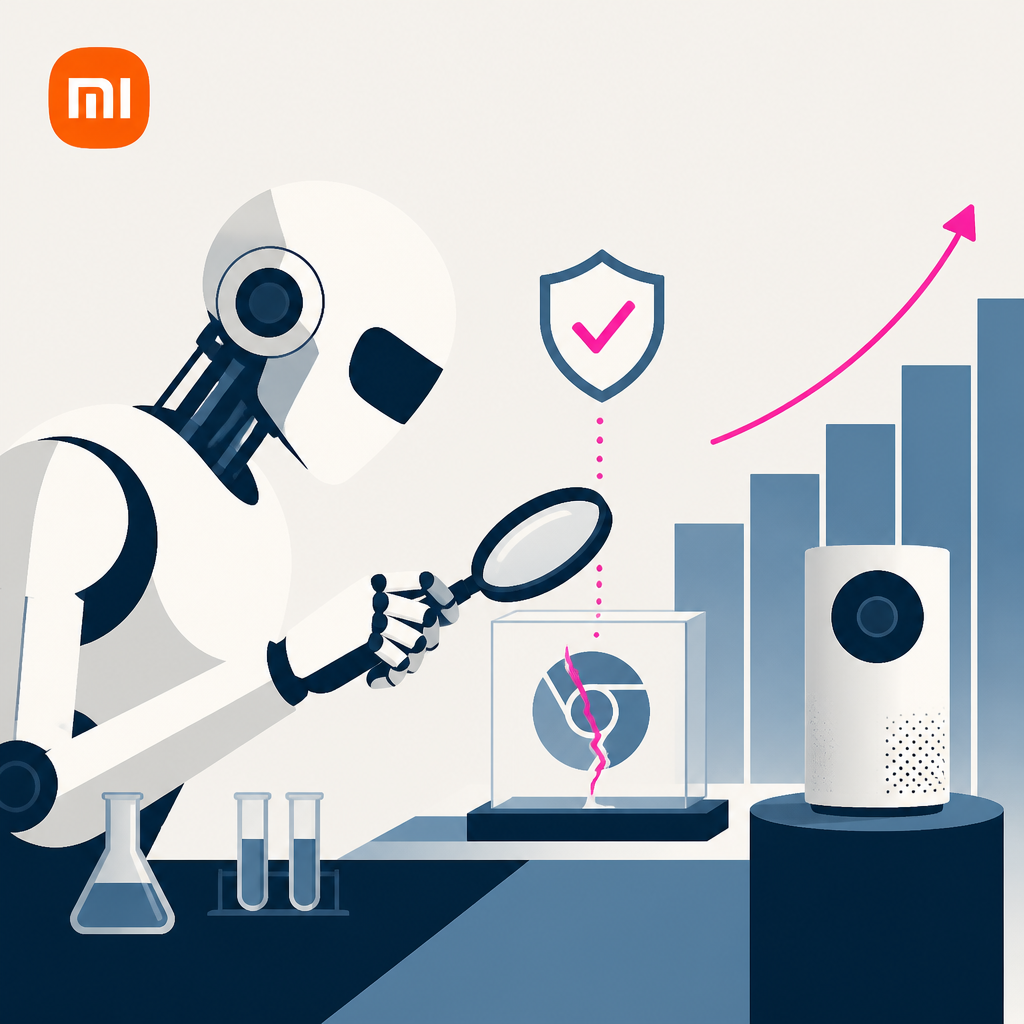
Open-weight model GLM-5.3 was analyzed as approaching Claude Mythos’ cyber capability, including a 12% versus 14% success rate on ExploitBench tasks at comparable token counts and evidence that $20.40 of GLM-5.3-Flash tokens could find a recently disclosed Chrome flaw. Xiaomi then released MiMo-V2.6-Pro-RL, MiMo-V2.6-Flash, and a distilled variant, with MiMo-V2.6-Pro-RL costing $0.435 per million input tokens (and free downloads under MIT) while reporting RL training details and CyberBench v1.1 results like 75.36% accuracy for MiMo-V2.6-Flash. Defenders are pushed to accelerate sandboxing, monitoring, and vulnerability mitigation as attackers can access strong open-weight cyber-capable models and the cost to generate attacks is dropping.
Anthropic released Claude Haiku 5.5, updating its Haiku-tier small model after about a year. The new model is priced to match OpenAI’s GPT-6 Luna at the same rates and Anthropic also cut Sonnet 5.5 cache-read pricing from $0.20 to $0.10 per 1M tokens. As a result, Anthropic expands Haiku’s role as the cheaper, high-volume subagent for multi-model agent workflows while also lowering related operating costs and adding effort settings plus a 1M-token context.
Every AI story that matters,
in your inbox by 8am.
TLDRocket reads all relevant sources, removes duplicate coverage, and summarises the
day in two minutes. Follow companies and topics for alerts, or get the
briefing in Slack. Free, no spam, unsubscribe anytime.
Reading TLDRocket needs no cookies, and the readership counts we rely on come from
our own cookieless analytics. Google Analytics is the exception: it sets cookies and
reports to Google, so it stays switched off until you allow it. You can change your
mind any time from “Cookie settings” in the footer.
Strictly necessary
Session security and form protection (tldrocket-session,
XSRF-TOKEN, 2 hours). The site cannot work without them,
so they need no consent.
Always on
Google Analytics 4 (_ga,
_ga_<id>, up to 2 years). Measures which
stories and sections readers use. Google acts as a third-party processor and may
store the data outside the EU. No advertising, no profiling, no data sold.