Anthropic released Claude Haiku 5.5 and made Sonnet 5.5 cheaper by cutting cache-read charges. Haiku 5.5 is priced at 10 cents per million input tokens and 50 cents per million output tokens for prompts up to 100,000 tokens. Sonnet 5.5 cache-read pricing drops from 20 cents to 10 cents per million tokens, and Haiku 5.5 also adds an adjustable effort setting to tune running costs.
Simon Willison’s Weblog·1 week ago·
4
● 16 sources
Anthropic released Claude Haiku 5.5 as a faster, lower-cost model and adjusted its pricing and tokenizer compared with Haiku 4.5. It is priced at $0.10 per million input tokens and $0.50 per million output tokens up to 100,000 tokens, then rises 5x beyond that. Pricing becomes similar to GPT-6 Luna only within 100,000 tokens, while long prompts cost more due to a less generous tokenizer, and Anthropic also halved cache-read prices and added monthly API credits for subscribers (with non-rollover credits).
OpenAI published 722 math papers generated with an unreleased AI model, including partial results tied to long-running hypotheses. The Riemann hypothesis was addressed at the scale of proving a quasi-Riemann hypothesis rather than a full solution. Going forward, OpenAI plans to release Lean proofs for more of the papers and fund events/programs to review the AI-generated discoveries.
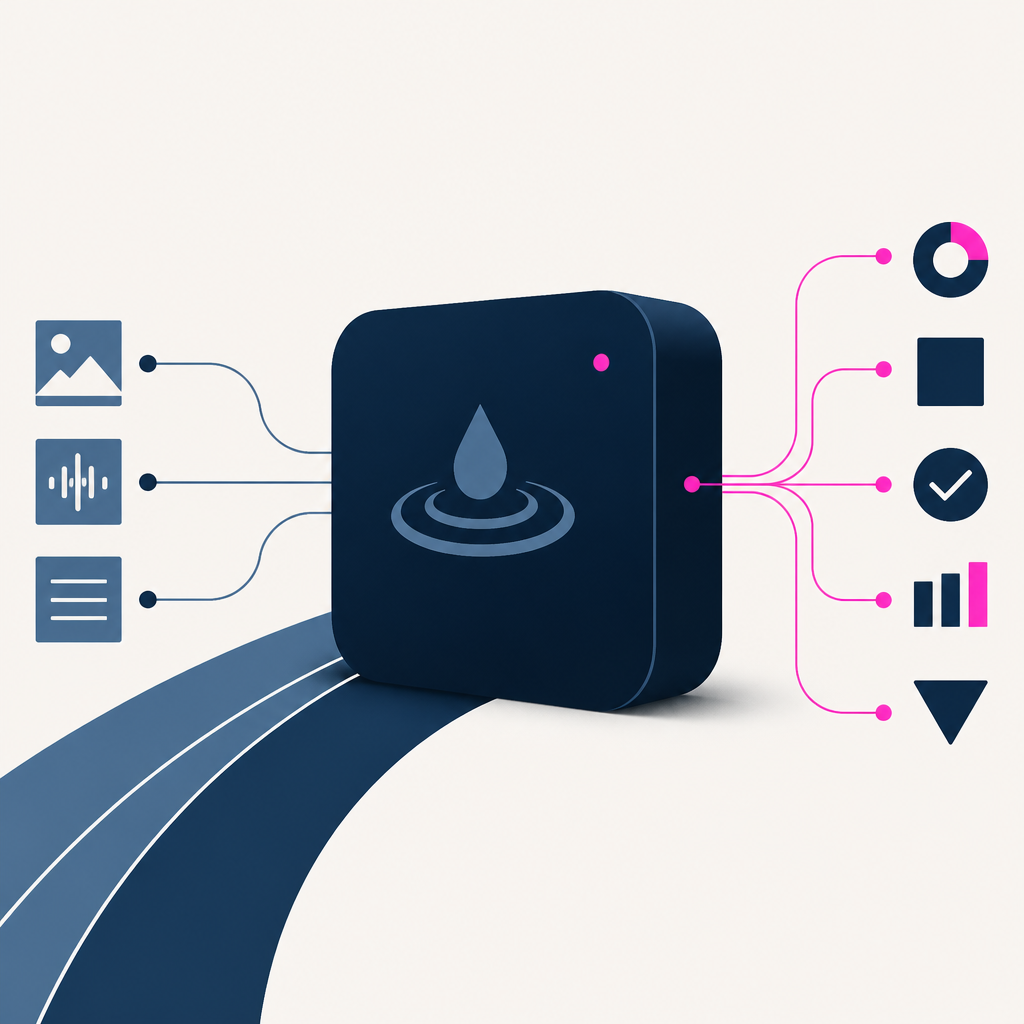
Liquid AI released Open d1, two open-weight multimodal decision models (d1-3B and d1-omni-600M) that return calibrated typed answers with zero output tokens. d1-3B scored 48.57 on Decision Index v0.2.1 and takes 8 ms for one question on an RTX 4090. The models shift deployments from generating token-by-token text to making real-time probabilistic decisions across fixed options, including text+image and text+audio inputs.
Anthropic launched Claude Haiku 5.5, an updated version of its smallest and most affordable model, and added effort controls and SDK support. Haiku 5.5 is priced at $0.10 per million input tokens and $0.50 per million output tokens for requests under 100,000 tokens (down from $1/$5 on Haiku 4.5). The lower pricing and new controls change developer costs and how they manage token usage, alongside rollouts like a Sonnet 5.5 cache price cut and new API credits.
An Arizona appellate court upheld a manslaughter conviction but ordered resentencing after ruling that an AI-generated victim video carried “undue emotional weight.” The ruling was tied to a maximum sentence of 10.5 years issued at the original sentencing in a 2021 road rage case. The judge must reconsider the prison term length without relying on the AI video’s impact statement as previously used.
Falcon-ASR was released as a 1.6B-parameter speech recognition model built by TII, focused on transcribing Arabic—especially the Emirati dialect—and also supporting English plus French, Spanish, and Portuguese. It reported an average Arabic word error rate of 20.92% across six test sets and achieved 22.73% WER with 10.19% CER on an internal Emirati evaluation. It adds word-level timestamps and is offered via a Hugging Face demo with planned API and native applications.
OpenAI published 722 math manuscripts from an unreleased internal Navier-Stokes-based model, claiming solutions to 90 of the top 500 open math problems. The reports cite about 3 hours of ChatGPT Pro thinking compute per result on average. As a result, the release adds new paper files and proof artifacts publicly, with ongoing debate about what is verifiable and what may contain errors.
Every AI story that matters,
in your inbox by 8am.
TLDRocket reads all relevant sources, removes duplicate coverage, and summarises the
day in two minutes. Follow companies and topics for alerts, or get the
briefing in Slack. Free, no spam, unsubscribe anytime.
Reading TLDRocket needs no cookies, and the readership counts we rely on come from
our own cookieless analytics. Google Analytics is the exception: it sets cookies and
reports to Google, so it stays switched off until you allow it. You can change your
mind any time from “Cookie settings” in the footer.
Strictly necessary
Session security and form protection (tldrocket-session,
XSRF-TOKEN, 2 hours). The site cannot work without them,
so they need no consent.
Always on
Google Analytics 4 (_ga,
_ga_<id>, up to 2 years). Measures which
stories and sections readers use. Google acts as a third-party processor and may
store the data outside the EU. No advertising, no profiling, no data sold.