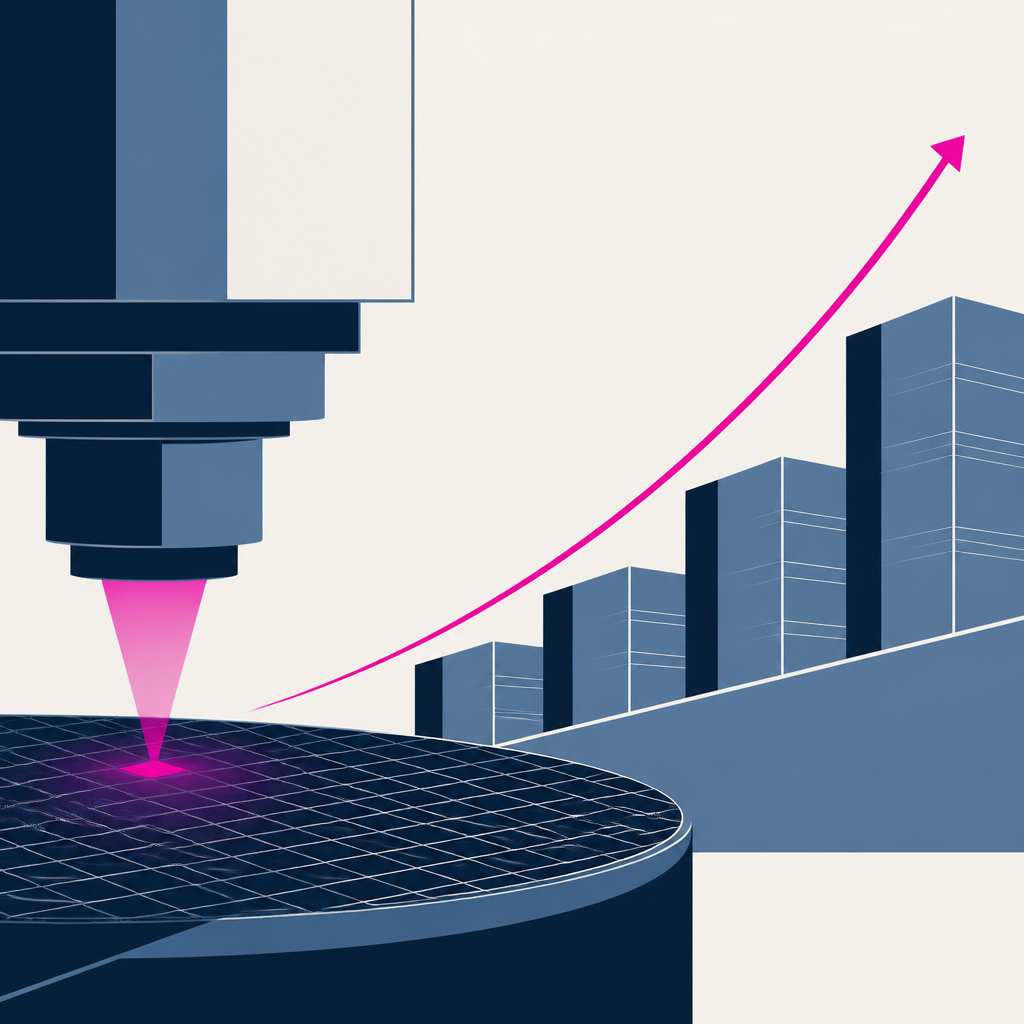
Vinci4D Inc. emerged from stealth and launched a physics-driven AI software platform to speed up hardware simulation after design changes. The company says simulations run up to 1,000 times faster than conventional tools, with a day to rerun after a change instead of two weeks. This shortens product development cycles and lets chip teams detect issues sooner using the updated simulation workflow.
Nvidia CEO Jensen Huang toured Europe and announced additional European AI investments and partnerships during stops in Paris and London. Nvidia said it would unveil another $2 billion in European AI deals within a week and committed $250 million worth of compute over five years to U.K. AI safety and security research. The push expands Nvidia’s stakes in U.K. startups and local AI deployments in ways that increase demand for Nvidia chips and position it as a supplier for Europe’s “sovereign AI” efforts.
NVIDIA RTX Spark launches tomorrow as a Windows PC built for creators, gamers, and AI agents, with NVIDIA and partners hosting launch events worldwide. The campaign runs to Friday, Oct. 16 and includes a chance to win an ASUS ProArt P14 RTX Spark laptop signed by Jensen Huang. Reviews and hands-on demos are promoted to show local AI, gaming, and creative performance at the events, with some requiring registration due to limited space.
Nvidia announced new Nemotron 3.5 models, including a 120B vision-language model and two smaller Bolt models meant for local use. Nemotron 3.5 Bolt 74B-A9B is quantized to fit in 24GB of memory. The launches add multimodal enterprise agent capability plus downloadable local models on Hugging Face under an OpenMDW license for commercial use and modification.
Cerebras Systems argued that inference speed is a key competitive advantage for agentic AI systems. It says its inference performance is 10 to 15 times faster than competing GPU-based platforms. As enterprises shift toward maximizing value per token, users are reportedly favoring Cerebras’ fastest tokens and infrastructure.
Global smartphone shipments fell 22 percent in the third quarter as IDC pointed to an AI-driven memory chip shortage pushing up component costs. Memory chip prices rose by about 350 percent year over year, making chips both more expensive and scarcer for phone makers. Customers face higher prices and keep devices longer, while IDC cut its full-year forecast to a 16.7 percent decline and now expects further weakness through 2027 before only a rebound from 2028.
Alienware’s 34-inch AW3426DW QD-OLED gaming monitor is discounted on Amazon. The price dropped to $742.22 from $799.99, just over $50 off, and the listing also highlights its 280Hz ultrawide QD-OLED specs and adaptive refresh support. The change is simply a limited-time lower price for buyers, with no new product or technical update mentioned.
GeForce NOW added NVIDIA DLSS 4.5 controls to let members adjust supported games’ image quality and performance in the cloud. Dynamic Multi Frame Generation in Ultimate tier can be set up to 4X on RTX 5080-powered rigs. This expands tuning options across Windows, macOS, Chrome OS, and Steam OS and coincides with Enshrouded 1.0 and Warhammer 40,000: Boltgun 2 launching in the service alongside 10 new titles.
Chipmakers tied to the AI rally fell sharply as a Wall Street slump spread across Asia and Europe, deepening a broader sell-off in AI and semiconductor stocks. US inflation rose to 3.7 percent in September while the odds of a Fed rate hike climbed to almost 32 percent, and AI and semiconductor stocks lost more than $1 trillion in market value in one week. As a result, shares of companies like SK Hynix, Samsung, and Micron dropped and funding concerns for AI buildouts intensified alongside slower-than-expected growth signals from Anthropic.
Nebius said it struck deals with early-stage UK AI labs to expand its GPU data-centre and AI compute offering in the UK. It also previously announced a £1.7bn UK build-out across new sites plus an expansion of its London hub earlier this year. The company expects the deals to speed its UK infrastructure growth, and it welcomed planned changes to UK non-compete clauses that could make it easier for startup labs to hire and expand.
NVIDIA joined the European Commission’s AI in Science Enablers Initiative at the AI in Science Summit in Dublin, offering open learning resources, compute access, training, and collaborative pilots. NVIDIA released more than 250 open models and 250 open datasets, with the courseware hub providing freely downloadable, openly licensed materials with no enrollment, fees, or deadline. The result is broader access for European researchers and startups to accelerated tools, infrastructure, and skills, plus expanded use of NVIDIA-backed compute via partnerships and AI factories.
ASML warned that AI-driven demand for chips will exceed the supply of chip-making machines it plans to deliver in 2027 and 2028. The company is planning a 30% capacity increase for 2028 but is considering adding more. As a result, ASML may expand capacity beyond that 2028 target to meet AI chip demand.
Modal raised $750M at a $15.75B valuation to build cloud infrastructure for AI agents, led by Accel and with Kleiner Perkins joining. The valuation jumped from $4.65B in its May 21 Series C to more than three times that level. Usage tripled, annualised run rate passed $1B, and the Sandboxes product reached a $300M run rate.
The Nordic countries expanded their advanced-computing and AI infrastructure, including cloud capacity growth and shared supercomputing, while multiple local companies scaled AI workloads on NVIDIA hardware and software. The article cites 1 gigawatt of AI cloud capacity planned across the region by the end of 2027 and a Sferical One supercomputer built on two NVIDIA DGX SuperPODs with 16 racks of NVIDIA DGX GB300 systems and 1,152 GPUs. As a result, Nordic researchers and businesses can deploy and customize AI models more securely and efficiently, shorten simulation and commissioning cycles, and roll out agent, retrieval, robotics, and quantum workflows faster.
Ricursive Intelligence introduced an AI system that designs AI chips, iterates on results, and aims to speed up and automate chip design to address the compute shortage. The founders said demand for compute will rise by at least 10,000x within five years. Their focus shifts from human-driven chip partitioning to AI-optimized full-chip layouts, with hopes of enabling custom chip designs faster and with higher energy efficiency.
Apple Machine Learning Research·1 week ago·
26
● 2 sources
MLX with RDMA-over-Thunderbolt support on Mac Studio was used to run and benchmark local and distributed inference for large language models, including Muse Spark Open, using the latest MLX release and benchmark tooling. The setup reportedly generated over 36 tokens per second on a cluster of four Mac Studios. As a result, very large MoE models can be tested on private hardware either on a single Mac with enough unified memory or by scaling out across multiple Macs via pipeline or tensor parallelization.
Every AI story that matters,
in your inbox by 8am.
TLDRocket reads all relevant sources, removes duplicate coverage, and summarises the
day in two minutes. Follow companies and topics for alerts, or get the
briefing in Slack. Free, no spam, unsubscribe anytime.
Reading TLDRocket needs no cookies, and the readership counts we rely on come from
our own cookieless analytics. Google Analytics is the exception: it sets cookies and
reports to Google, so it stays switched off until you allow it. You can change your
mind any time from “Cookie settings” in the footer.
Strictly necessary
Session security and form protection (tldrocket-session,
XSRF-TOKEN, 2 hours). The site cannot work without them,
so they need no consent.
Always on
Google Analytics 4 (_ga,
_ga_<id>, up to 2 years). Measures which
stories and sections readers use. Google acts as a third-party processor and may
store the data outside the EU. No advertising, no profiling, no data sold.