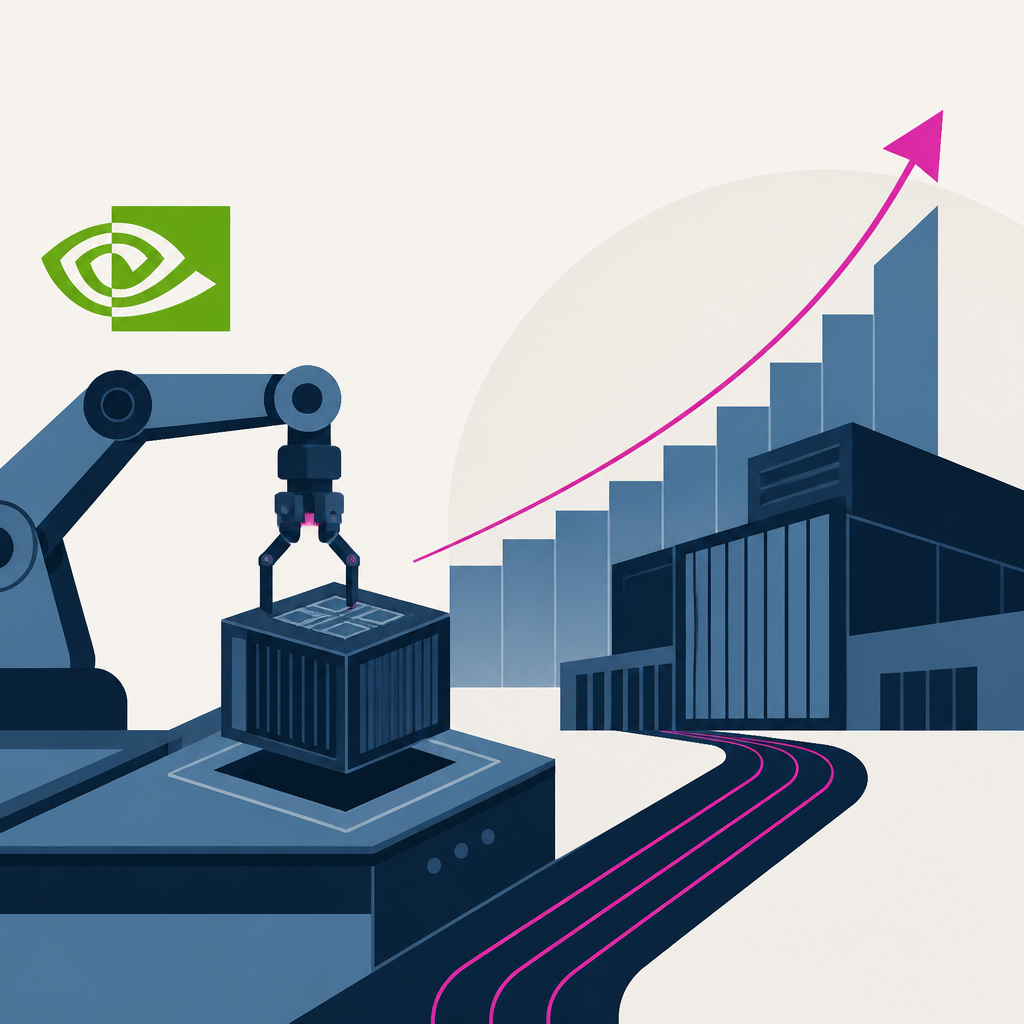
Nebius Group NV shares rose 34% after its second-quarter earnings beat expectations, driven by AI-optimized cloud demand and large data center deals. Revenue jumped 454% year over year to $582.3 million, helped by four data center contracts averaging more than $1 billion and spending that reached $5.7 billion versus $4.7 billion expected. The company is increasing data center capacity, including a 2026 contracted power target of 5 gigawatts and plans to bring over 1 gigawatt online annually from 2027.
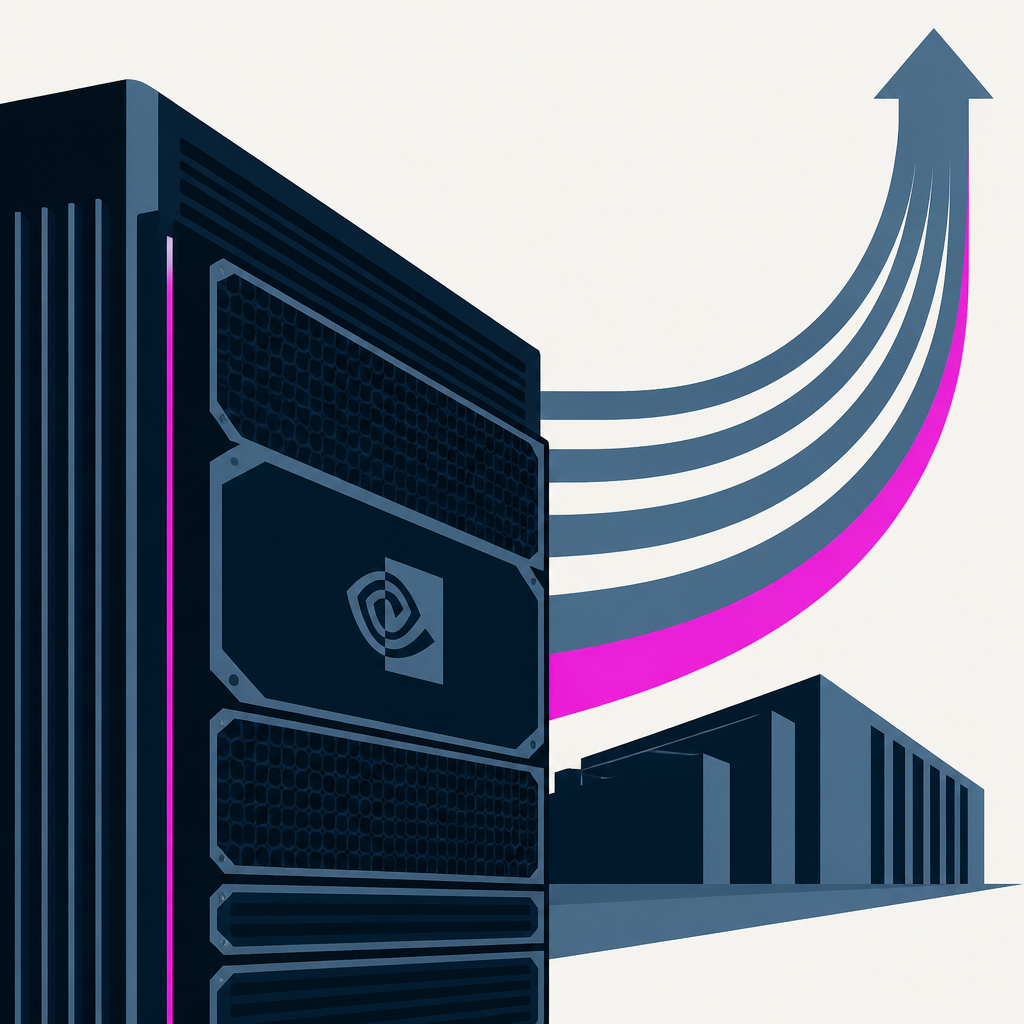
Nvidia announced partnerships with Apollo, BlackRock, Blackstone, Brookfield, Goldman Sachs, and KKR to set up financing platforms for AI infrastructure. The platforms aim to mobilize more than $500 billion from third-party investors. This shifts AI compute toward “productive infrastructure” financed by debt and institutional capital rather than relying on Nvidia’s or customers’ balance sheets, with Nvidia limiting its risk and potentially providing residual-value support up to 25% on some projects.
SpaceX and NVIDIA plan to launch Starmind AI1 satellites to run AI compute in Low Earth Orbit and relay results to Earth using Starlink laser links. Each satellite is described as drawing up to 250 kW at peak and needing deployable liquid radiators totaling 160 square meters. The proposal changes the cooling and networking model of AI infrastructure to reliance on slow infrared heat rejection and optical inter-satellite links, while leaving major risks from debris, space weather, and high launch-cost scaling unresolved.
Vertical AI deployment is pushing enterprises to tailor infrastructure stacks to industry-specific data, governance, and operational needs rather than relying on one-size-fits-all setups. It cites domain-specific open-weight models and notes a shift in hardware where Kioxia’s BiCS8 technology in CM9 and CD9P drives is replacing CM7 and CD8P drives. As a result, companies use vertically integrated, pre-validated “T-shirt size” infrastructure options and plan for production scale and either cloud or private data-center operations.
OneAdvanced deployed a UK-sovereign AI setup on its own AWS accounts by self-hosting Llama 4 Maverick and Llama Guard 4 with a RAG pipeline, a tool layer, and more than 50 task-specific Strands agents on ECS/SageMaker. It built and shipped over 50 agents in only three weeks, starting from a two-week Bedrock prototype. As a result, customer data stays in the UK with model inputs screened by Llama Guard 4 before main inference, and users can retrieve from indexed documents with source references.
Amazon SageMaker HyperPod with vLLM’s LMCache was extended using Managed Tiered KV Cache plus Intelligent Routing, with Curvine added as a shared NVMe (L2) layer to reuse KV cache across Pods and nodes. In a test deployment, it reported up to a 100% cross-Pod cache hit rate, up to a 2.7x improvement in TTFT, and about 56 ms cross-node L2 read latency for a ~1,900-token prompt. Workloads can shift from requiring P5 instances to running on lower-cost G6e instances by reducing cold-start re-prefill penalties when prompts share leading tokens.
Nebius Group reported Q2 2026 results far above expectations, with revenue up 454% YoY to $582.3 million and its AI cloud business rising 514% YoY to $574.9 million. The company attributed the gains to rapid GPU and data-center build-out, including capital expenditures of about $5.7 billion in the quarter and cash of roughly $8 billion. Revenue growth and improving cloud margins are being supported by new contracts and funding (including 12.7 million shares issued at an average $223.60 and $775 million secured debt), along with a plan to expand capacity to 5 gigawatts and bring over one gigawatt per year into operation starting in 2027.
Chris Alexiuk discussed NVIDIA’s Nemotron development, including model scaling, agent systems, and how routing/specalization and multimodal upgrades fit into production AI workflows. Nemotron 3 ships in three tiers with active parameter counts of about 3B, 12B, and 50B. The focus shifts from chatbots to long-running agent execution, enabled by smaller, cheaper models like Nemotron 3.5 Lightning and by evolving model routing toward broader orchestration layers for end users.
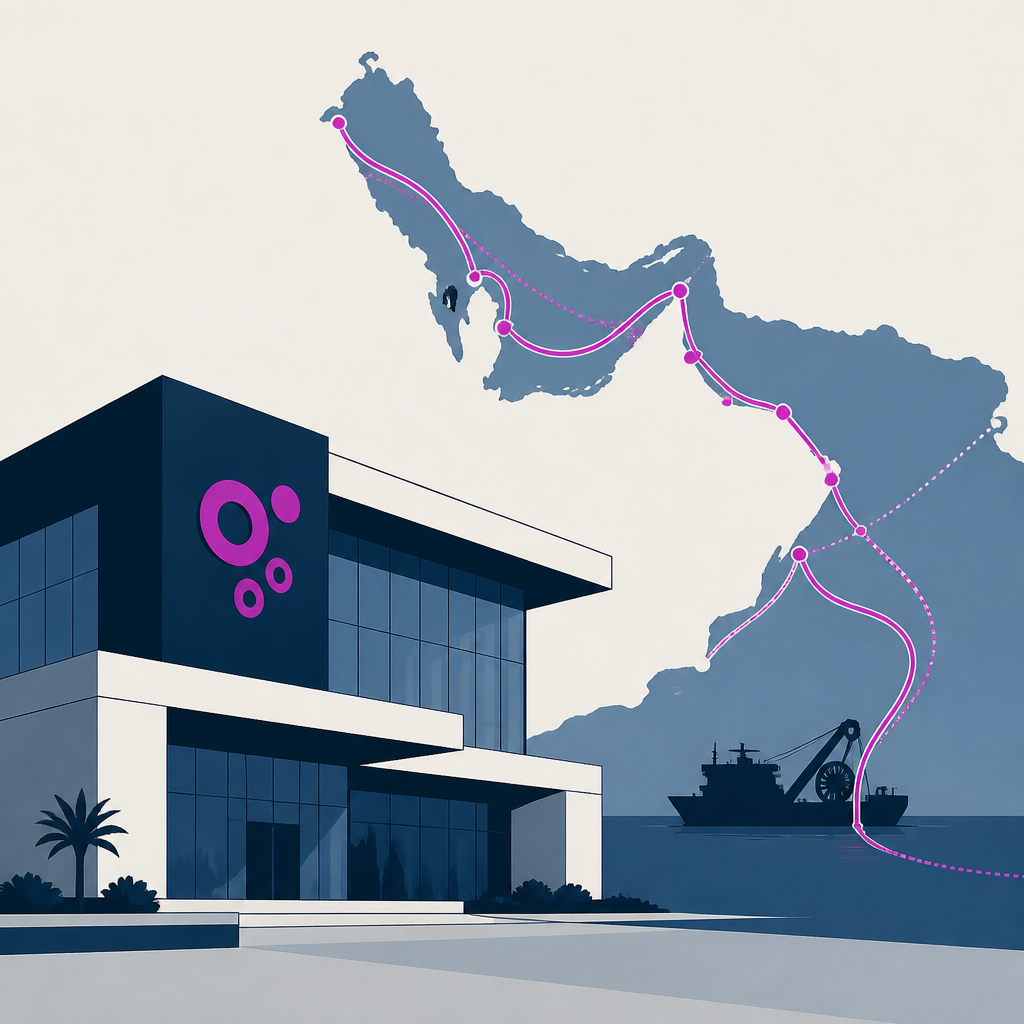
Gulf countries and telecom firms are building new fibre and subsea cable routes to gain more control over data connectivity as AI plans expand. Ooredoo’s Fibre in the Gulf (FIG) system is set for completion in late 2027 as a $500 million project spanning almost 2,000 kilometers. These build-outs aim to reduce reliance on Red Sea/Suez and related chokepoints, while highlighting operational risks like cable-laying limits around the Strait of Hormuz.
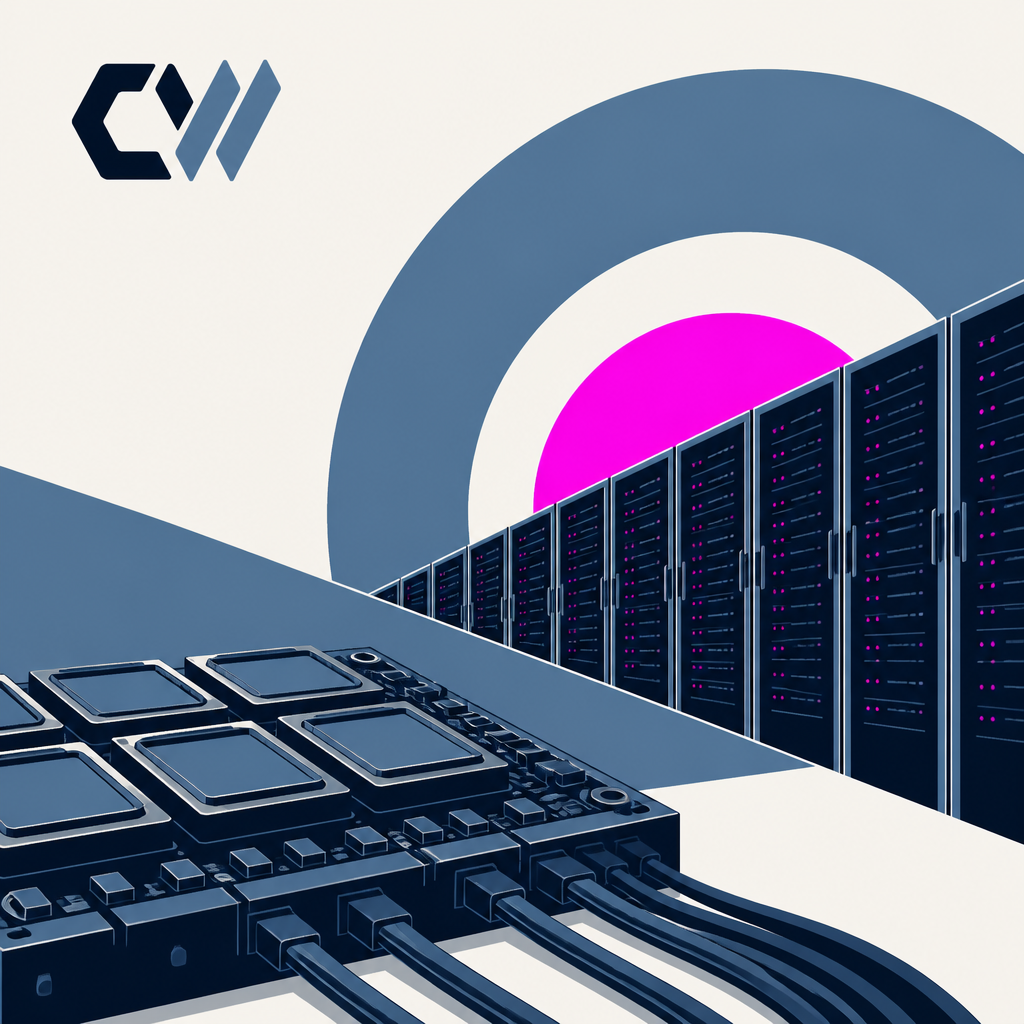
CoreWeave reported second-quarter revenue of $2.58 billion, with the CEO saying near-term AI infrastructure capacity is effectively sold out. Revenue backlog rose 246% year-over-year to $104.2 billion and included an additional ~$25 billion of net new customer commitments added in early Q3. The results and guidance drove a stock gain of more than 14% after hours and reinforced CoreWeave’s push to monetize GPU capacity via AI inference despite concerns about older hardware values and data-center restrictions.
NVIDIA announced partnerships with Apollo, BlackRock, Blackstone, Brookfield, Goldman Sachs, and KKR to set up independent financing platforms for AI infrastructure buildouts. The platforms target mobilizing over $500 billion of third-party capital to fund AI factories over time. As a result, NVIDIA compute is positioned as an investable, revenue-producing infrastructure asset with redeployable capacity backed by long-term institutional financing decisions, rather than project-by-project chip purchases and data center builds.
Every AI story that matters,
in your inbox by 8am.
TLDRocket reads all relevant sources, removes duplicate coverage, and summarises the
day in two minutes. Follow companies and topics for alerts, or get the
briefing in Slack. Free, no spam, unsubscribe anytime.
Reading TLDRocket needs no cookies, and the readership counts we rely on come from
our own cookieless analytics. Google Analytics is the exception: it sets cookies and
reports to Google, so it stays switched off until you allow it. You can change your
mind any time from “Cookie settings” in the footer.
Strictly necessary
Session security and form protection (tldrocket-session,
XSRF-TOKEN, 2 hours). The site cannot work without them,
so they need no consent.
Always on
Google Analytics 4 (_ga,
_ga_<id>, up to 2 years). Measures which
stories and sections readers use. Google acts as a third-party processor and may
store the data outside the EU. No advertising, no profiling, no data sold.