Crusoe raised $3.9 billion in a Series F to support large data center projects and smaller, truck-transportable modular “AI factories” it calls Spark. The round increases Crusoe’s valuation to $30.9 billion. It plans to finance existing sites used for OpenAI compute and expand modular deployments to reduce construction labor needs and local community backlash.
Freddo the robot was trained in a virtual simulation to walk, recognize a bottle, and grasp it in just minutes and then ran the resulting policy on its hardware.
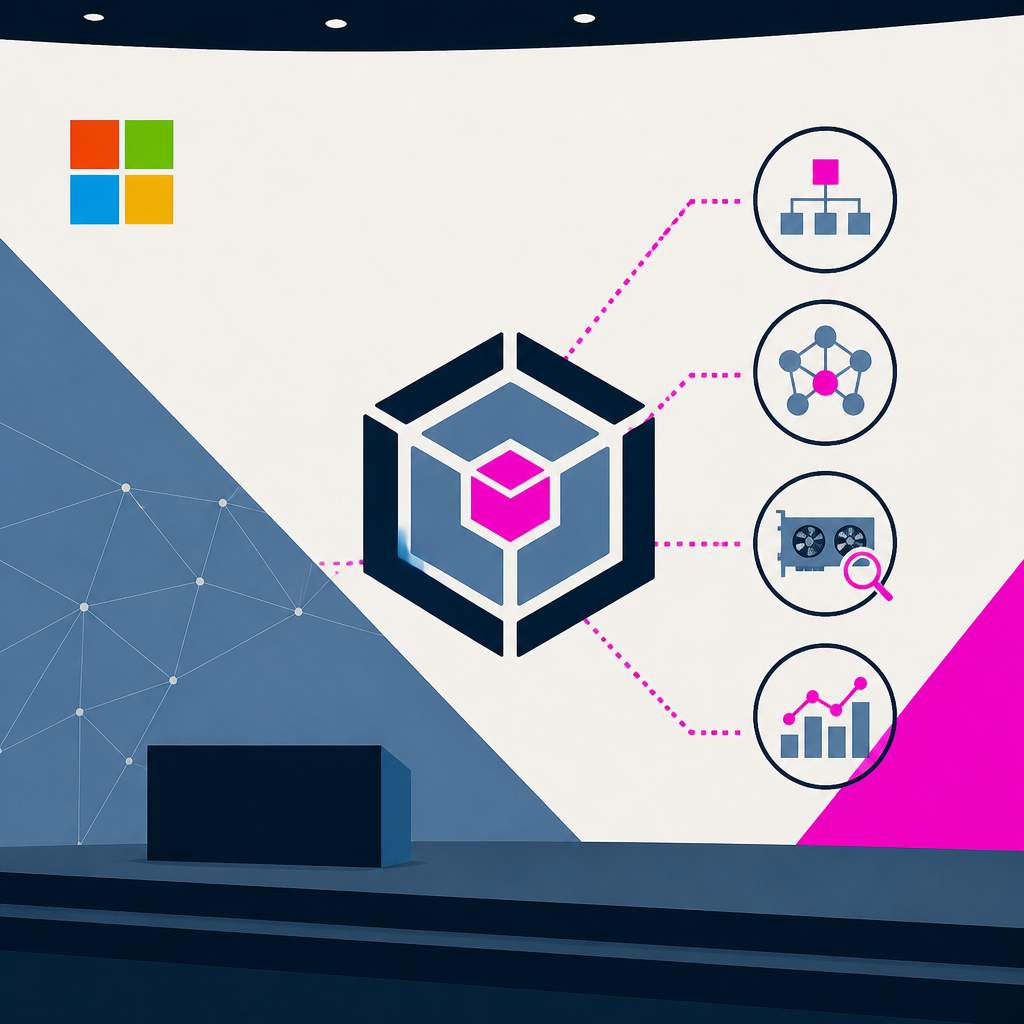
Microsoft open-sourced TauGrid, a Kubernetes-native platform that bundles queueing, Ray orchestration, GPU health monitoring, and observability for AI workloads into a single Helm install. It was released on August 28, 2026, under the MIT license with version 0.4.2 available via a Helm chart from Microsoft Container Registry. Platform teams now deploy AI job submission and execution through one install and use Tau evidence records to make runs more reproducible and auditable, with telemetry disabled by default but Azure Data Explorer observability still Azure-specific.
Intel researchers introduced BITCOS to compress ternary LLM weights by storing zero locations separately, without retraining or changing model outputs. BITCOS reduced storage to 1.485 bits per weight and increased decoding throughput by up to 18% on CPUs and 27% on GPUs. The smaller format speeds token decoding on many Intel platforms but does not help on bandwidth-rich CPUs like Lunar Lake where a fixed 2-bit kernel stays faster.
The Sequence Opinion (Issue 935) argues that Chinese frontier labs emphasize algorithmic efficiency while American labs pursue scaling via major infrastructure plans like OpenAI’s Stargate, and that this is often misframed as “cleverness vs purchasing power.” Issue 935 is the specific edition cited. The focus shifts to how each side decides whether to spend the next dollar on more computation or on making existing compute more productive, which can change model design and what training runs are worth attempting.
Apple is working on an AI server powered by its M-series Ultra chips. The server is expected to be released in 2029 with two or four M8 Ultra chips. As a result, Apple would be moving deeper into enterprise AI compute with a dedicated, chip-packed server offering.
Every AI story that matters,
in your inbox by 8am.
TLDRocket reads all relevant sources, removes duplicate coverage, and summarises the
day in two minutes. Follow companies and topics for alerts, or get the
briefing in Slack. Free, no spam, unsubscribe anytime.
Reading TLDRocket needs no cookies, and the readership counts we rely on come from
our own cookieless analytics. Google Analytics is the exception: it sets cookies and
reports to Google, so it stays switched off until you allow it. You can change your
mind any time from “Cookie settings” in the footer.
Strictly necessary
Session security and form protection (tldrocket-session,
XSRF-TOKEN, 2 hours). The site cannot work without them,
so they need no consent.
Always on
Google Analytics 4 (_ga,
_ga_<id>, up to 2 years). Measures which
stories and sections readers use. Google acts as a third-party processor and may
store the data outside the EU. No advertising, no profiling, no data sold.