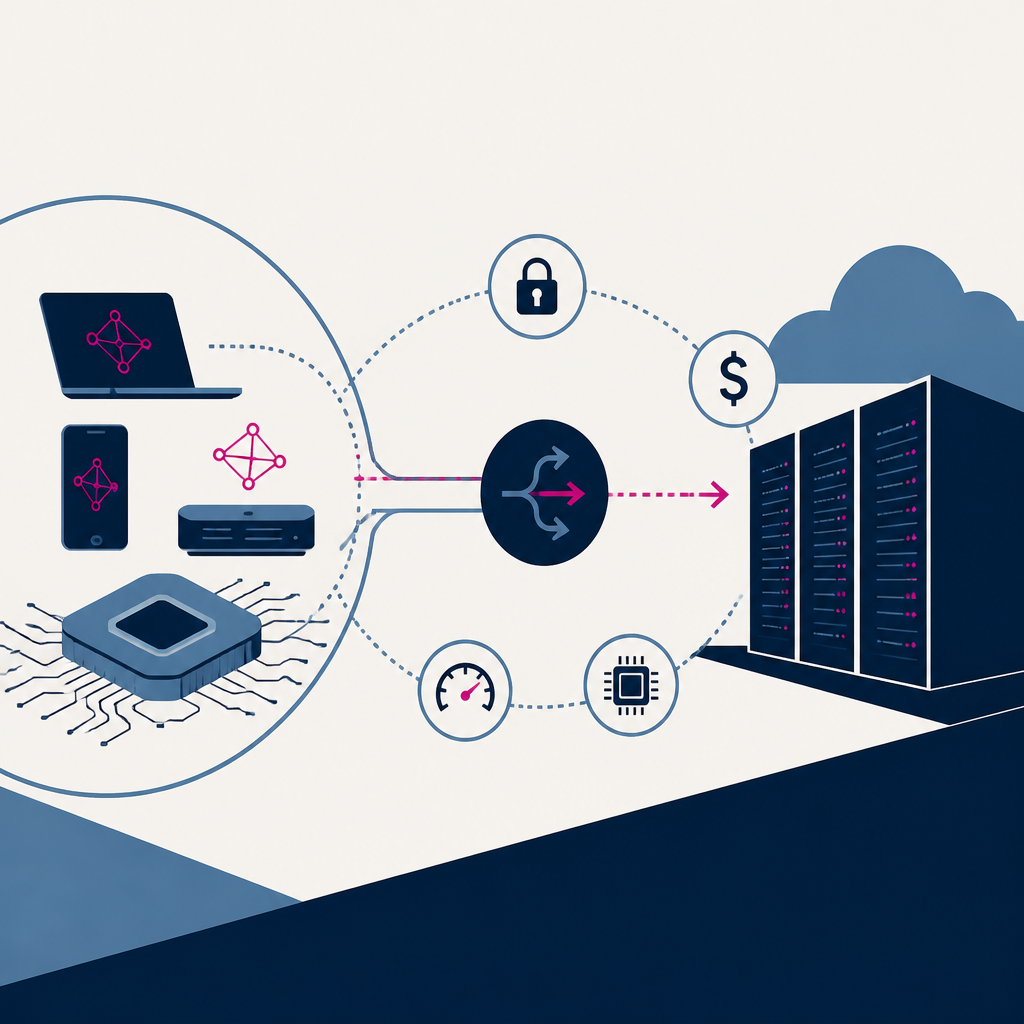
Q.ANT released the Q.ANT Native Computing Toolkit so developers can write and test software for its light-powered AI chips via a simulator on regular computers. The kit is free on GitHub under a license that allows commercial use. Access to the real photonic chips is still limited to a few research centers, so developers can start building now but can only validate energy and performance claims once cloud or on-site hardware access arrives in the coming months.
Vast Data introduced DataEnclave to let enterprises and AI labs deploy proprietary models in secure compute so data transfer risk works in both directions. It uses Nvidia’s Confidential Computing technology. As a result, companies can run models without sharing data or handing over model weights, and the market will test the approach through early access into general availability.
MJWarp moved a MuJoCo robot pick-and-place workflow onto NVIDIA GPU simulation by porting a compatible MJCF model to batched Warp physics and validating that it matches the CPU setup. The walkthrough scales the same scene to 2,048 parallel MJWarp environments and advances them in one call to the step function on the GPU. The result is higher aggregate throughput (more world-steps per second) for reinforcement learning and large-scale sampling instead of focusing on single-environment step latency.
Intel’s Dr. Olena Zhu discussed hybrid AI, pairing local or edge models with a frontier cloud model to coordinate tasks. The episode highlights routing decisions across privacy, cost, capability, and hardware as key infrastructure choices. This shifts focus from picking a single model to building systems that decide where each part of the work runs.
CoreWeave is organizing Fully Connected 2026, a three-day conference for AI leaders and engineers focused on production AI infrastructure and deployment. Standard general admission costs $899, with the event running September 29 to October 1, 2026 at Moscone South in San Francisco. The schedule adds keynotes, breakout sessions, and hands-on labs, plus networking and receptions, while giving attendees access to product and engineering teams building the stack.
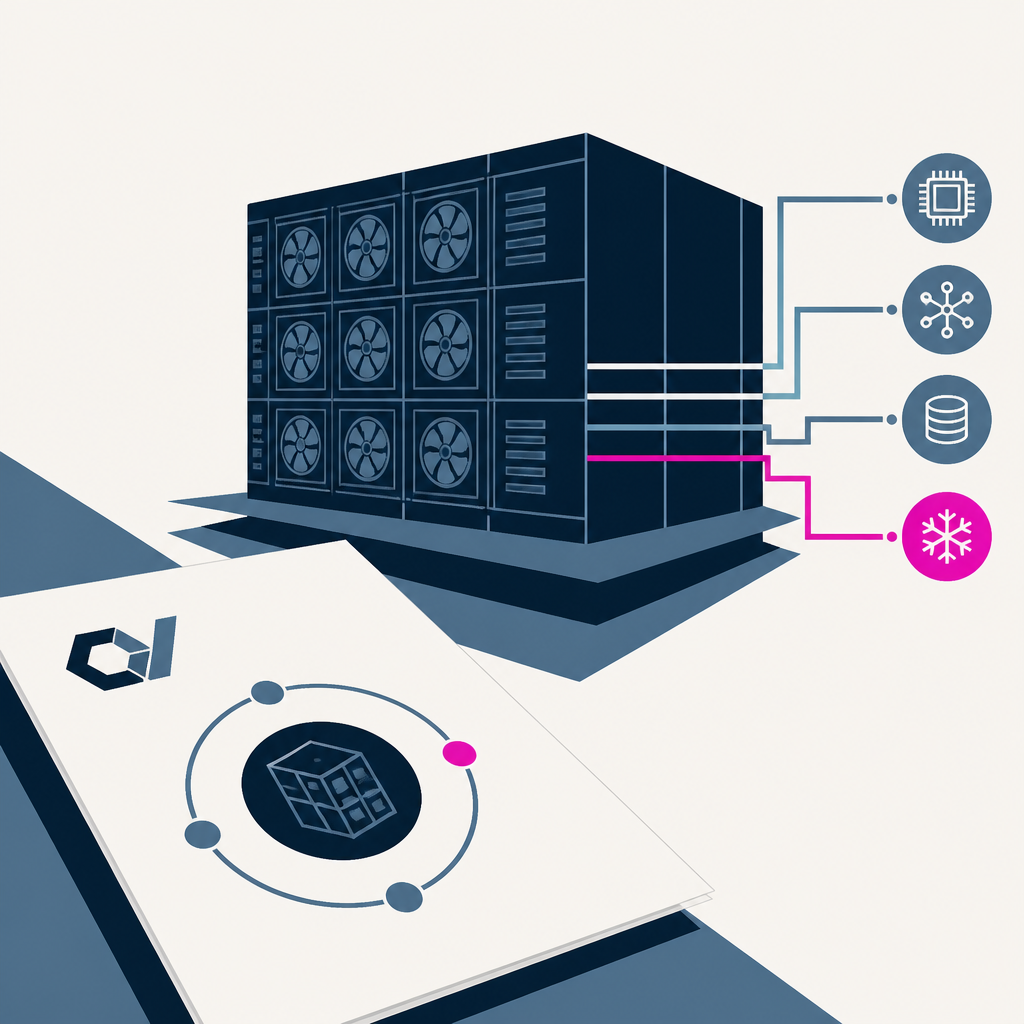
CoreWeave describes how multi-rack NVIDIA Vera Rubin NVL72 clusters are brought up by tightly coordinating compute, networking, power, and liquid cooling with automated validation to avoid distributed-system bottlenecks. It says each Rubin GPU is served by two ConnectX-9 SuperNICs delivering up to 1.6 Tb/s backend connectivity per GPU. As racks scale out, the process shifts from per-node checks to rack-, fabric-, and synchronized workload testing so stragglers and underperforming links are caught before production.
CoreWeave brought up multi-rack NVIDIA Vera Rubin NVL72 clusters on CoreWeave Cloud, creating a single scale-out setup for running training and inference across hundreds of Rubin GPUs. Each NVL72 rack pairs 72 Rubin GPUs with 36 Vera CPUs. CoreWeave also added cross-region write acceleration and a new Archive storage tier to keep AI data closer to compute and reduce checkpoint write pauses.
CoreWeave’s Chen Goldberg argues that an AI cluster should be treated as one integrated supercomputer rather than separate components like GPUs. She points to Kubernetes deployments needing an evolving resource model that accounts for compute, networking, storage, and cooling working together. As a result, cloud thinking shifts toward supporting AI agents and managing infrastructure as a single coordinated system.
Microsoft Research reports that running physical AI inference only on a robot’s onboard GPU can reduce performance, battery life, and scalability, and that offloading inference to edge or cloud GPUs improves results for mobile manipulation. Offloading increased battery life by up to 160% when replacing an onboard GPU (measured on the Stretch-3 robot). The Physical AI Toolchain was updated with Kubernetes-based tooling that lets developers containerize, deploy, and orchestrate offloaded inference across robots, edge, and cloud.
Sakeena Fiza, an NVIDIA validation engineer, describes how her team brings new data center systems up from first power and then hunts for failure causes across hardware, firmware, software, and manufacturing. A rack can involve close to 500,000 components that must be proven to work together under real conditions before mass production. This process helps catch problems before customers encounter them, making NVIDIA hardware more resilient at scale.
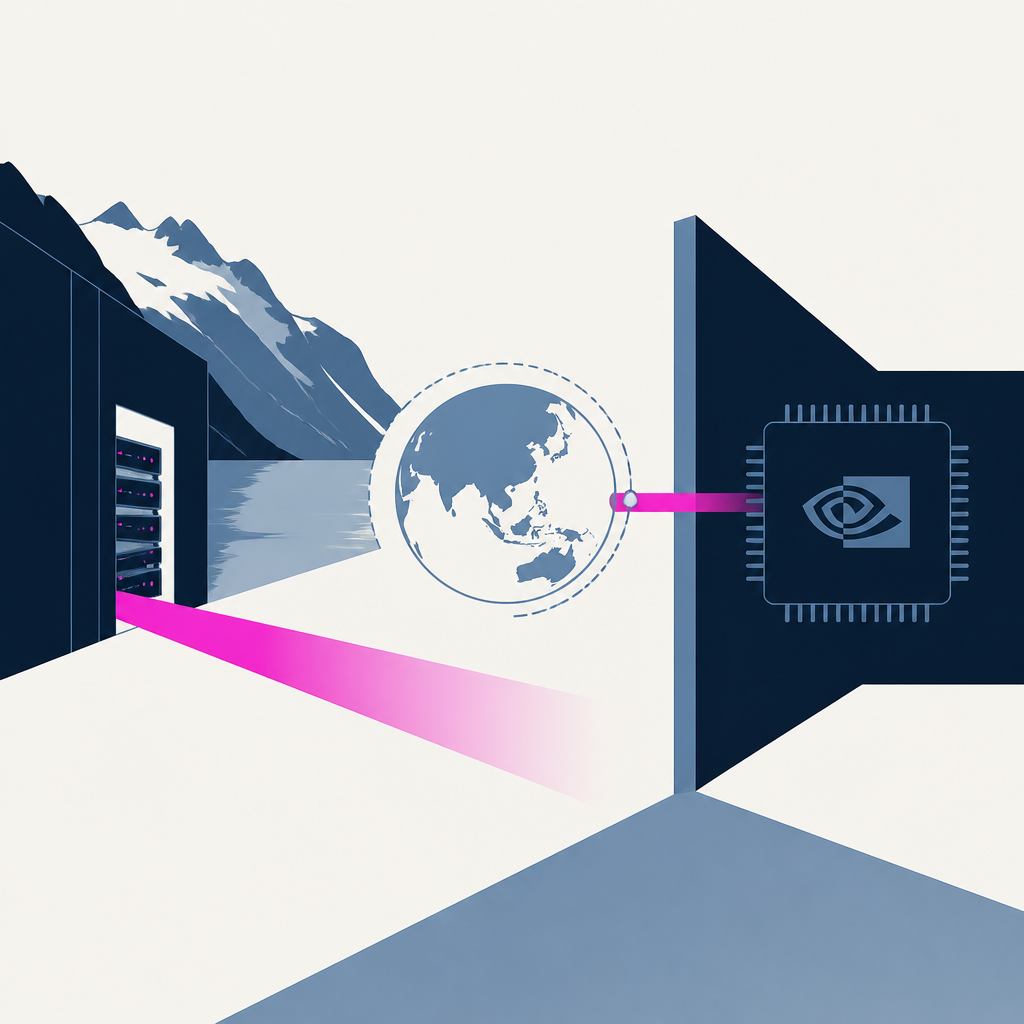
Nscale’s $35 billion IPO filing and exhibits show that ByteDance (TikTok’s parent) used Nscale’s Norway cloud facility to access Nvidia chips it otherwise couldn’t buy in China, via a Singapore subsidiary.
The issue reports that the cost of achieving a given level of AI performance has dropped about 47% per quarter over the past three years. The article argues that cheaper AI can lead to higher total spending by enabling more agents, while harder tasks still get more expensive even as capability improves. As a result, organizations may spend more overall and allocate more budget toward difficult work rather than only optimizing per-call price.
SPRIND and NADI launched the AI-Native Chip Design Challenge to fund pan-European efforts to reinvent chip design processes. It commits €40 million over 20 months, selecting seven teams for €2.6 million each in Stage 1 from November to July 2027. The programme aims to move chip development from years to weeks and produce production-ready chip designs for AI training and inference while teams receive coaching to reach market readiness.
Every AI story that matters,
in your inbox by 8am.
TLDRocket reads all relevant sources, removes duplicate coverage, and summarises the
day in two minutes. Follow companies and topics for alerts, or get the
briefing in Slack. Free, no spam, unsubscribe anytime.
Reading TLDRocket needs no cookies, and the readership counts we rely on come from
our own cookieless analytics. Google Analytics is the exception: it sets cookies and
reports to Google, so it stays switched off until you allow it. You can change your
mind any time from “Cookie settings” in the footer.
Strictly necessary
Session security and form protection (tldrocket-session,
XSRF-TOKEN, 2 hours). The site cannot work without them,
so they need no consent.
Always on
Google Analytics 4 (_ga,
_ga_<id>, up to 2 years). Measures which
stories and sections readers use. Google acts as a third-party processor and may
store the data outside the EU. No advertising, no profiling, no data sold.