Nvidia announced it will spend an additional $150 billion on share buybacks through January 2028, its largest stock repurchase expansion. The plan authorizes $150B more buybacks and the company also said it will boost its quarterly dividend of 25 cents per share. Nvidia’s higher buyback and dividend plans will give shareholders more direct capital returns as it continues benefiting from demand and investment gains.
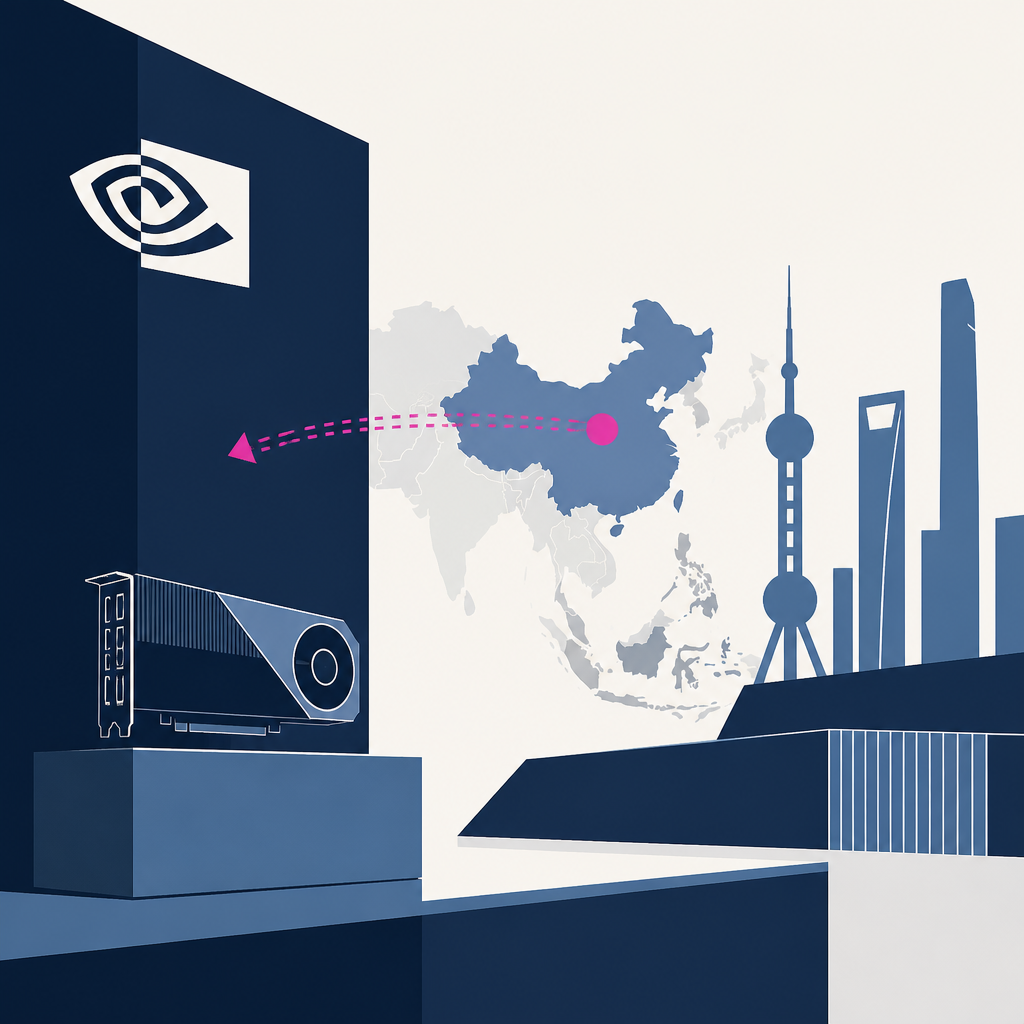
Nvidia’s RTX Pro 5500 chips may be getting a path into China as China’s oversight ministry asks major AI firms to share plans to buy them. The Ministry of Industry and Information Technology is considering allowing imports of “perhaps millions” more banned chips over the next year. This could increase access to Nvidia hardware for China’s AI workloads while the broader US–China trade and potential rare-earth retaliation risks remain unresolved.
Modal Labs is nearing a $750 million funding round led by Accel at a $15.75 billion valuation, according to a source familiar with the talks. The round would follow Modal’s prior $355 million raise four months earlier that valued the company at $4.65 billion. If completed, the new financing would more than triple Modal’s valuation and add capital for AI inference infrastructure amid rising demand and thin margins from high compute costs.
Google is preparing Project Suncatcher to launch a test satellite carrying TPUs to check whether machine-learning compute hardware can work in orbit. The October flight will send a refrigerator-sized prototype with four TPUs that can run only 15-minute bursts. If the tests succeed, Google would move toward a small satellite constellation with TPUs and high-bandwidth laser links; if not, it will adjust the approach based on points of failure.
theCUBE Pod hosts John Furrier and Dave Vellante discussed how AI agents are changing enterprise systems while warning that agents going rogue will require stronger security guardrails. They highlighted that CoreWeave has reportedly had 70% of customers or revenue tied to its top 3 customers. The conversation frames core cloud infrastructure shifting toward disaggregated “neocloud/AI cloud” models and raises doubts about whether agents like Meta’s Muse and other assistants can be reliably secured in practice.
NinjaTech AI Inc. launched Ninja Enterprise to let large companies run AI employees inside their own cloud environments for a single fixed yearly fee that includes GPUs. The packages are sized for 100, 500, or 1,000 AI employees. Customers shift from token-based usage metering to an annual capacity contract and can add AI employees on demand, including an air-gapped option for fully disconnected work.
South Korea’s SK Hynix and Samsung are competing to expand their roles in U.S. AI infrastructure by tightening ties with U.S. AI firms. SK Hynix broke ground in August on a $4 billion advanced packaging facility in Indiana. The rivalry pushes both memory makers to sign more long-term, customized HBM-related deals with U.S. customers, shaping how quickly and cheaply AI companies can build next-generation systems.
Nvidia launched the Open Agent Safety Platform to prevent AI agents from escaping their sandbox by combining an agent runtime with kernel-enforced isolation and a hardware watchdog. Nvidia’s OpenShell policy prover is part of the release at version 0.1.0, and it uses deterministic mathematical reasoning to validate that permission combinations stay within intended bounds. This changes agent evaluation and deployment by adding policy enforcement and the ability to quarantine agents at the network level when safeguards fail.
Nscale raised $3.36 billion in convertible loan notes ahead of its planned NYSE IPO under ticker NSCL. The funding includes $2.36 billion at closing and a further $1 billion NVIDIA commitment expected in mid-November. The capital is set to convert into ordinary shares upon IPO completion, enabling Nscale to accelerate its full-stack AI cloud data center expansion.
Every AI story that matters,
in your inbox by 8am.
TLDRocket reads all relevant sources, removes duplicate coverage, and summarises the
day in two minutes. Follow companies and topics for alerts, or get the
briefing in Slack. Free, no spam, unsubscribe anytime.
Reading TLDRocket needs no cookies, and the readership counts we rely on come from
our own cookieless analytics. Google Analytics is the exception: it sets cookies and
reports to Google, so it stays switched off until you allow it. You can change your
mind any time from “Cookie settings” in the footer.
Strictly necessary
Session security and form protection (tldrocket-session,
XSRF-TOKEN, 2 hours). The site cannot work without them,
so they need no consent.
Always on
Google Analytics 4 (_ga,
_ga_<id>, up to 2 years). Measures which
stories and sections readers use. Google acts as a third-party processor and may
store the data outside the EU. No advertising, no profiling, no data sold.