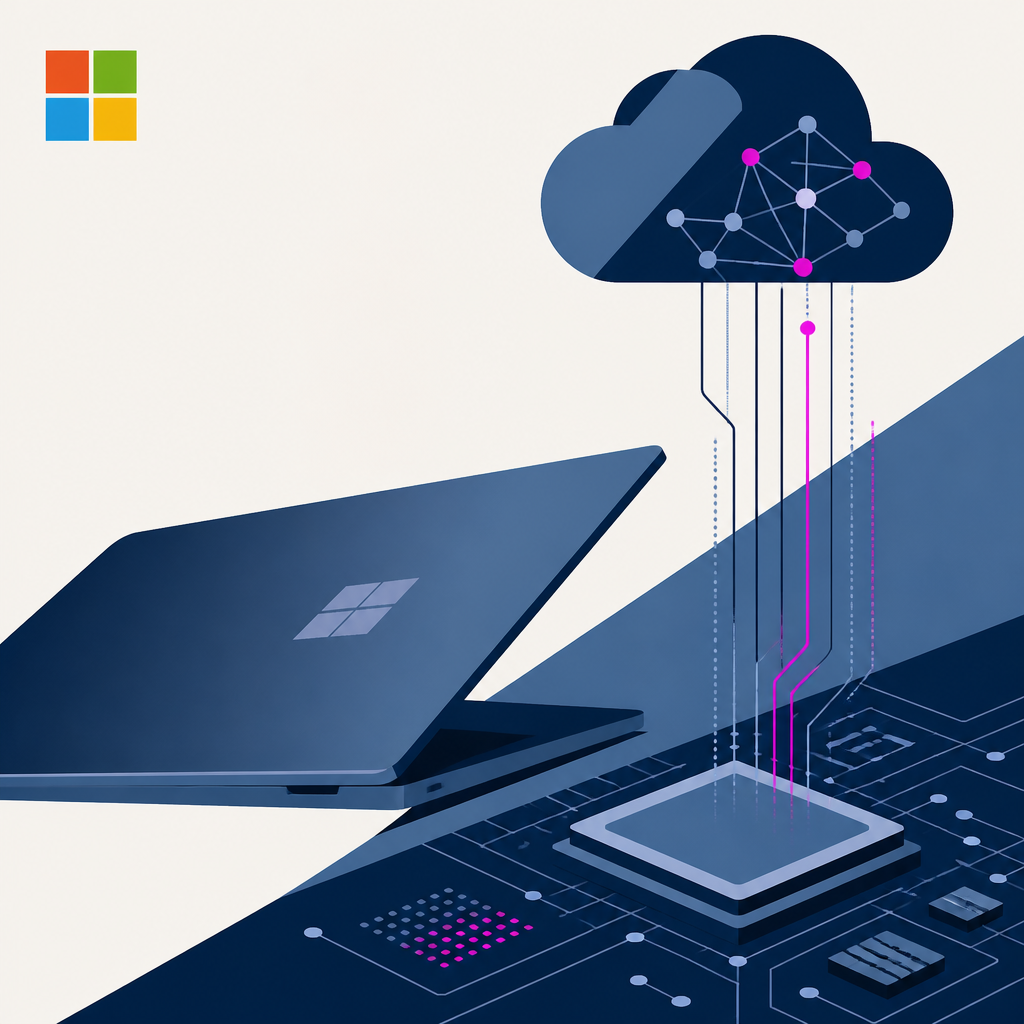
Microsoft unveiled Windows updates aimed at adding agentic AI capabilities directly into the Windows PC experience, tying cloud AI and local AI tools together with the reworked Copilot. The Surface Laptop Ultra it showcased will cost $2,599 and be available starting Oct. 16. Copilot will be redesigned as a central Windows “super app” with more native, potentially offline task execution and an Autopilot feature for running agent-style tasks, while some shown functions remain unavailable.
Microsoft unveiled new Surface Laptop Ultra and Surface RTX Spark Dev Box PCs built around Nvidia’s RTX Spark chip, along with a revamped Windows 11 that adds Execution Containers for sandboxing AI agents. The Surface Laptop Ultra starts at $2,600 and the dev box starts at $6,000. Execution Containers will roll out to all Windows 11 users, and the new hardware is aimed at running AI models locally on-device.
Microsoft announced Windows as a more secure “hybrid intelligence” platform where AI agents can run locally or in the cloud inside OS sandboxes with company-controlled access rules. Surface Laptop Ultra with Nvidia’s RTX Spark chip starts preorders at $2,599 and is slated to ship from next Friday. Microsoft will generally release Windows 11 Microsoft Execution Containers (MXC), add Copilot local-file and search command actions to Copilot+ PCs, and expand the set of on-device model providers beyond OpenAI.
Kubernetes is the dominant container orchestration platform, but its development and operations teams still clash over self-service speed versus operational stability. The CNCF says 82% of container users run Kubernetes in production. AI-driven automation is suggested to help teams monitor clusters, check logs, and predict outages while easing Kubernetes management and scaling pressures from AI inference workloads.
Microsoft launched the Surface Laptop Ultra, a 15-inch touchscreen laptop positioned for on-device AI use.
It supports running AI models up to 120B parameters locally.
This adds a new high-end Surface option with NVIDIA Blackwell RTX graphics and up to 128GB unified memory for local model runs rather than relying on the cloud.
Cornerstone OnDemand built Orion AI, a multi-agent system using Amazon Bedrock and Strands Agents to automate database diagnosis and operational workflows that previously required manual handoffs. Database diagnosis time fell from 45 minutes to 10 minutes, a 78% reduction. The change turned reactive, multi-step firefighting into faster, guided investigations with single-interaction lifecycle handling and reduced alert noise.
Laptops from Dell, Lenovo, MSI, HP, and Asus using Nvidia’s new RTX Spark chip launched with prices that target high-end MacBook Pro models. Some configurations start at $2,599 with an 18-core CPU, 24GB unified memory, and 512GB storage. Higher-spec models increase the costs, including much higher “kitted-out” pricing versus lower starting configurations.
Microsoft held a Windows and Surface keynote in San Francisco and announced the Surface Laptop Ultra along with related Windows and Surface updates. The Surface Laptop Ultra starts at $2,599 and ships on October 16th. Copilot’s “Hybrid Intelligence” will be updated to let it use files on the PC for actions, and the Surface RTX Spark Dev Box goes up for preorder at $5,999.
Microsoft held a live event in San Francisco focused on how local AI will shape the next Windows and Surface PC chapter. The event centered on the new Nvidia RTX Spark platform, aimed at running local AI models on new laptops like the Surface Laptop Ultra. This sets expectations for new Windows and Surface devices and features that highlight on-device AI, enabled by Nvidia GPUs.
Lambda is reportedly raising up to $4B from Blackstone and Coatue at a $14.5B pre-money valuation as its potentially last private round ahead of a 2027 IPO. Its backlog of unfilled orders rose from $15B in June to $50B in September. The reported deal pricing and timeline could change based on how much of that backlog turns into delivered capacity and revenue by the time Lambda files for an IPO.
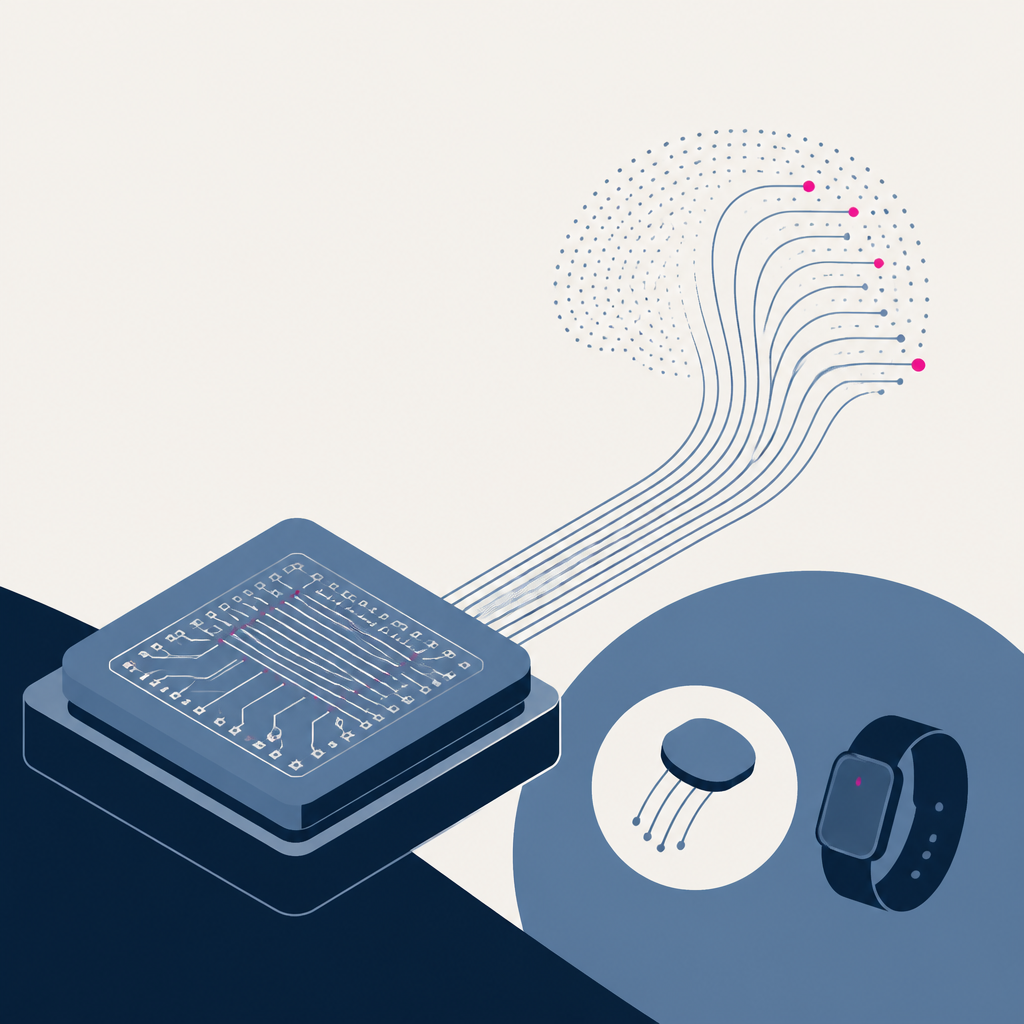
MintNeuro, an Imperial College London spinout, raised funding to scale purpose-built chips for neural devices, including implants and wearables, and it already has working silicon and partner integration milestones.
Planned new grid-connected gas power in the U.S. has nearly tripled as data-center electricity demand from artificial intelligence grows, while planned wind additions decline. Planned gas capacity through 2030 rose to 60.4 gigawatts, up from 20.4 gigawatts in early 2023. As a result, more states are shifting toward gas projects (with Texas and four others accounting for about 60% of the total planned capacity) and more communities are pushing back, including delays and cancellations of data centers.
SpaceX is negotiating about $40 billion in financing to buy Nvidia chips for its expanding A.I. data centers, with Apollo Global Management leading the deal. The package would include about $10 billion in bank loans and $30 billion in investment-grade bonds, expected to close in 2027. As a result, SpaceX plans to scale Nvidia hardware use—doubling the number of Nvidia chips at its Colossus 2 site by December—and raise more debt to support its A.I. compute operations.
Google’s Project Suncatcher launched a test satellite carrying four of its AI chips into orbit to check whether the hardware can survive and operate in space. The prototype went up on October 1 and is designed around launch-cost parity at about $200 per kilogram to compete with Earth data centres. The effort will shift from a single-server proof to further in-orbit tests in 2027 and depends on upcoming launch pricing and other companies’ growing in-orbit AI efforts.
Caterpillar and CoreWeave are partnering to speed up training for physical AI systems used in construction machines. They report that the feedback loop for using newly annotated field data in simulations has been cut from months or weeks to hours within a workday. As a result, physical AI development relies on much larger data and updated AI cloud infrastructure to handle terabytes of sensor and control data per machine per day.
Every AI story that matters,
in your inbox by 8am.
TLDRocket reads all relevant sources, removes duplicate coverage, and summarises the
day in two minutes. Follow companies and topics for alerts, or get the
briefing in Slack. Free, no spam, unsubscribe anytime.
Reading TLDRocket needs no cookies, and the readership counts we rely on come from
our own cookieless analytics. Google Analytics is the exception: it sets cookies and
reports to Google, so it stays switched off until you allow it. You can change your
mind any time from “Cookie settings” in the footer.
Strictly necessary
Session security and form protection (tldrocket-session,
XSRF-TOKEN, 2 hours). The site cannot work without them,
so they need no consent.
Always on
Google Analytics 4 (_ga,
_ga_<id>, up to 2 years). Measures which
stories and sections readers use. Google acts as a third-party processor and may
store the data outside the EU. No advertising, no profiling, no data sold.