CoreWeave announced CoreWeave Forge to connect training, inference, and evaluation in an open, full-stack AI cloud. The platform is tied to its newly announced development platform and CoreWeave recently earned SemiAnalysis’ Platinum ClusterMAX rating for a third consecutive time. As a result, production learnings can feed back into improving models and agents, and customers can start with specific inference use cases on the same platform.
The U.S. Federal Reserve’s latest policy meeting minutes said the A.I. infrastructure buildout is contributing to stubborn inflation alongside tariffs and energy costs. Inflation was 3.8% in August on the Fed’s preferred PCE measure and core inflation was 3.4%, with an A.I.-related rise in technology consumer-goods prices cited. The Fed’s outlook supports another rate increase by year-end, potentially keeping inflation-fighting policy in place as A.I. investment continues to raise demand and prices.
Amazon Bedrock AgentCore added managed pay-per-inference payments so AI agents can pay BlockRun for model inference during runtime without manual approval. Incarna integrated the full AgentCore payments flow in 3 days and, during the beta, agents processed over 1,000 payments at $0.001 to $0.05 per call that settled individually on-chain. As a result, pay-per-inference runs in production with per-request spending controls enforced by infrastructure, and transaction settlement becomes auditable via verifiable on-chain records.
AMD will expand its ML-based FSR 4 upscaling from some current handheld support to more handhelds. It plans to do this by the end of 2026. AMD says the rollout will depend on which handhelds are compatible, and it may require a new FSR4-capable chip.
Amazon SageMaker HyperPod is presented with a reference multi-tenant design so multiple internal teams can share one GPU cluster while keeping workload isolation, fair scheduling, and per-team cost visibility. The example architecture shows two teams sharing a single HyperPod EKS cluster using separate Kubernetes namespaces plus per-team identity and governance controls. This shifts operations from unmanaged, cross-team usage to a setup where access is tied to IAM Identity Center groups and namespaces, and spend can be attributed per team via namespace-level cost allocation.
Ambrosia Energy CEO Ben Longmier and Bloom Energy SVP Bill Thayer discussed how AI scaling is constrained by physical infrastructure on the Smart Systems Stage at TechCrunch Disrupt 2026. The session is scheduled for October 13 at 8 a.m. PT. The talk shifts attention from AI models and chips to opportunities in power, grids, data centers, cooling, and related infrastructure markets.
AI development is forcing hyperscale data centers to redesign data lakes because AI training and inference require continuous, concurrent, high-throughput access rather than batch-style retrieval. The article points to recent demonstrations of 256TB NVMe drives built for AI workloads. As a result, storage architectures and cloud storage tiers shift toward higher-performance all-flash offerings and higher-capacity QLC NAND systems, with SSD designs focusing on reducing unnecessary data movement to manage endurance and efficiency.
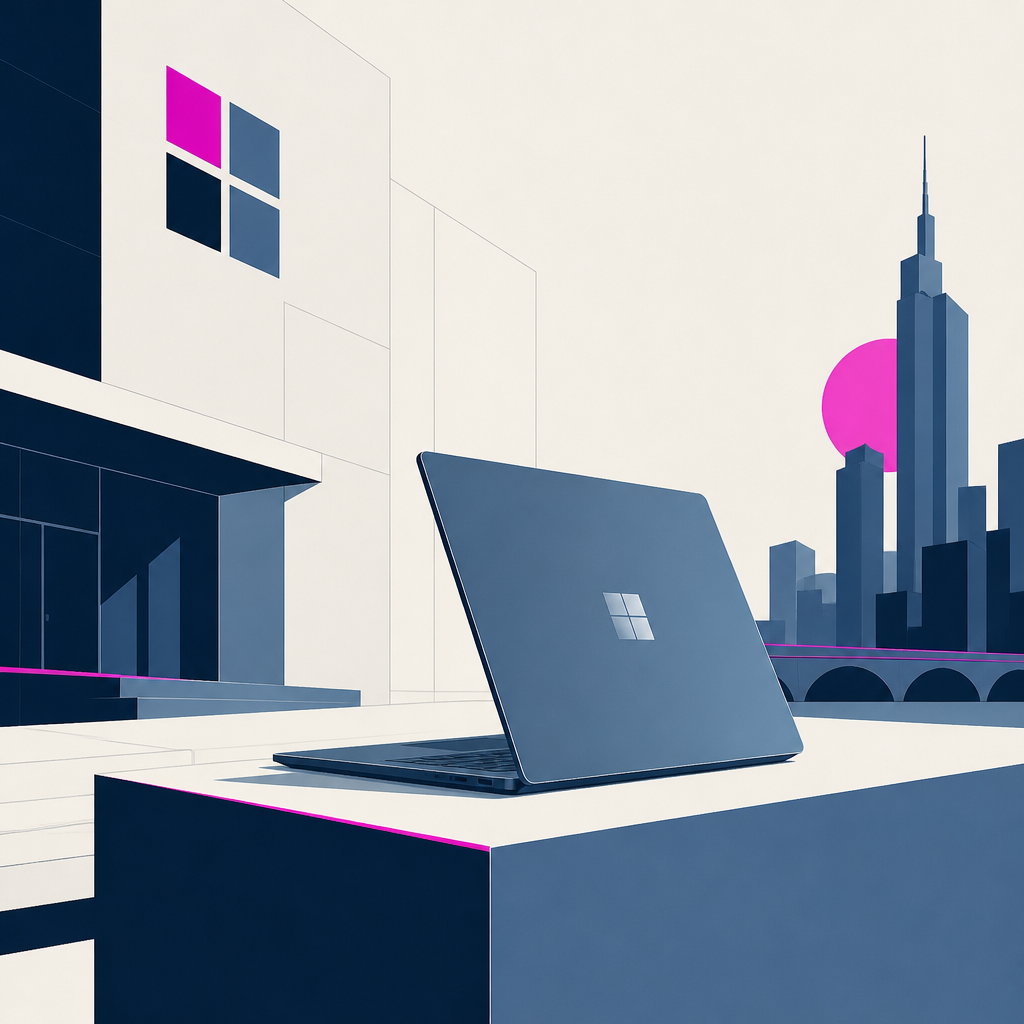
Microsoft opened Surface Laptop Ultra preorders and confirmed the device will ship on October 16 at a starting price of $2,599. The entry-level model starts at $2,599. The listings specify availability and pricing for the 15-inch mini-LED laptop, including its breakaway USB-C port and the option for high-end configurations aimed at intensive AI developer workloads.
Samsung Electronics expects its quarterly operating profit for the three months to the end of September to rise as memory-chip demand from AI data centres surges.Operating profit is estimated at 107.4tn won (about $80bn), a nine-fold increase versus a year earlier. Higher chip prices and strong earnings from AI-linked memory chips will keep lifting Samsung’s results, with full earnings due at the end of October.
Microsoft used its first live event in two years to announce the Surface Laptop Ultra, plus a set of Windows 11 changes focused on local AI and agentic workflows for developers and home users. The Surface Laptop Ultra starts at $2,599, shipping on October 16 with up to 128GB of LPDDR5x unified memory and either a 5,120-core or 6,144-core Blackwell GPU. Users will get new Surface AI-friendly hardware and Windows 11 updates intended to better support running and deploying local AI and agent-style tasks on-device.
Every AI story that matters,
in your inbox by 8am.
TLDRocket reads all relevant sources, removes duplicate coverage, and summarises the
day in two minutes. Follow companies and topics for alerts, or get the
briefing in Slack. Free, no spam, unsubscribe anytime.
Reading TLDRocket needs no cookies, and the readership counts we rely on come from
our own cookieless analytics. Google Analytics is the exception: it sets cookies and
reports to Google, so it stays switched off until you allow it. You can change your
mind any time from “Cookie settings” in the footer.
Strictly necessary
Session security and form protection (tldrocket-session,
XSRF-TOKEN, 2 hours). The site cannot work without them,
so they need no consent.
Always on
Google Analytics 4 (_ga,
_ga_<id>, up to 2 years). Measures which
stories and sections readers use. Google acts as a third-party processor and may
store the data outside the EU. No advertising, no profiling, no data sold.