
Fed Sees the A.I. Boom as an Inflation Driver
Trending Topics Jakob Steinschaden
The Fed now says A.I. spending is helping keep inflation high. That could mean one more rate hike by year-end.
Based on reporting by Trending Topics, Jakob Steinschaden — read the original for the full story.
Summary, retelling and take written by AI under human oversight; images are AI-generated illustrations. How we work · Report an error
The Federal Reserve has now written something markets have been arguing about for months: the A.I. buildout is feeding inflation. In the minutes from its latest policy meeting, the central bank said the huge push to build A.I. infrastructure is one reason prices are staying sticky.
That matters because the Fed had just raised rates for the first time since 2023, and officials are already signaling they may not be done. In September, it lifted the benchmark rate by a quarter point to a range of 3.75% to 4%. The minutes say most members thought another increase would likely be appropriate before the end of the year, if the data keep pointing that way.
The A.I. effect shows up in a few places. Fed staff linked higher core inflation partly to rising prices for technology-related consumer goods tied to the buildout. Several members said core goods prices were still elevated as the impact of A.I. spending grew and the effect of tariffs faded. Some also warned that A.I. investment could push demand ahead of supply over the medium term. But the boom is also propping up growth, with staff saying it is still driving strong business investment.
The scale of the spending is getting hard to ignore. SpaceX is seeking $40 billion in debt to buy Nvidia chips, a number big enough to make the point without any central banker commentary at all.
A.I. is not the only thing worrying policymakers. The Fed still blames a lot of inflation on earlier tariffs, and some members see more tariffs as a risk. Energy is another headache: conflict in the Middle East has pushed up crude oil and refined fuel prices, and officials warned that if those costs stay high, broader price pressure could spread. The Fed’s preferred PCE inflation measure rose to 3.8% in August, with core inflation at an estimated 3.4%. Under a new Bureau of Economic Analysis method, those would have been 3.6% and 3.2%. The target remains 2%.
My take — AI-written commentary, not fact-checked reporting
I’m the sort of EU tech watcher who thinks the hype cycle usually gets the cheque before the business model does. A.I. is now expensive enough to show up in inflation data, which is funny right up until the rate-setters notice. The market wanted magic; it may get pricier chips and fewer cheap excuses.
Read more about this at: Trending Topics
Related stories
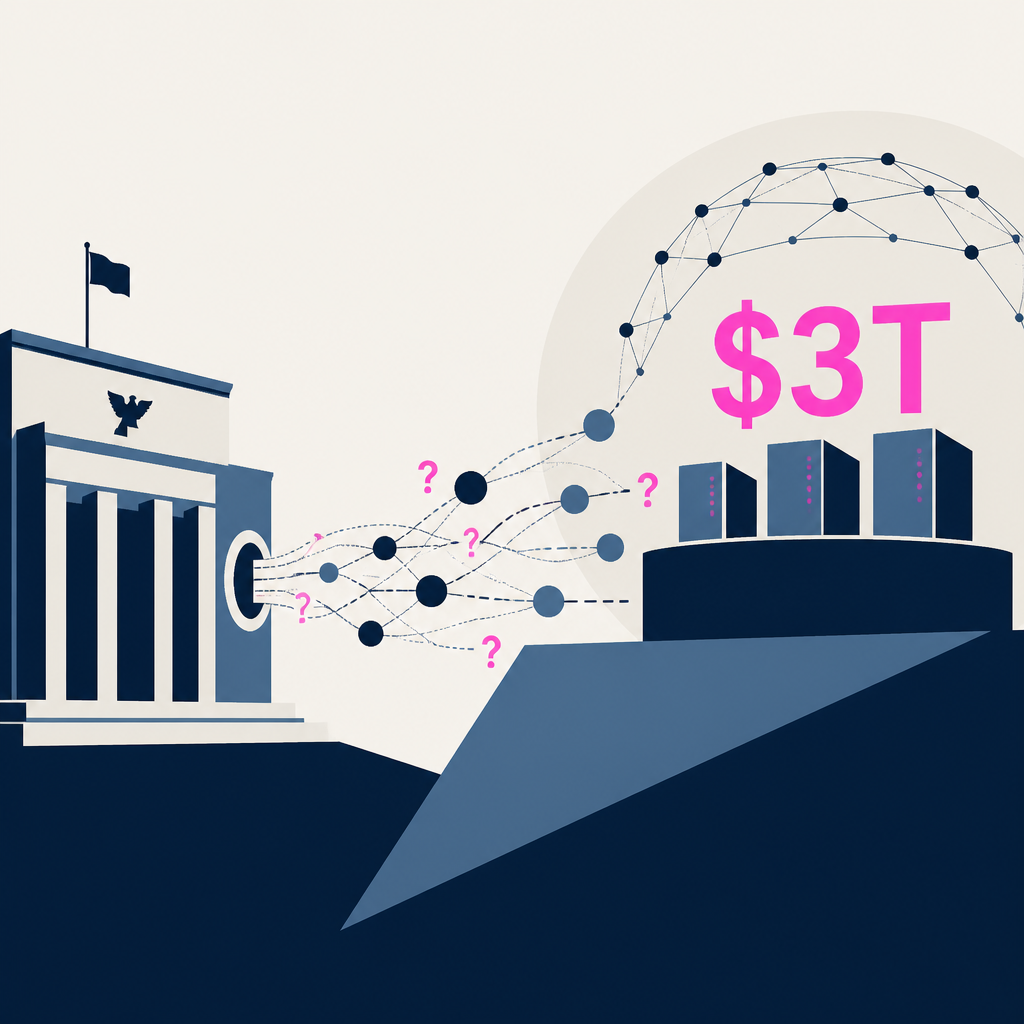 The Fed doesn't know who's financing the $3 trillion AI boom
Fortune ·
37
The Fed doesn't know who's financing the $3 trillion AI boom
Fortune ·
37
 Kevin Warsh finally threw Wall Street some crumbs on what he's thinking: ‘There is one signal nobody can miss: 65 months of elevated inflation'
Fortune ·
36
Kevin Warsh finally threw Wall Street some crumbs on what he's thinking: ‘There is one signal nobody can miss: 65 months of elevated inflation'
Fortune ·
36
 Exclusive: Goolsbee says AI is 'not far' from overheating the economy
Fortune ·
2
Exclusive: Goolsbee says AI is 'not far' from overheating the economy
Fortune ·
2