CoreWeave makes the case for an open, full-stack AI cloud
SiliconANGLE Sloane Kali Faye ● Covered by 5 sources
CoreWeave is pushing an open AI cloud that ties training, inference and testing together. The bet is that production feedback, not just GPUs, is what improves models.
Based on reporting by SiliconANGLE, Sloane Kali Faye — read the original for the full story.
Summary, retelling and take written by AI under human oversight; images are AI-generated illustrations. How we work · Report an error
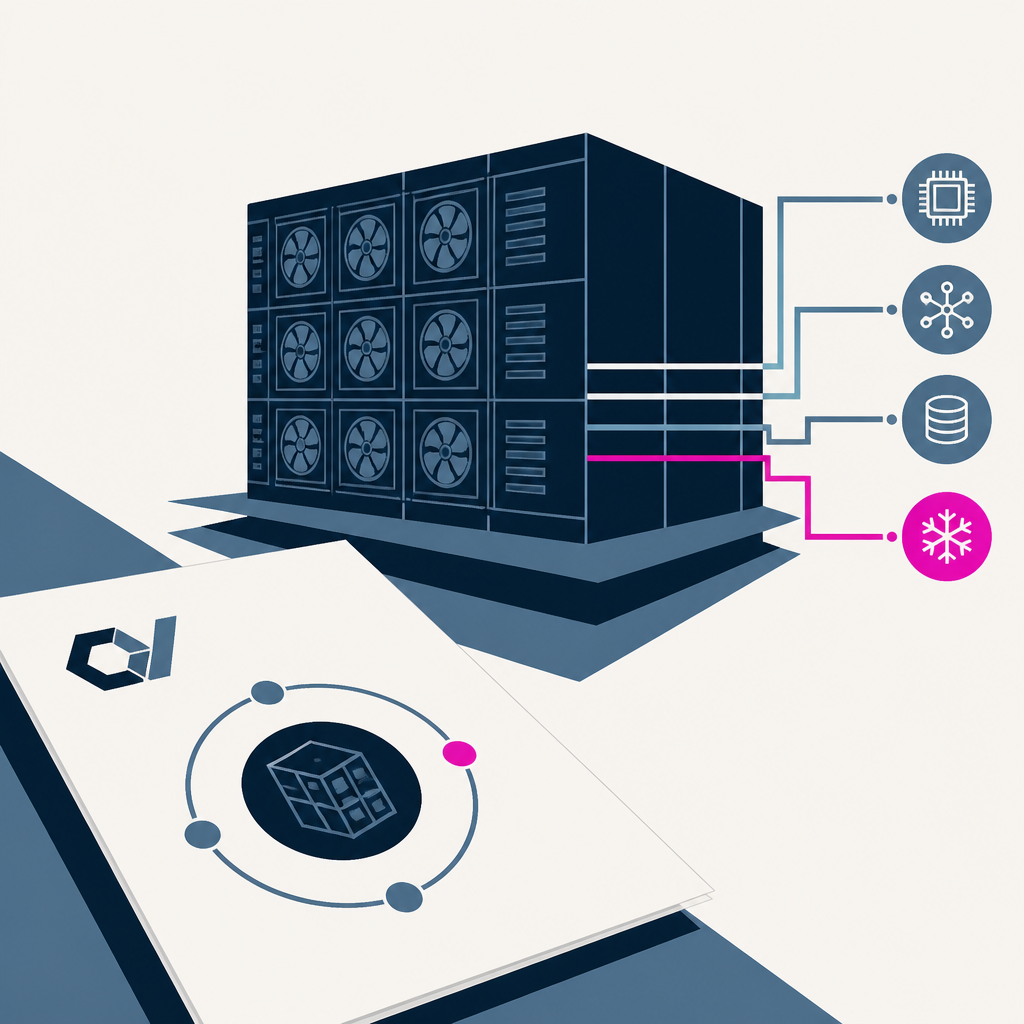
CoreWeave is making a simple argument with a big edge: the AI cloud should not stop at raw compute. The company has launched CoreWeave Forge, a development platform meant to connect training, inference and evaluation so teams can feed what they learn in production back into the model loop.
Jean English, CoreWeave’s chief marketing officer, said the company wants that loop to stay open to different models, frameworks and clouds. That matters because the real fight in AI infrastructure is no longer just who has the most GPUs. It’s who can bundle hardware with the tooling, partners and operating know-how that keep models and agents improving after launch.
CoreWeave is leaning hard into that idea because it was built for AI from the start, not retrofitted from older web infrastructure. English said customers coming from other clouds often run into limits around speed, performance, capacity or tooling. Her pitch is that building from first principles lets CoreWeave move faster and deliver the performance AI teams need.
The hardware story is still there. CoreWeave was first to bring up and validate Nvidia’s Vera Rubin platform, and it recently received SemiAnalysis’ Platinum ClusterMAX rating for the third time in a row. But the bigger point from English was that the chip is only part of the picture. Compute, networking, storage, software and operations have to work together if the platform is going to support production AI.
That’s why the company is also talking about inference, not just training. English said many customers are looking there first, while model makers keep training frontier systems and enterprises hunt for the one use case that actually shows impact. This is where a lot of AI spending has ended up anyway: less on grand transformation talk, more on a narrow problem that needs to work now.
My take — AI-written commentary, not fact-checked reporting
CoreWeave is reading the room correctly: the next AI cloud pitch is open tooling plus operational muscle, not another glossy GPU shopping cart. Closed systems make for neat demos; production teams usually want fewer sermons and more knobs. That’s the part most vendors still miss.
Read more about this at: SiliconANGLE