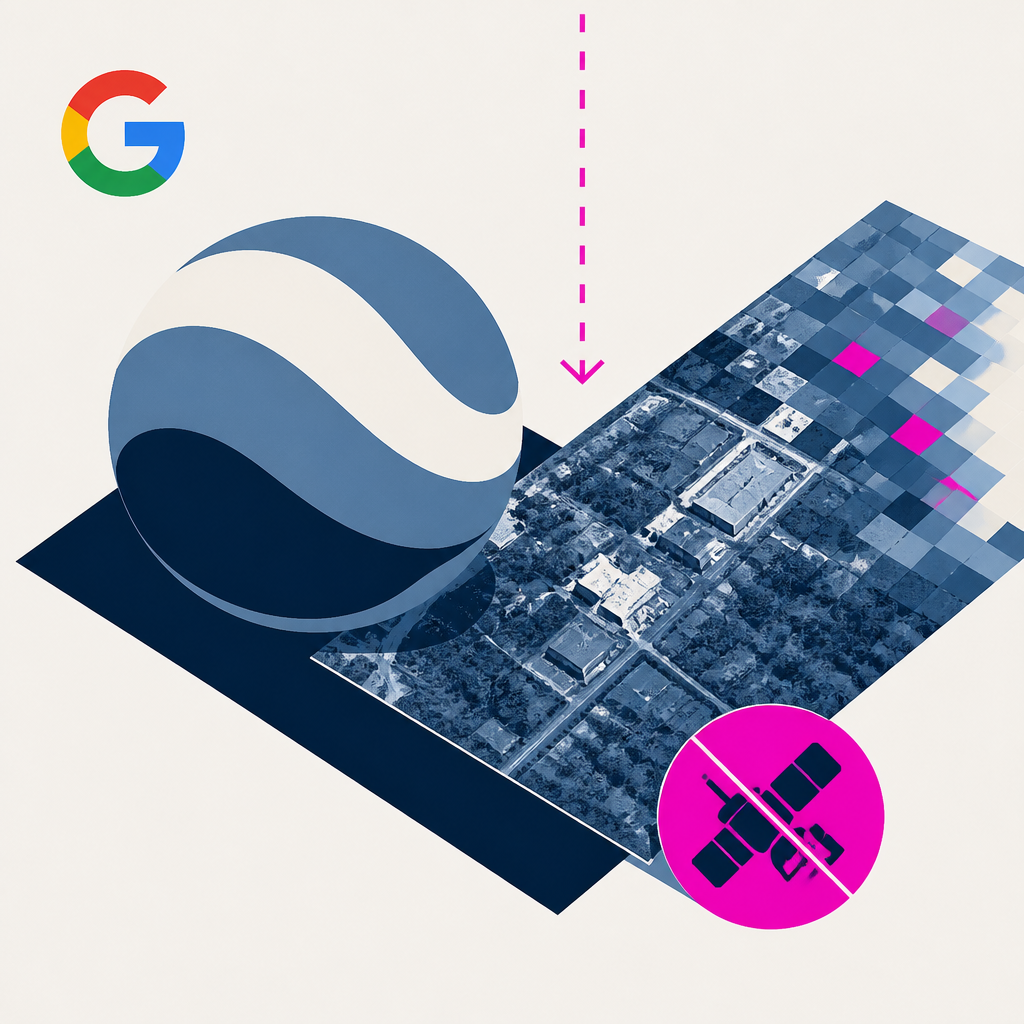
Google launched an AI tool called Nano Banana 2 that let users create AI-modified satellite imagery in Google Earth, but retracted the feature within days after people demonstrated it could generate misleading pictures of real locations. The tool was publicly announced on July 30 before removal. Google's reversal prevented a potentially significant misinformation vector by allowing easy manipulation of authentic satellite data tied to real geographic locations.
Google launched an AI image generation feature in Google Earth that allowed users to create fake satellite imagery but removed it after one day following criticism that it could spread misinformation. The feature used Google's Nano Banana 2 image generator with prompt-based controls to superimpose generated images onto real maps. Google stated it would reimplement the feature with stronger safeguards to prevent policy violations.
Google introduced an AI feature in Google Earth that generates synthetic satellite imagery, enabling users to create false images of locations such as drone strikes or nuclear facilities. The feature is currently available to Google Earth users without clear restrictions or verification mechanisms. This capability transforms Google Earth from a reliable open-source intelligence tool into a potential vector for disinformation campaigns.
Google shut down an AI image-editing feature in Google Earth after just one day, which allowed users to generate deepfake satellite imagery by typing text prompts. The tool, powered by Nano Banana 2, was disabled after users demonstrated it could create false images of sensitive locations including fictional refugee camps and bombed hospitals. Google's brief experiment shows the challenge of deploying generative AI tools that can easily produce misleading geospatial content.
Google released Lyria 3.5, a music generation model that produces more natural melodies, better lyrics, and realistic vocals. The model supports tracks from 30 seconds to 3 minutes and includes a new "Selective Section Painting" feature for editing specific song sections and adjusting tempo and duration of individual instruments. Users can now refine generated music without restarting, with finer control over vocal and instrumental elements through Google's Flow Music platform.
Every AI story that matters,
in your inbox by 8am.
TLDRocket reads all relevant sources, removes duplicate coverage, and summarises the
day in two minutes. Follow companies and topics for alerts, or get the
briefing in Slack. Free, no spam, unsubscribe anytime.
Reading TLDRocket needs no cookies, and the readership counts we rely on come from
our own cookieless analytics. Google Analytics is the exception: it sets cookies and
reports to Google, so it stays switched off until you allow it. You can change your
mind any time from “Cookie settings” in the footer.
Strictly necessary
Session security and form protection (tldrocket-session,
XSRF-TOKEN, 2 hours). The site cannot work without them,
so they need no consent.
Always on
Google Analytics 4 (_ga,
_ga_<id>, up to 2 years). Measures which
stories and sections readers use. Google acts as a third-party processor and may
store the data outside the EU. No advertising, no profiling, no data sold.