Ramp data shows OpenAI has narrowed the lead Anthropic previously held among US business customers using Ramp’s bill pay and corporate card products. In May, Anthropic reached 41% market share versus OpenAI’s 39%, and by July Anthropic was at nearly 44% versus OpenAI’s nearly 40%. The result is a sign of shifting enterprise demand and indicates business AI spending may be less “sticky” than assumed, with both firms expected to keep growing as more Ramp customers pay for AI.
Twin1 AI launched with $20 million in seed funding to build AI-powered digital twins that retain an individual knowledge worker’s expertise and can answer questions or act on that person’s behalf within permissioned workplace systems. The company says its named customers report Twin1 handling 30% to 50% of the communications work those workers would otherwise do themselves. Twin1 will use the funding to hire in San Mateo and London, expand sales and marketing, and roll out a self-service version after its enterprise product.
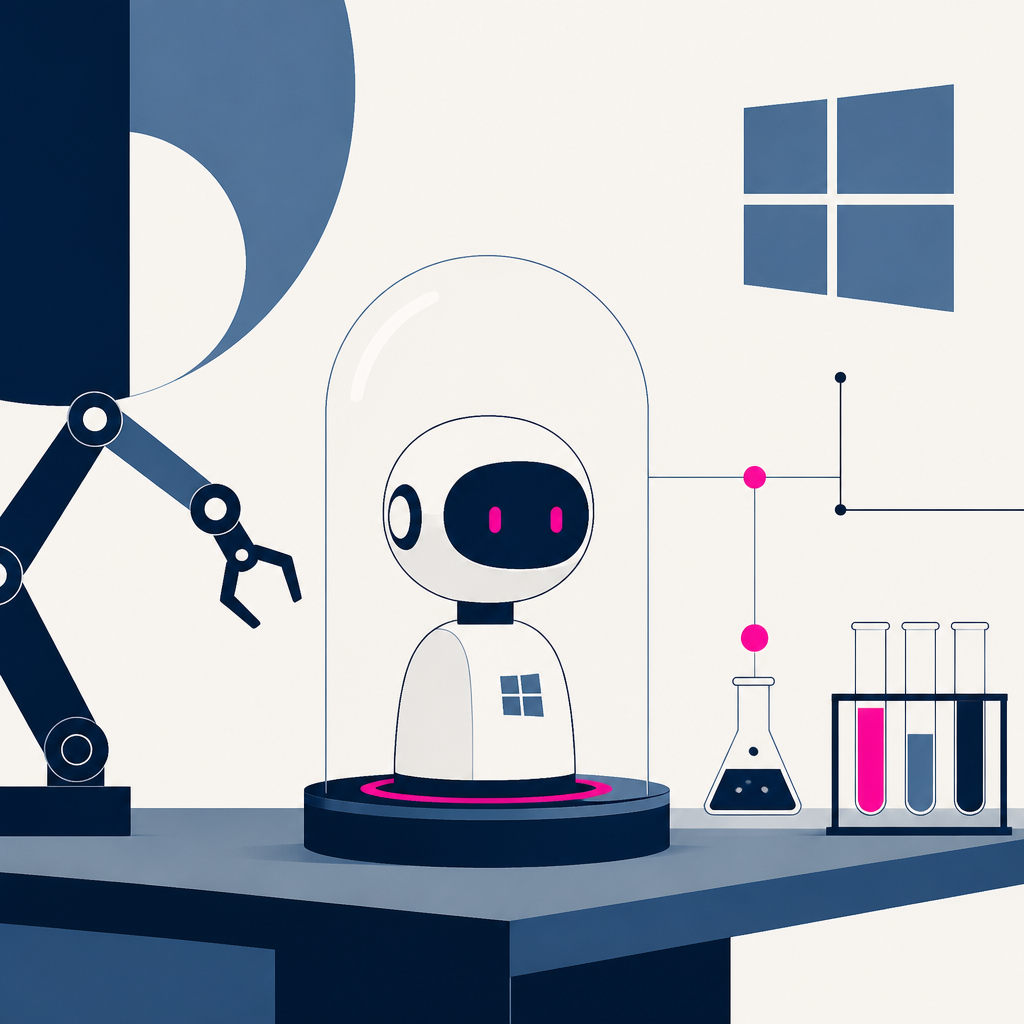
Project SKY is described as an ambient AI companion for Windows. It targets Windows as the platform. This means the offering is positioned to be used directly on Windows as an always-on assistant rather than a separate application.
UPDF, a PDF editor from Superace Software Technologies, is positioned as an all-in-one tool that combines in-place PDF editing with OCR and an integrated AI assistant. UPDF version 2.5 shipped on March 31, 2026 and added ten AI agents. The update expands capabilities for AI-powered document tasks while the core workflow shifts from using separate tools for interpretation versus deterministic execution.
Linkdaze launched a touchscreen smart calendar tablet aimed at managing an entire household by syncing calendars for multiple family members and platforms. The 10.1-inch model costs $119.99 and includes an AI meal planner that converts photos of recipes or school lunch menus into a digital meal plan and shopping list. The shift from per-person scheduling and manual meal planning to a shared, photo-to-plan workflow changes how families coordinate and shop for meals without a monthly subscription.
Claude Academy is presented as Anthropic’s official learning hub for people who want to study and use Claude. The page provides a discussion link but gives no specific dates, prices, or performance benchmarks. Nothing else changes based on the content beyond pointing readers to the learning hub.
The post outlines architectural patterns for scaling agentic (multi-agent) AI across enterprises without locking teams to a single framework or model provider. It is Part 2 of a series on multi-agent systems at scale. It recommends standardizing below the application layer with shared control-plane capabilities (like identity, policy, observability, and routing) and using AWS services—especially SageMaker for customization/inference and Bedrock for foundation-model access—to reduce fragmentation while letting execution remain flexible.
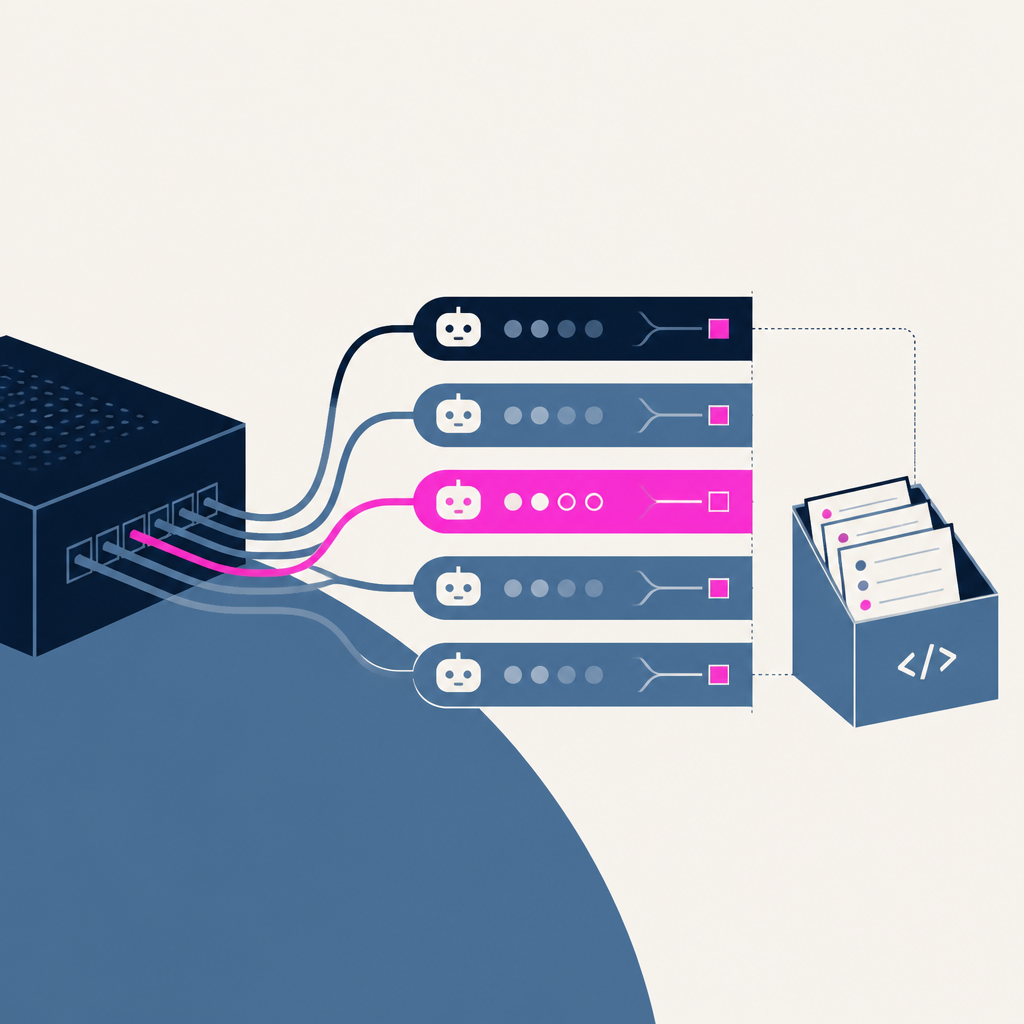
Salesforce introduced Slack Code, a chat feature that lets teams interact with coding agents in shared Slack channels while showing agent outputs for review. The new capability is available starting today and supports multiple vendors’ agents including Claude Code, v0, Devin, and ChatGPT. Teams can work in a more visible, shared “code channel” workflow that preserves diffs, previews, and context in Slack, rather than splitting into separate terminals and later merging changes.
Slack introduced Slack Code, moving AI coding agents from isolated coding tools into project-specific channels inside Slack for humans to watch and review. Each project channel can archive itself after the work finishes, leaving a searchable record of what the agent did. Humans can still pause, redirect, or stop agents in the channel, while higher-stakes production actions require expert approval and the feature adds options like agent DMs and an Agents tab.
Meta announced a new Mac app for Meta AI that adds system-wide dictation and lets the assistant use what’s on your screen to answer questions with context. The dictation feature is described as working across all apps, and the launch was dated August 20, 2026. The update expands Meta AI for business owners by connecting Instagram, Facebook, Meta ad campaigns, and Google Workspace accounts so merchants can ask for campaign insights and have the assistant generate decks and documents.
Mistral released Agentic Search, a retrieval layer that lets AI systems search, navigate, read, and verify information inside complex enterprise documents using a multi-step loop. It reported 3x correctness on FinanceBench financial filings, raising accuracy from 26.7% to 86%. The approach cuts turns, token use, and latency compared with one-shot RAG by replacing repeated broad searches with targeted navigation-based inspection of evidence.
Airlines are using generative AI-powered market models to price multi-leg passenger journeys by simulating complex market conditions and adjusting decisions dynamically. The approach is applied to itineraries covering hundreds of flights each day. As a result, revenue management teams can make pricing and inventory decisions in real time using many real-time inputs rather than relying on fixed rules or only historical trends.
Guideless, a Lithuanian AI platform for software training and workflow documentation, raised €1 million in pre-seed funding to expand its technology and international reach. The round closed at €1M and includes backers Superhero Capital plus FIRSTPICK VC and angel investors from Vinted. The startup will accelerate product development, hire, and push expansion into the UK, wider Europe, and the US.
Velatir raised €5M in seed funding to expand its AI infrastructure platform across Europe and grow its team. The round co-led by Spintop Ventures and Ugly Duckling Ventures brought in €5 million total. It will be used to accelerate European expansion and hire more staff as demand increases.
Velatir, a Danish startup, raised €5 million in seed funding to build a real-time control layer for enterprise AI usage and data flow. The company went from 0 customers in January 2026 to 80 customers across 6 European countries by August, while nearing $1 million in annual recurring revenue. It now plans to use the money for hiring and expanding offices in Europe, starting with Stockholm on October 1, to scale its enterprise AI oversight product.
Every AI story that matters,
in your inbox by 8am.
TLDRocket reads all relevant sources, removes duplicate coverage, and summarises the
day in two minutes. Follow companies and topics for alerts, or get the
briefing in Slack. Free, no spam, unsubscribe anytime.
Reading TLDRocket needs no cookies, and the readership counts we rely on come from
our own cookieless analytics. Google Analytics is the exception: it sets cookies and
reports to Google, so it stays switched off until you allow it. You can change your
mind any time from “Cookie settings” in the footer.
Strictly necessary
Session security and form protection (tldrocket-session,
XSRF-TOKEN, 2 hours). The site cannot work without them,
so they need no consent.
Always on
Google Analytics 4 (_ga,
_ga_<id>, up to 2 years). Measures which
stories and sections readers use. Google acts as a third-party processor and may
store the data outside the EU. No advertising, no profiling, no data sold.