
Salesforce introduces Slack Code to bring agentic team coding into the open
SiliconANGLE Kyt Dotson ● Covered by 2 sources
Salesforce put coding agents inside Slack, so teams can build in public. It’s meant to cut the back-and-forth between idea, code, and review.
Based on reporting by SiliconANGLE, Kyt Dotson — read the original for the full story.
Summary, retelling and take written by AI under human oversight; images are AI-generated illustrations. How we work · Report an error
Salesforce has rolled out Slack Code, a new way to work with coding agents directly in Slack while keeping the whole team in the conversation. The pitch is simple: don’t hide the work inside one developer’s terminal. Put it in the channel, let people see it, and keep the context around after the discussion ends.
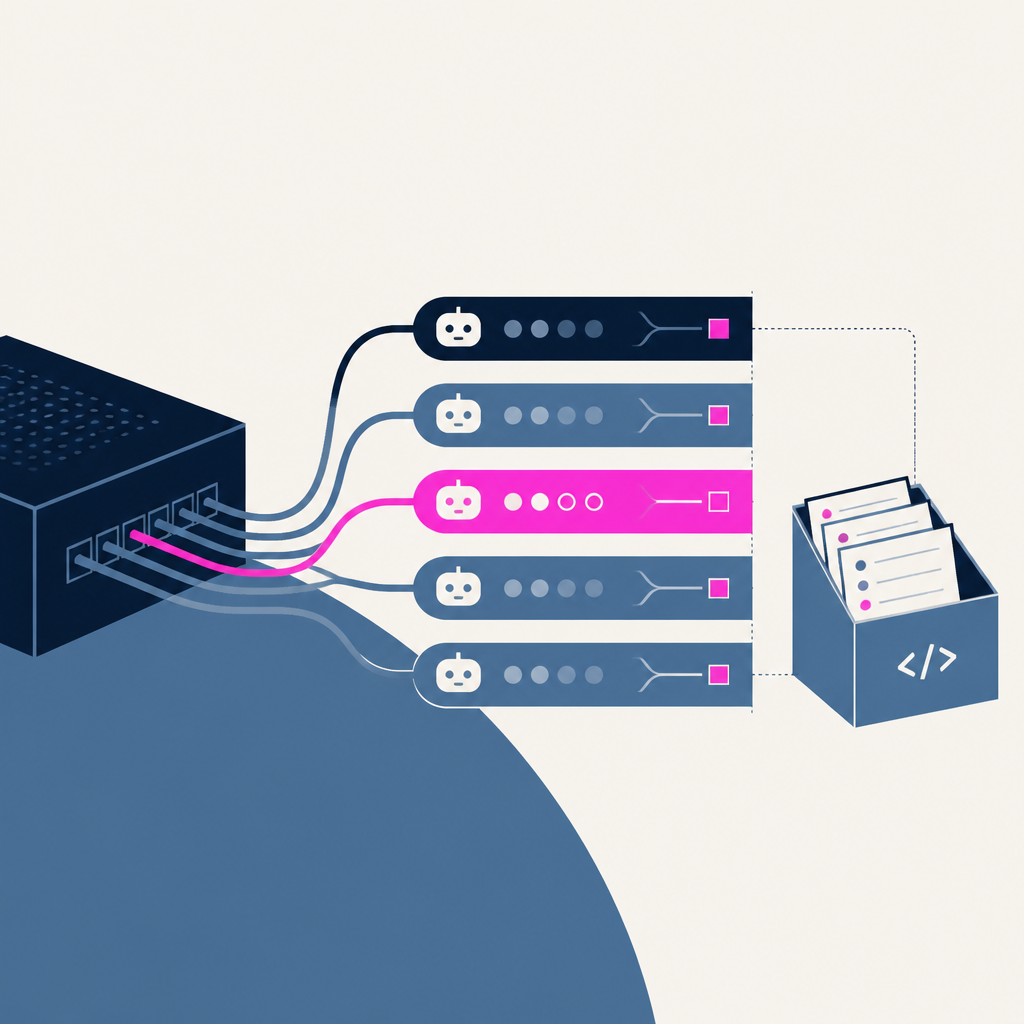
The feature is built around a familiar Slack move. Someone tags an agent in a channel, Slack opens a Code Channel, the agent starts working, and the output shows up in a canvas. That can include diffs, previews, and the rest of the visible trail a team usually has to reconstruct later. Salesforce says the system works with agents from Anthropic’s Claude Code, Vercel’s v0, Cognition AI’s Devin, OpenAI’s ChatGPT and others.
Ryan Gavin, Slack’s chief marketing officer, framed the change as a way to compress the trip from idea to shipped code. He argued that software work has too often been a solo act, even when the result is supposed to serve a whole organization. In his view, AI agents are already speeding up coding, and Slack Code is meant to move more of that speed into shared spaces where teams can learn from what’s happening as it happens.
That still doesn’t mean engineers are out of the picture. Salesforce says the hard coding in terminals and IDEs remains necessary, but the scaffolding can happen earlier in Slack with feedback from the right people at the right time. The company’s bet is that this will cut down on churn when teams build in the wrong direction and only discover it after a painful review cycle.
The broader idea is that other departments can join sooner too. Marketing or design can weigh in on user-facing changes, and non-technical teams can even start their own agent-driven work before handing it off for engineering polish. The work, the diffs, the GitHub links, the canvases and the rest of the trail stay archived in Slack, so the team can look back at how the project evolved. Salesforce says Slack Code is available now on any Slack plan, as long as the user already has access to the agent they want to use.
My take — AI-written commentary, not fact-checked reporting
This is the right instinct: put AI work where the team already talks, not in another shiny sidecar app nobody checks twice. The real win isn’t faster typing, it’s fewer private little experiments pretending to be collaboration. Open beats hidden here, because software teams have always paid for secrecy later.
Read more about this at: SiliconANGLE
Related stories
 Slack Code taps into collective vibe, puts AI agents into the group chat
The Register · 1 month ago ·
28
Slack is launching collaborative vibe-coding channels
The Verge · 1 month ago ·
51
Salesforce rolls out new Slackbot AI agent as it battles Microsoft and Google in workplace AI
VentureBeat · 9 months ago ·
15
Slack Code taps into collective vibe, puts AI agents into the group chat
The Register · 1 month ago ·
28
Slack is launching collaborative vibe-coding channels
The Verge · 1 month ago ·
51
Salesforce rolls out new Slackbot AI agent as it battles Microsoft and Google in workplace AI
VentureBeat · 9 months ago ·
15