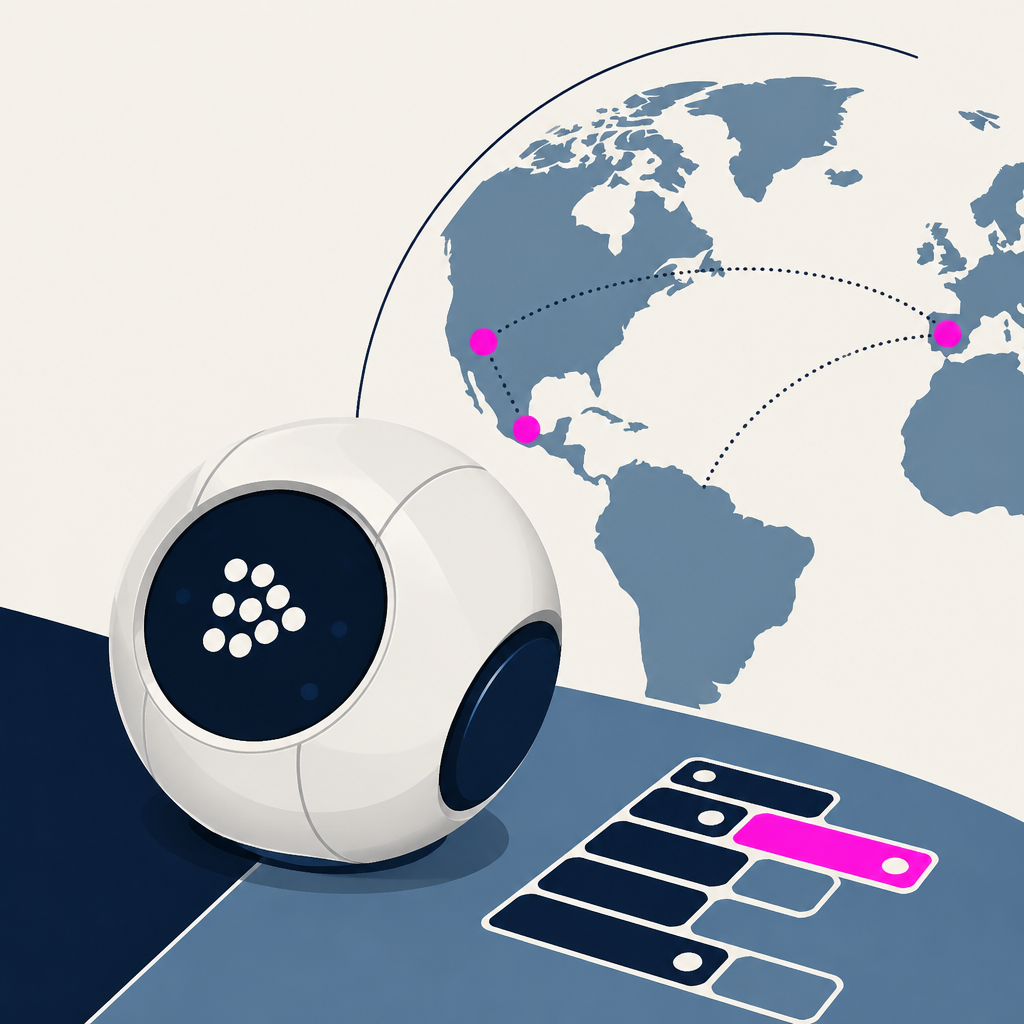
OpenAI’s Joseph Kim, hedge fund Two Sigma’s John Feminella, and Anthropic’s Belinda Neal and Keon Shahab presented approaches to balancing agent autonomy with safety in financial-agent workflows at AIE NY.
Dottr launched as an AI contract assistant that drafts agreements from email threads or notes, reviews risks in plain English, sends for signature, and follows up with signers. It is described as free and launching today. As a result, contract drafting and signature chasing become automated inside email without requiring signers to log in.
McKinsey & Company plans to test entry-level applicants by having them complete a 10-minute conversation with an AI simulation of a client during interviews. The simulation is intended to cover 80% of the scenarios McKinsey consultants might face. Human interviewers will still evaluate candidates, so the change is adding an AI role-play step rather than automating scoring.
Koch Disruptive Technologies made a strategic investment in Emanate, a San Francisco startup aiming to use AI for industrial sales workflows, with Emanate also previously backed by a16z. The investment amount was not disclosed by either side. The push shifts industrial account handling toward AI-driven, 24/7 use of customer interaction knowledge and a system that can progress from human-in-the-loop to greater autonomous account actions over time.
Amazon Bedrock AgentCore multi-agent system is used to classify, extract, validate, and iteratively learn from business documents for agentic intelligent document processing. The end-to-end time drops from 3 minutes 49 seconds on the first run to 1 minute 30 seconds when a second document from the same type is processed, after new extraction instructions are trained and saved. This replaces template-heavy configuration with automated instruction generation and reuse so later documents of a known type avoid manual retraining and run faster.
AI app builders charge differently for making edits after an AI-generated first version, with credits/tokens making each iteration more expensive on some platforms than on flat-rate editors. Softr’s annual pricing starts at $19/month, and its visual edits plus MCP-based building from Claude or ChatGPT don’t draw down credits. The result is that the lowest demo cost can become the highest production cost on credit-metered tools, while flat-priced options keep ongoing iteration cheaper and more predictable.
Zenzap raised $44 million to build an AI messenger meant for workplace communication and context-aware assistance. The funding round was led by investors including Bessemer and Lightspeed, with plans starting at $51 per month for up to 20 users. The company expands its product offerings with AI voice and workspace search, and shifts from bootstrapping to venture-backed scaling with more hires in product and R&D.
pgEdge CEO Phillip Merrick warns that choosing developer-friendly database platforms for AI prototypes can force enterprises to re-platform after launch when security, compliance, and reliability requirements don’t match production needs. He cites that for every 33 AI proofs of concept, only four make it into production. The article argues enterprises should use a single Postgres-based platform from Day 1 to move between cloud and on-premises without the same rework, highlighting Starfleet’s copy-on-write branching and portability features.
A financial services team described building an Amazon Bedrock AgentCore system that automatically generates client PowerPoint decks from quarterly reports, compliance documents, and market analyses. The workflow was tested internally and finished in under 90 seconds per presentation. It replaces manual slide creation with a Bedrock AgentCore supervisor that uses RAG over S3/OpenSearch and tools for pptx generation, plus Bedrock guardrails for content safety, returning completed files via presigned S3 URLs.
Duvo, an enterprise AI automation startup, raised a $32 million Series A led by Balderton Capital to address stalled “agentic” AI pilots. The round came just 10 months after its $15 million seed. The funding will be used to expand into the US with retailers and consumer goods providers and to push its Enterprise Execution OS approach toward faster, more reliable deployment.
Duvo announced a $32 million Series A led by Balderton Capital to expand its enterprise AI operating system for automating company processes across existing systems. The funding brings Duvo’s total raised to $48 million, with early targeting focused on retailers and consumer packaged goods companies. As a result, Duvo will push faster product-led automation and expand sales efforts, including growth into the US, while positioning AI as embedded productivity tooling rather than a standalone initiative.
Ambio closed a seed funding round to build an end-to-end procurement solution for recycled plastics. The startup raised €5.1 million and plans to use it to scale internationally and add additional polymer types. Its platform will better verify and match recycled-plastics quality earlier in the purchasing process by learning from transaction data to improve matching and quoting.
Uvi raised $7.5 million to provide an infrastructure “context reasoning layer” so enterprise AI agents can understand company business context without relearning it from scratch each deployment. Uvi’s benchmarks say agent responses cost $0.75–$1.41 without the layer but drop to 10–16 cents when routing through Uvi. As a result, enterprises can run agents more cheaply and faster, with Uvi citing open-ended questions where it claims agents cost 46 times less and answer about twice as fast.
Forgepoint raised $9.8 million to automate the RFQ process for manufacturing firms using its AI sales agent, Frank, which generates price quotes from existing systems. The seed round totals $9.8M, co-led by Primary Venture Partners and a16z Speedrun. Early adopters reported a 30% increase in monthly quote throughput and a 55% drop in time to produce quotes.
FLÆ Robotics raised more than €1 million in seed funding to expand its AI hospitality platform BE-A, which automates hotel guest communications and front-office tasks. It processed about 265,000 messages and voice interactions across nearly 160,000 conversations in July and August 2026. The funding will support more product development, team expansion, and international rollout as the company strengthens Germany presence, enters Austria, expands in the UK, and prepares for US market entry.
FLÆ Robotics secured €1M+ in funding from Purple Ventures to deploy an AI receptionist for 60+ hotels. The round size is €1M+. The company’s AI receptionist rollout expands across more hotels.
SolarWinds launched Avior, a standalone agentic AI system designed to handle first-line enterprise IT operations while keeping agent actions auditable and repeatable. Avior pairs “probabilistic models” with deterministic execution, and it is available starting today via a guided onboarding program. It consolidates related alerts into single incidents, detects out-of-channel configuration changes, retires stale device inventory records, and requires explicit human approval for actions classed as potentially dangerous.
Block is building AI-powered security using OpenAI technology to help its security team investigate threats and propose patches faster. The article says the team can propose patches in minutes. As a result, threat investigation and patching workflows speed up, reducing the time between identifying a threat and applying fixes.
Coding Giants secured up to €6 million in venture debt from Orbit Capital to fund its international expansion of STEM education for children and teenagers.
The deal size is €6 million.
It plans to use the financing to strengthen its presence in the US and Mexico and pursue further growth in Spain and other markets via organic expansion and acquisitions.
Chatway launched “Chatway MCP,” a customer service platform that lets users connect their own AI agents to handle live chat support tickets. The launch is “Launching today.” The change is that ChatGPT, Claude, Gemini, Cursor, or any MCP-compatible assistant can answer tickets through MCP, REST API, and webhooks, with a free plan available.
The article argues that Asia’s AI adoption depends on leaders redesigning how work is done, not on telling staff to try AI tools. It cites a CEO at a major Southeast Asian regional bank who held monthly learning sessions with junior data engineers. As a result, it recommends top-down leadership actions—visible learning, committing amid uncertainty, and actively seeking honest feedback—to close the gap between efficiency and reinvention.
Block cut 40% of its staff while ramping AI automation, and Block CFO Amrita Ahuja said this kind of restructuring will spread as companies try to justify AI spend.
The spending level expected to exceed $730 billion this year is pushing companies to change workforce roles and what employees do with AI agents.
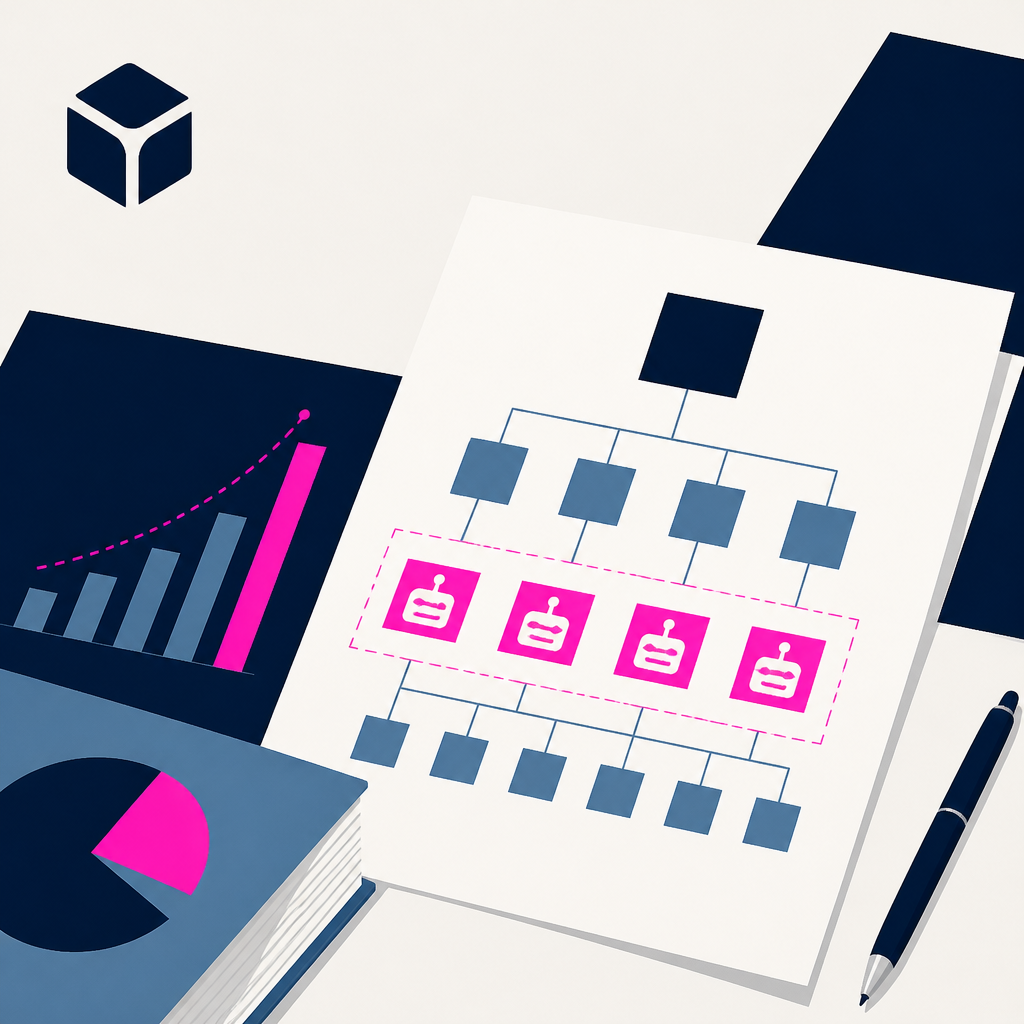
Organizational charts may start listing AI agents as units, with workers responsible for training and deploying them, and companies will increasingly measure ROI via adoption, efficiency, and revenue growth.
Every AI story that matters,
in your inbox by 8am.
TLDRocket reads all relevant sources, removes duplicate coverage, and summarises the
day in two minutes. Follow companies and topics for alerts, or get the
briefing in Slack. Free, no spam, unsubscribe anytime.
Reading TLDRocket needs no cookies, and the readership counts we rely on come from
our own cookieless analytics. Google Analytics is the exception: it sets cookies and
reports to Google, so it stays switched off until you allow it. You can change your
mind any time from “Cookie settings” in the footer.
Strictly necessary
Session security and form protection (tldrocket-session,
XSRF-TOKEN, 2 hours). The site cannot work without them,
so they need no consent.
Always on
Google Analytics 4 (_ga,
_ga_<id>, up to 2 years). Measures which
stories and sections readers use. Google acts as a third-party processor and may
store the data outside the EU. No advertising, no profiling, no data sold.