Simon Willison's Weblog·2 months ago·
52
● 2 sources
Simon Willison released LLM 0.32, a major update to his command-line tool for interacting with language models, adding support for visible reasoning traces, server-side tools from OpenAI and Anthropic, and a new streaming events API for the Python interface. The release includes support for GPT-5.6 models as the new default, WebSearch and CodeInterpreter tools, and a content-addressable SQLite logging system to avoid duplicating message histories. These changes enable LLM to function as an agent framework that can chain tools from multiple providers and models together, with the llm-anthropic plugin updated to version 0.26 to support Claude 5 models and additional server-side tools.
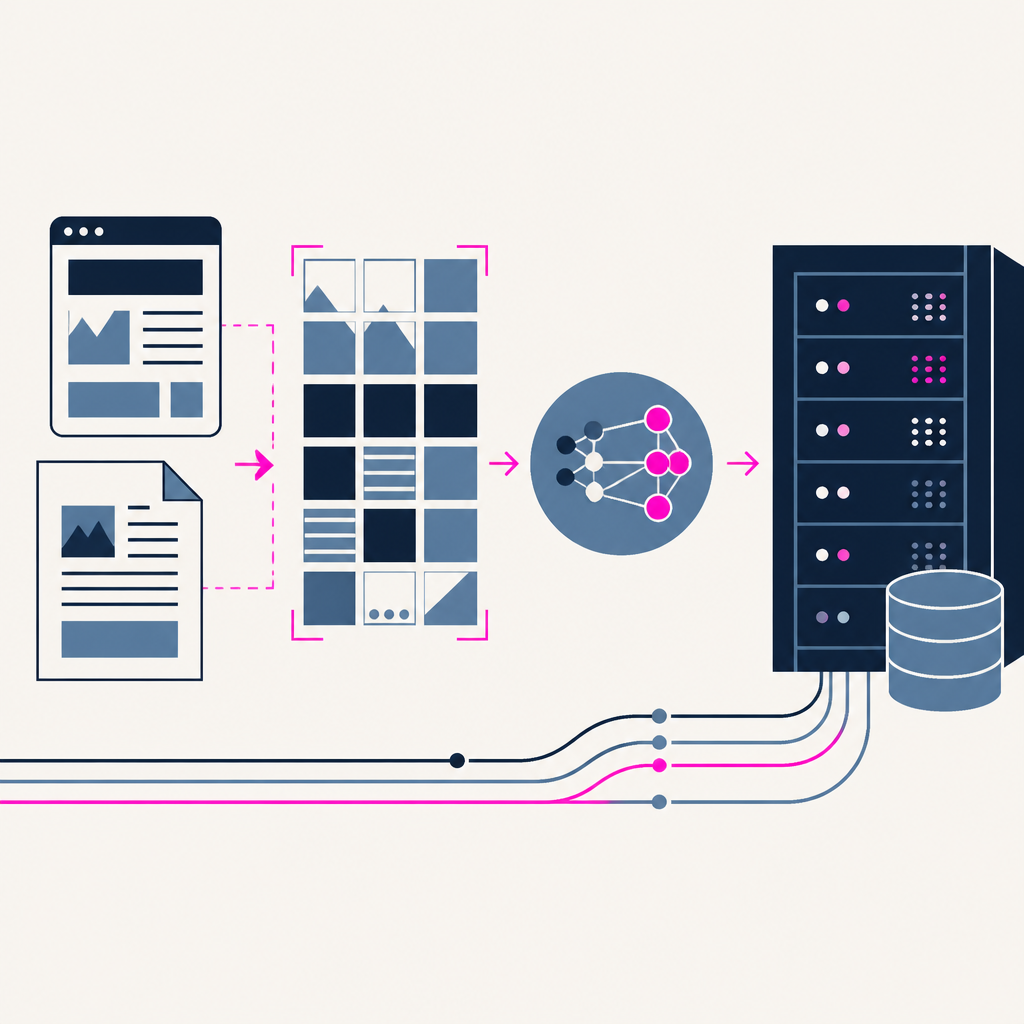
A tutorial describes building a pixel-native retrieval-augmented generation system that converts web pages and PDFs into image tiles, generates multimodal embeddings with vision models like SigLIP or CLIP, indexes them in FAISS, and retrieves relevant document sections via similarity search and hybrid ranking. The system uses 1024×1024 pixel tiles with 128-pixel overlap, combines dense embeddings with OCR-based BM25 scoring through reciprocal rank fusion, and optionally passes top-ranked evidence to vision-language models for answer generation. Users can evaluate retrieval quality via Recall@k metrics, train lightweight adapters with contrastive learning, and deploy the pipeline as a FastAPI service without relying on traditional HTML parsing or text extraction.
This article appears to be a discussion or documentation page about local semantic search functionality for AI agents, rather than a news story reporting on a specific event, product launch, or development. There is no concrete date, benchmark, number, or material change described that would constitute reportable news. The item is trivial as news content.
Simon Willison's Weblog·2 months ago·
33
● 2 sources
The llm-anthropic plugin released version 0.26 with support for three new Claude 5 models (Fable, Sonnet, Opus) and server-side tools including WebSearch, WebFetch, and CodeExecution. The update requires llm>=0.32 and streams reasoning and tool calls as typed events. Reasoning now displays to stderr by default, and extended thinking has been simplified to a thinking parameter with effort levels (low to max), with Claude 5 models using thinking by default.
AWS announced general availability of Web Search on Amazon Bedrock, a server-side tool that grounds foundation model responses in current web knowledge without requiring third-party vendor integration. The feature is available through the OpenAI Responses API with a single parameter, supporting semantic snippet extraction from Amazon's web index and knowledge graph while keeping data within AWS infrastructure. Developers can now add web grounding to AI applications with minimal setup, reducing hallucinations and enabling models to answer questions about recent events beyond their training data.
Convex, a developer tooling startup founded by former Dropbox engineers, closed a $57 million Series B funding round led by Insight Partners to expand its AI-optimized application backend platform. The platform powers nearly 2 million applications and is used by customers including OpenAI, with funding bringing total outside capital to $110.5 million. Convex will use the new funding to hire employees and enhance its platform's features for building AI agents with reduced hallucination errors.
This appears to be a product marketing page or tool registration rather than substantive news reporting—it's promotional material for building AI agents and workflows without reporting on any actual developments, announcements, or events.
A developer describes techniques for efficiently extracting keyframes from videos for LLM analysis, using adaptive scene detection and three-channel deduplication to select the most informative frames within a token budget of 100–150 frames per video. Key technical details include per-frame scene scores compared against rolling averages, RGB-based global deduplication at 16×16 resolution, a separate action channel that catches small subjects via 32×32 grid analysis, and a settled channel at 192×192 resolution for UI and text changes. The result is an open-source tool (claude-real-video) that outputs JPEGs, transcripts, and a manifest file, available as an MCP server, allowing models to analyze video content directly rather than relying on human summaries.
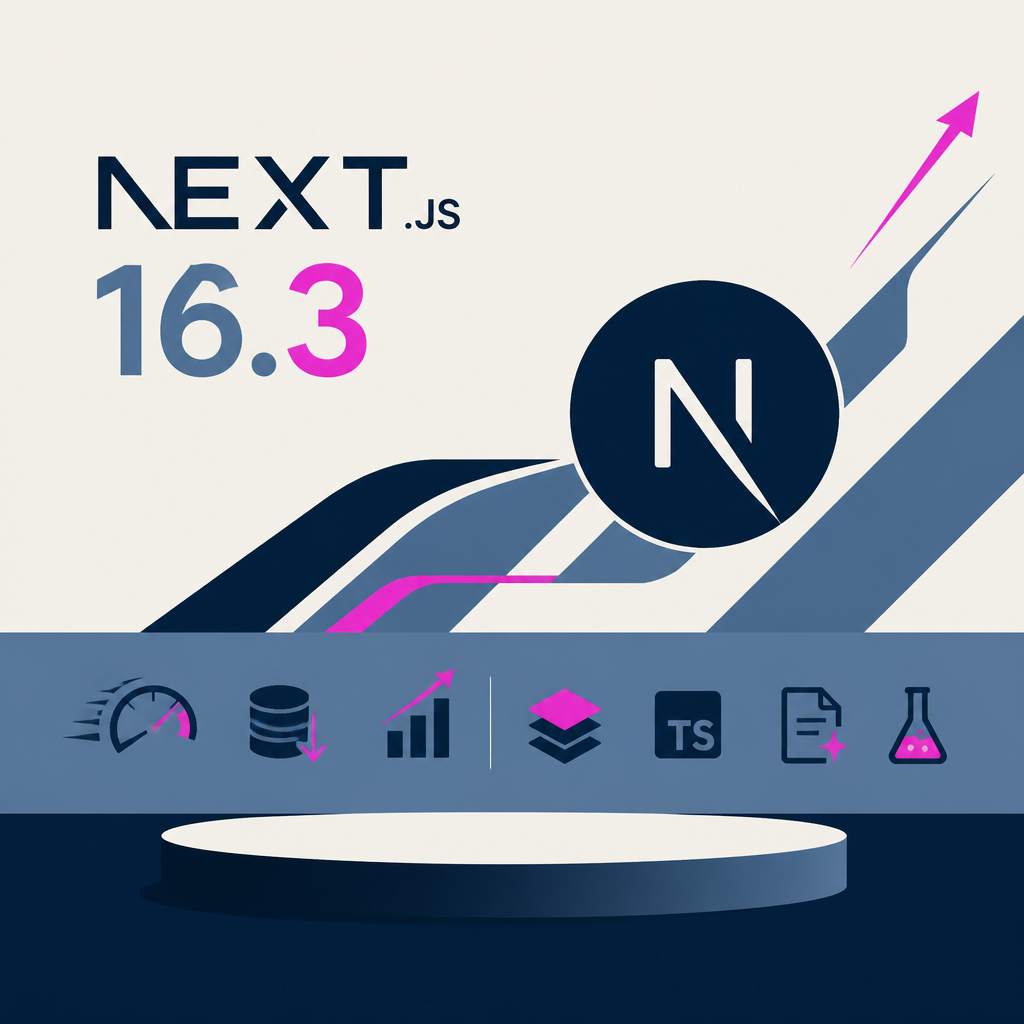
Next.js 16.3 shipped with Instant Navigations (a suite of SPA-like responsiveness tools), dev server memory cuts up to 90%, and 22% faster server-side rendering. The release includes faster builds via disk caching, TypeScript 7 integration, versioned documentation for AI agents, and experimental features like the Rust-based React Compiler. Developers get performance gains without code changes, plus new tooling for AI agents to access version-matched docs automatically.
Wealthfront built an AI code review system called Iris that uses Claude Opus as the lead agent with adversarial sub-agents (prosecution and defense models) to evaluate potential bugs and issues in pull requests. The system achieved an average review cost of $4 and 10-minute turnaround, with engineer ratings skewing toward useful and great feedback while significantly reducing false positives compared to earlier attempts. The AI review complements rather than replaces human code review, running after self-review and before peer review to maintain reviewer independence.
Cloudflare announced Cloudflare Wallets, a programmable wallet product designed for the agentic Internet. The product enables autonomous AI agents to manage cryptocurrency transactions and digital assets. This allows developers to build applications where AI agents can independently handle financial operations.
Aramb launched an operating system for AI agents that lets users hire agents or build their own via its SDK. The setup is claimed to take 20 minutes after installing @aramb-ai/sdk. It introduces a single API covering runtime, memory, browser, tools, models, and billing so agents can be launched and monetized through one interface.
Nuphos is presented as an AI-native DevOps workspace in a discussion-style post with a link. The post includes 0 concrete details beyond that description. As a result, there isn’t enough information here to determine what capabilities, features, or release terms change for users.
OpenAI released new education plugins for ChatGPT Work and Codex designed to support K-12 teachers, college educators, and students in learning, teaching, research, and building activities. The plugins enable integration of AI tools directly into educational workflows without specified technical details or rollout timeline. Teachers and students gain access to AI-assisted capabilities for classroom instruction and project development.
Every AI story that matters,
in your inbox by 8am.
TLDRocket reads all relevant sources, removes duplicate coverage, and summarises the
day in two minutes. Follow companies and topics for alerts, or get the
briefing in Slack. Free, no spam, unsubscribe anytime.
Reading TLDRocket needs no cookies, and the readership counts we rely on come from
our own cookieless analytics. Google Analytics is the exception: it sets cookies and
reports to Google, so it stays switched off until you allow it. You can change your
mind any time from “Cookie settings” in the footer.
Strictly necessary
Session security and form protection (tldrocket-session,
XSRF-TOKEN, 2 hours). The site cannot work without them,
so they need no consent.
Always on
Google Analytics 4 (_ga,
_ga_<id>, up to 2 years). Measures which
stories and sections readers use. Google acts as a third-party processor and may
store the data outside the EU. No advertising, no profiling, no data sold.