Thomas Dohmke launched Entire as an alternative developer platform built for collaboration between AI agents and humans to manage, review, and ship code. Entire said its Trail system replaces pull requests using AI agents’ scoring on each push and that the distributed hosting supports pushes up to 89 times faster than GitHub. The platform changes code review from line-by-line reading to agent-evaluated criteria and adds agent session storage in the repository, along with integrations to move CI pipelines from GitHub Actions.
Anthropic’s S-1 filing tied most of its Q3 results to its newest Claude releases, showing rapid customer spending on models launched shortly before quarter end. Models released in the six months leading up to September 30 accounted for more than 80% of third-quarter revenue. This implies a feedback loop where frequent model updates are financially important and may push developers toward defaulting to newer, potentially costlier models.
Goldman Sachs and Apollo economists argued that the AI boom’s support for U.S. growth is nearing its peak while corporate “payoff” beyond Big Tech has not materialized. Goldman expects the growth impulse to crest in late 2026 or early 2027, and estimates that AI-linked borrowing could subtract 0.6% cumulatively from GDP if it persists. As a result, they expect slower capital-spending growth and a declining consumer “wealth effect,” with mainstream firms increasingly treating token/model spending as a cost rather than a revenue driver.
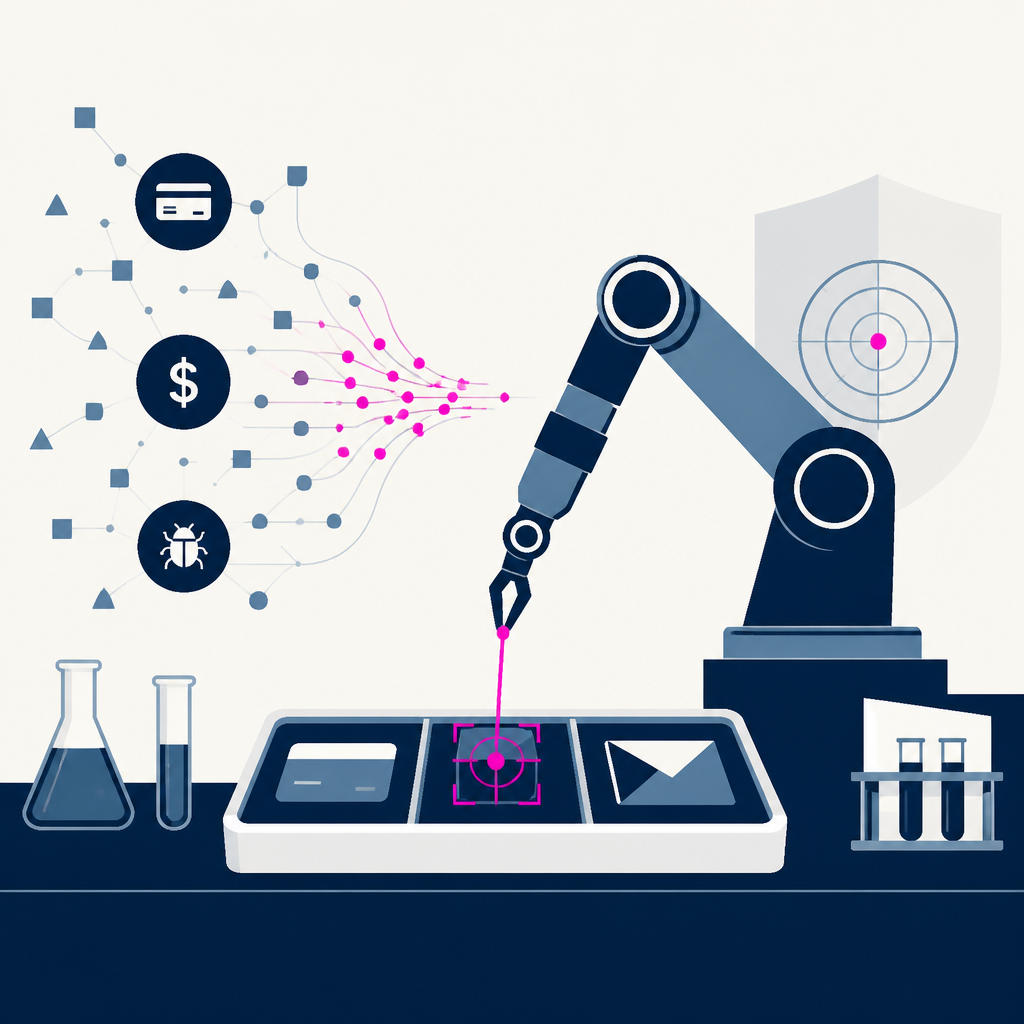
Overwatch said AI is already making cybercrime faster, cheaper, and more integrated across fraud, money laundering, and hacking, shifting attackers away from separate “silos.” Overwatch’s CEO Arjun Bisen cited a case where one actor ran over 100 attack campaigns in about five days and stole card details from over 600,000 cards. As a result, the New York startup raised a $15 million Series A to help companies defend against these combined threats using AI-driven defense technology and customer deployments.
Anthropic filed its IPO prospectus detailing major financial gains alongside large losses and founder-focused governance as it prepares to go public. The filing reports $16.3 billion in first-half revenue and a $80.7 billion net loss for the six months through June 2026. It sets up an offering on Nasdaq under ticker ANT, with expectations for continued investment-driven losses while highlighting AI safety risks and founder voting control changes.
Nevis, a startup founded by former Revolut executives, raised a Series B round to expand AI software that automates routine paperwork for financial advisors. The company said it raised $70 million, bringing its valuation to $500 million. As a result, Nevis will keep building its AI agents and investing in its platform to help advisors manage more clients amid a projected shortage.
Anthropic filed its S-1 paperwork for an initial public offering, showing that its seven cofounders each hold about 240 million shares. At a $58.90 split-adjusted Series H price, each stake is valued around $13.7B–$14.4B, and could be about $27B–$29B if the IPO reaches an estimated $2T valuation. The filing also states an 80% pledged donation of personal equity, which would reduce the cofounders’ economic interests while their Founder LLC voting control remains largely unchanged.
Anthropic’s S-1 IPO filing lays out a five-class share structure that concentrates voting control while limiting public investors’ influence. One co-founder LLC share (Class F) gives 50.1% of the vote with no economic rights, even if founders give away 98% of their shares. The change is that Class A buyers get only one vote per share and generally cannot affect director elections or most shareholder votes, with founder control ending if fewer than three co-founders remain for 90 days.
Anthropic filed its IPO prospectus after weeks of speculation, and the article uses that filing and earlier company speeches to question what the company really is. The prospectus is 335 pages long, with about 100 pages focused on risks. As a result, attention shifts from the IPO itself to evaluating how Anthropic’s “safety” messaging, policy influence, and frontier ambitions may—or may not—align, affecting how much external oversight it may need.
Anthropic disclosed share-listing risk factors describing how its AI work could create catastrophic or existential harms if safeguards fail, alongside concerns about chip and data-centre access and customer concentration. It reported that 250 enterprise customers have paid it at least $10mn over the past year. It also said customer spend fell 20% in January and that its free-to-paid Claude tools strategy is meant to convert growing enterprise users into paying customers.
SpaceX disclosed a binding commitment for financing that will buy AI chips and related server hardware and lease it back to the company. The deal totals roughly $40 billion in committed GPU financing. The leases are expected to start in the first half of 2027 and provide SpaceX another funding source for its expanding AI compute infrastructure.
Anthropic filed S-1 paperwork for an initial public offering to be listed on Nasdaq under the ticker ANT. The filing says the company generated $16.3 billion in revenue in the first half of this year. If approved, the IPO would move Anthropic toward a major U.S. market debut and raise the bar for expectations around other AI company listings, including OpenAI.
Anthropic filed S-1 paperwork with the U.S. SEC for a proposed IPO on Nasdaq under the ticker symbol ANT. The filing says it plans to list on Nasdaq, under ANT. The move sets up a potential major stock debut for the AI developer as it remains focused on continuing to develop advanced models despite continued AI safety concerns.
Anthropic said it will primarily stay a foundation AI model company but may compete with application-layer startups in select categories from time to time. Anthropic reported first-half losses of $80.8bn. As a result, European application startups got a clearer statement on when they might face direct competition, alongside financial details from Anthropic’s IPO-related filing.
Anthropic warned that advanced AI could pose catastrophic or existential risk to humanity ahead of its planned US stock market listing. It reported losses of $80.7bn in the first half of the year and said it has $112.4bn in cash or equivalents. Its Nasdaq debut as ANT is now positioned as a test case, with investors given risk language while key listing details like share count, price range, and date remain undisclosed.
Anthropic filed for an initial public offering, following weeks of leaked S-1s, positioning its debut as one of the most closely watched in the U.S. market. The filing reported $16.3 billion in revenue for the first half of 2026. With the IPO process underway, its share listing (ticker ANT) moves forward while its founder voting-control and safety-focused governance structure takes center stage.
Anthropic’s IPO filing highlights Claude Code’s role in the company’s enterprise growth, describing how internal adoption by engineers leads to later sales involvement. The S-1 says the top 5% of Claude Code users on Enterprise spent about 20 times as much as the average Claude Enterprise user, who spent less than $75 a month in Q3. The filing backs this with growth metrics and shifts Anthropic’s strategy toward selling the software for running Claude Code as agents, while also warning that increased autonomy could reduce human visibility and control.
Anthropic published its IPO prospectus with the SEC ahead of its Nasdaq listing under ticker ANT for the maker of Claude. Since 2023 it reported about $132.5 billion in net losses. The filing sets out the company’s updated revenue, loss drivers, compute commitments, and risk factors as banks set the IPO price after the U.S. midterm elections and before Thanksgiving.
Bitcoin fell to about $79,900 and briefly dipped to around $79,300 as investors cut risk ahead of the Federal Reserve’s Wednesday meeting. About $154 million in leveraged crypto positions were liquidated over 24 hours. The selloff adds pressure on broader crypto markets and coincides with continued weakness in Asia A.I.-linked stocks and ETF outflows.
HM Treasury added £120 million to the UK’s Sovereign AI Fund, split between investing in startups and buying R&D from them rather than issuing grants. The Sovereign AI Fund funding increased by 12% to reach £560 million, while the R&D Procurement Scheme rose from £100 million to £160 million. The government will act as an early customer in real-world trials while startups keep their IP, changing how UK AI firms compete for state demand.
Anthropic filed its S-1 prospectus with the SEC, laying out executive compensation, planned IPO spending, and risks for investors. The filing is more than 300 pages long. Investors and analysts now have new disclosures to assess Anthropic’s business and IPO plans, including details about its top-paid executives.
Epoch, a London startup, raised $4.25M in seed funding to verify the origin of cocoa, coffee, and rubber and to sell a self-serve tool for EU Deforestation Regulation compliance by small importers. The EU rules start applying to large and medium operators on 30 December 2026. Epoch’s approach moves compliance from supplier questionnaires toward geospatial AI and software agents that map supplier facilities and plots and generate due diligence statements for filing to TRACES.
European tech companies raised €27.8 billion across 732 deals in Q3 2026, led by the UK and with AI drawing €6.7 billion. The report lists Callosum’s €100M seed round in Q3 2026 for AI infrastructure software. The funding figures and the top 10 seed list show capital concentrating further in AI-related infrastructure and application startups.
Z_One Fund closed its first round at over €35m to back Italian pre-seed startups, with CDP Venture Capital among the investors. The fund plans an €60m total raise and up to 100 pre-seed/seed deals, with initial cheques up to €250k. It will expand from Italy across Europe while investing in AI-focused business and civic applications and urbantech areas like mobility and smart infrastructure.
Anthropic filed its S-1 prospectus with the SEC to prepare for an IPO for the company behind Claude. It reported a net loss of $80.7 billion on $16.3 billion in revenue in the first half of this year. The filing outlines a Nasdaq listing under ticker ANT and lays out investor risks and future plans as part of the IPO process.
European tech companies raised €27.8 billion across 732 deals in Q3 2026, and the roundup also lists more than 65 funding deals and 4 exits across Europe from the prior week. AI companies attracted €6.7 billion in that quarter, about 24% of the total. The figures show a 32.4% increase versus Q3 2025, and the article points readers to a funding explorer and the Q3 2026 report for more breakdowns of funding and exit activity.
adsilico, a University of Leeds spinout, raised a £10 million Series A to expand its AI-powered virtual patient simulation for testing medical device performance. The funding will be used to develop its Virtual Chimera generative AI platform that creates virtual hearts and blood vessels from anonymised clinical scans. This will let manufacturers evaluate devices across more diverse virtual populations earlier, support more targeted clinical trial planning, and reduce reliance on other testing methods while adsilico expands to neurovascular devices.
Nous raised $17M to expand its AI agent that manages household bills for UK customers. The agent is responsible for almost 250,000 UK households and manages over £685M of household spending. Nous will use the funding to grow more product and insurance categories and expand beyond the UK.
Nous raised $17 million to expand an AI agent that handles household administrative tasks and spending decisions on users’ behalf. The funding will go toward adding features and coverage for more spending categories and regulated services, including a broader range of insurance and financial services. As a result, Nous plans to introduce more everyday task capabilities and expand internationally.
Christian Lindner invested in Frankfurt-based cybersecurity startup QuoIntelligence through his investment company, Christian Lindner Beteiligungsgesellschaft. The startup had just raised a €7.3 million Series A in spring, and ENISA later awarded it a €1.4 million, four-year contract in 2025. The funding and backing strengthen QuoIntelligence’s push to sell ready-to-use cyber threat intelligence to customers without building an in-house security team.
Apollo Global Management chief economist Torsten Slok argues that A.I. spending has not produced broader economic payoff beyond Big Tech. He points to a gap in inflation-adjusted revenue per employee: about $780,000 for the Magnificent 7 versus about $527,000 for the other 493 S&P 500 firms. The implication is that A.I. benefits and profit expansion remain concentrated, with token spending and productivity signals showing limited economy-wide impact so far.
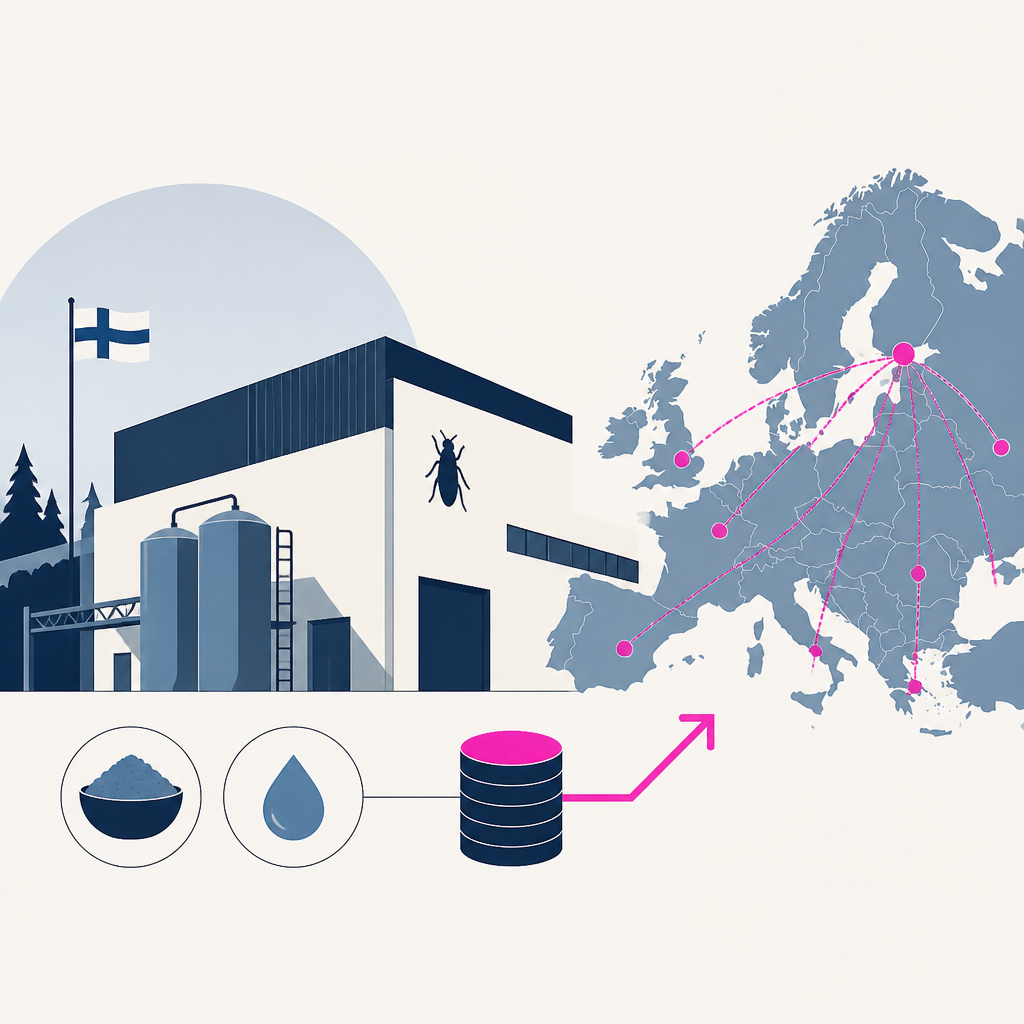
Volare completed Volare 01, its first industrial-scale insect protein factory in Pori, Finland. The 10,000-square-metre plant is budgeted at €15 million CAPEX and targets up to 5,000 tonnes of insect protein and 2,000 tonnes of insect oil annually. Volare says the ramp-up and new €7.1 million funding will let it scale production across Europe based on this industrial process model.
Elon Musk predicted that most of the roughly 200 neocloud providers serving AI computing will consolidate or fail, and he also said SpaceX closed a $40 billion debt deal to buy graphics chips. The deal is for debt totaling $40 billion, with chips expected in the first and second quarters of 2027. Shares for neoclouds such as CoreWeave, Nebius, and IREN fell about 2% and the financing outlook for smaller AI infrastructure providers tightened.
Apollo Global Management reported that most companies outside the biggest technology firms have not yet seen financial benefits from AI, while the largest AI-linked firms have. Apollo’s analysis says revenue per worker for the S&P 493 has stayed about $550,000 since 2019. As a result, mainstream corporate spending on AI is being reframed as a cost center, with many firms pulling back and requiring clearer returns before investing further.
Every AI story that matters,
in your inbox by 8am.
TLDRocket reads all relevant sources, removes duplicate coverage, and summarises the
day in two minutes. Follow companies and topics for alerts, or get the
briefing in Slack. Free, no spam, unsubscribe anytime.
Reading TLDRocket needs no cookies, and the readership counts we rely on come from
our own cookieless analytics. Google Analytics is the exception: it sets cookies and
reports to Google, so it stays switched off until you allow it. You can change your
mind any time from “Cookie settings” in the footer.
Strictly necessary
Session security and form protection (tldrocket-session,
XSRF-TOKEN, 2 hours). The site cannot work without them,
so they need no consent.
Always on
Google Analytics 4 (_ga,
_ga_<id>, up to 2 years). Measures which
stories and sections readers use. Google acts as a third-party processor and may
store the data outside the EU. No advertising, no profiling, no data sold.