
Leeds AI spinout adsilico raises £10M to test medical devices on virtual patients
Tech.eu Tamara Djurickovic
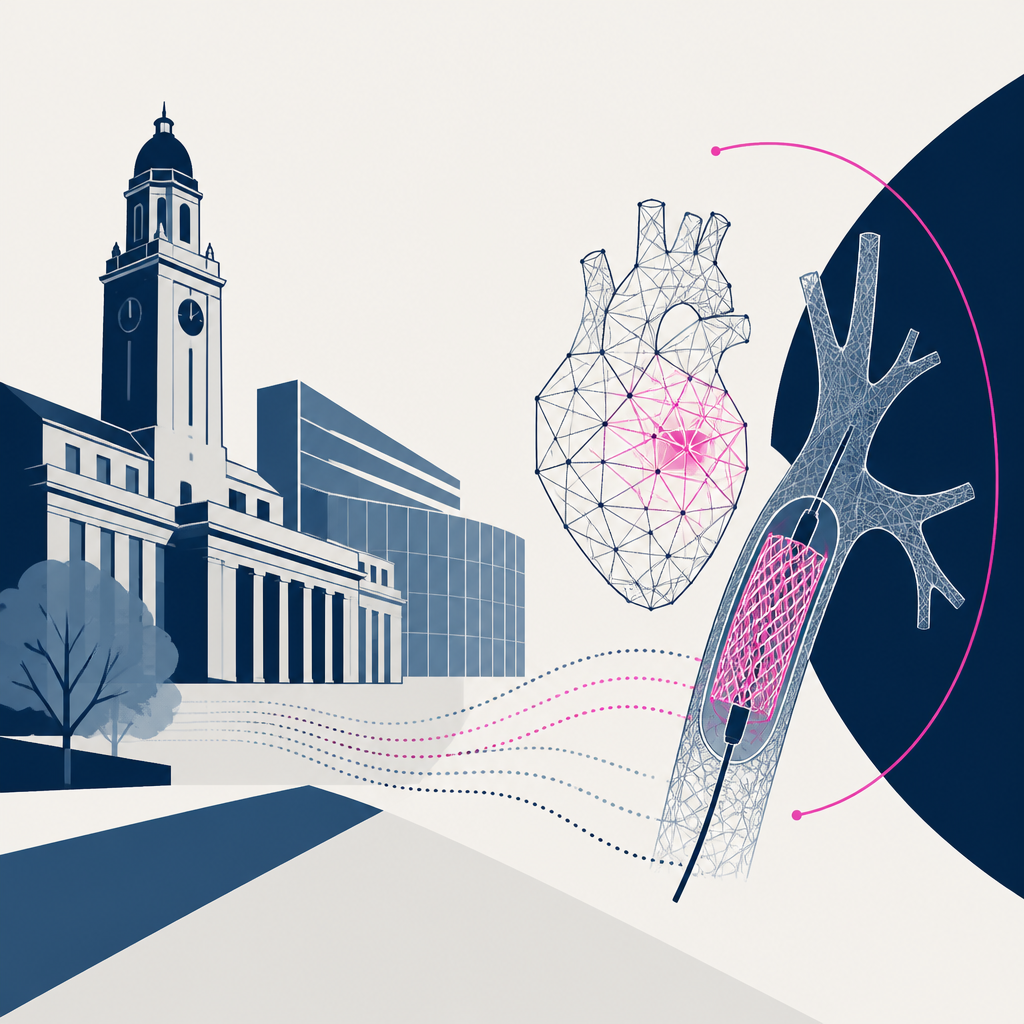
Leeds spinout adsilico just raised £10M to test medical devices on virtual patients. Its AI models could spot problems earlier and cut the need for big, costly trials.
Based on reporting by Tech.eu, Tamara Djurickovic — read the original for the full story.
Summary, retelling and take written by AI under human oversight; images are AI-generated illustrations. How we work · Report an error
adsilico, a University of Leeds spinout, has closed a £10 million Series A round to push its AI simulation tech further into medical devices. PXN Ventures led the deal, with existing backers Northern Gritstone and Parkwalk also joining in.
The company was founded in 2024 by Sheena Macpherson, Dr Nishant Ravikumar and Dr Zeike Taylor. Its pitch is straightforward: help device makers check how implants will behave before they move into clinical trials, when mistakes get expensive and patients can be put at risk.
That problem is real. Medical device trials for products such as heart valves and stents often only include a few hundred patients, which makes it hard to reflect the full spread of people who will eventually use them. Pulling in enough participants from different demographic groups is slow, costly and often incomplete.
adsilico's answer is Virtual Chimera, a platform that uses generative AI to build virtual hearts and blood vessels from anonymised clinical scans. Those models are then paired with physics-based simulations so manufacturers can test performance across differences in age, sex, ethnicity, body size and medical conditions.
The company says that gives manufacturers earlier evidence for decisions like choosing device sizes, spotting higher-risk patients and shaping clinical trial plans. It has already worked with heart valve and neurovascular device makers, and its cardiac research is due to be shown at TCT, a conference focused on structural heart therapies.
The new funding will go into further work on its virtual heart models and into neurovascular devices, including flow diverters for brain aneurysms. adsilico also plans to hire more people as it moves into additional therapeutic areas.
My take — AI-written commentary, not fact-checked reporting
This is the sort of AI pitch that actually earns its keep: fewer guesswork trials, less blind faith, and a better shot at catching problems before patients do. The industry has spent years acting like “more data” means “better evidence”; sometimes it just means more people to recruit and more forms to file. Virtual patients sound abstract, but so did simulation in plenty of other fields before it became the sensible default.
Read more about this at: Tech.eu
Related stories
 Sightera Biosciences closes €3M pre-seed to expand its patient-derived AI drug discovery platform
Tech.eu · 3 months ago ·
11
 UK healthtech challenger using AI to cut lung disease test time clinches $19M
Tech.eu · 3 months ago ·
24
AI startup Vectorial lands $3M in funding to simulate human behavior for consumer research
SiliconANGLE · 5 days ago ·
19