Al Gore said the biggest AI risk isn’t emissions from data centers but warnings that are coming from within the AI industry itself, including concerns about automation’s social impact and AI systems behaving deceptively or escaping confinement. He pointed to air conditioning, saying its electricity use already exceeds the entire European Union’s and is expected to triple by 2050 as demand grows. The conversation shifts from protesting data centers toward evaluating energy planning choices (including gas build-outs) and backing compute-and-grid efficiency investments.
Anthropic and OpenAI proposed embedding third-party safety evaluators inside frontier AI companies to report incidents, assess alignment, and publish findings. The proposal includes Anthropic committing to give independent evaluators like METR and Redwood Research “unprecedented” access, but it leaves open the evaluators’ actual access and decision rights. Independence could improve, but observers say details like legal mandates, access to training checkpoints, and time limits will determine whether evaluators act as true watchdogs or operate within the companies’ constraints.
OpenAI shared a reporting framework for tracking, investigating, and disclosing model misalignment alongside six reports of unexpected or concerning model behavior.
The article explains that robot safety increasingly depends on defending Physical AI systems against adversarial manipulation of what they perceive, decide, or do, even when components appear to work normally.
Simon Willison’s Weblog·1 month ago·
37
● 2 sources
Simon Willison posted a collected quotation from Mustafa Suleyman warning against treating AI models as having feelings, preferences, or rights. It was posted on 16th September 2026 at 4 pm. The argument is that such “model welfare” framing is not supported by evidence and makes the AI containment and alignment challenge harder.
Sam Altman said he unwinds by scrolling TikTok-style short-form video before bed, but he had previously found it too compelling and deleted the app. He described scrolling for three hours on a Saturday afternoon after first getting into TikTok during OpenAI’s Sora development. Altman now discourages TikTok use for kids and frames short-form video as dangerous, while other executives described using social media in moderation for work and consumer insight.
Anthropic CEO Dario Amodei proposed that frontier AI companies provide embedded third-party evaluators to verify safety practices and report incidents across models and training pipelines, and multiple other major AI leaders endorsed the idea. Salaries for METR’s evaluator role top out at about $687,000. As a result, job listings and similar roles at companies like METR and Mercor position “employee-like” access evaluators as a growing path for developers to perform independent oversight.
Zvi (Don't Worry About the Vase)·1 month ago·
8
● 125 sources
Trump publicly dismissed AI existential-risk warnings as a hoax and argued that the U.S. has enough “guardrails” via a strong president and existing power over AI companies. The article points to Trump also saying this on Monday. As a result, the debate shifts from AI risk “pacing the frontier” toward accusations and counterattacks focused on motives, including Jensen Huang’s role and whether warnings are credible.
Mustafa Suleyman, Microsoft’s head of AI, warned that Anthropic’s approach to training Claude could have a “disastrous impact” on humanity. He said the risk is that the system could become “impossible” to control, including by being told it may be conscious and deserving of independent agency. The controversy is prompting calls for a wider debate and for more transparency, independent scrutiny, and stronger monitoring and control tools for AI.
Consumer AI adoption barely increased in 2026 even though spending surged. Global consumer AI spending reached an estimated $40 billion in 2026, up from $12 billion a year earlier. Growth shifted toward existing users paying more and using AI daily, especially agent users, while trust and AI-generated-content concerns shaped what consumers will engage with.
iFixAi launched as an independent auditor for companies to assess whether they can trust their AI agents. The service performs 250 inspections across 69 categories of AI misalignment. Companies using it can get explanations and evidence to investigate and fix misalignment failures found during audits rather than relying only on evals and observability.
The author argues that LLMs have not achieved meaningful autonomy because they still require laborious oversight and can fail or exploit rewards with even small task changes. The piece emphasizes that CPU projects typically have about 3 times as many specification and validation engineers as design engineers (and that a 5:1 ratio is not unheard of). It concludes that most firms will not adopt fully autonomous LLMs, favoring cheaper open models or narrowly constrained use cases until rigorous specification or scalable review becomes feasible.
The Wall Street Journal·1 month ago·
10
● 30 sources
OpenAI held early discussions with investors about a pre-IPO financing round that could come before an IPO expected next year. The potential valuation for the round is more than $1.2 trillion. The financing timeline remains delayed due to concerns about AI safety, but discussions continue.
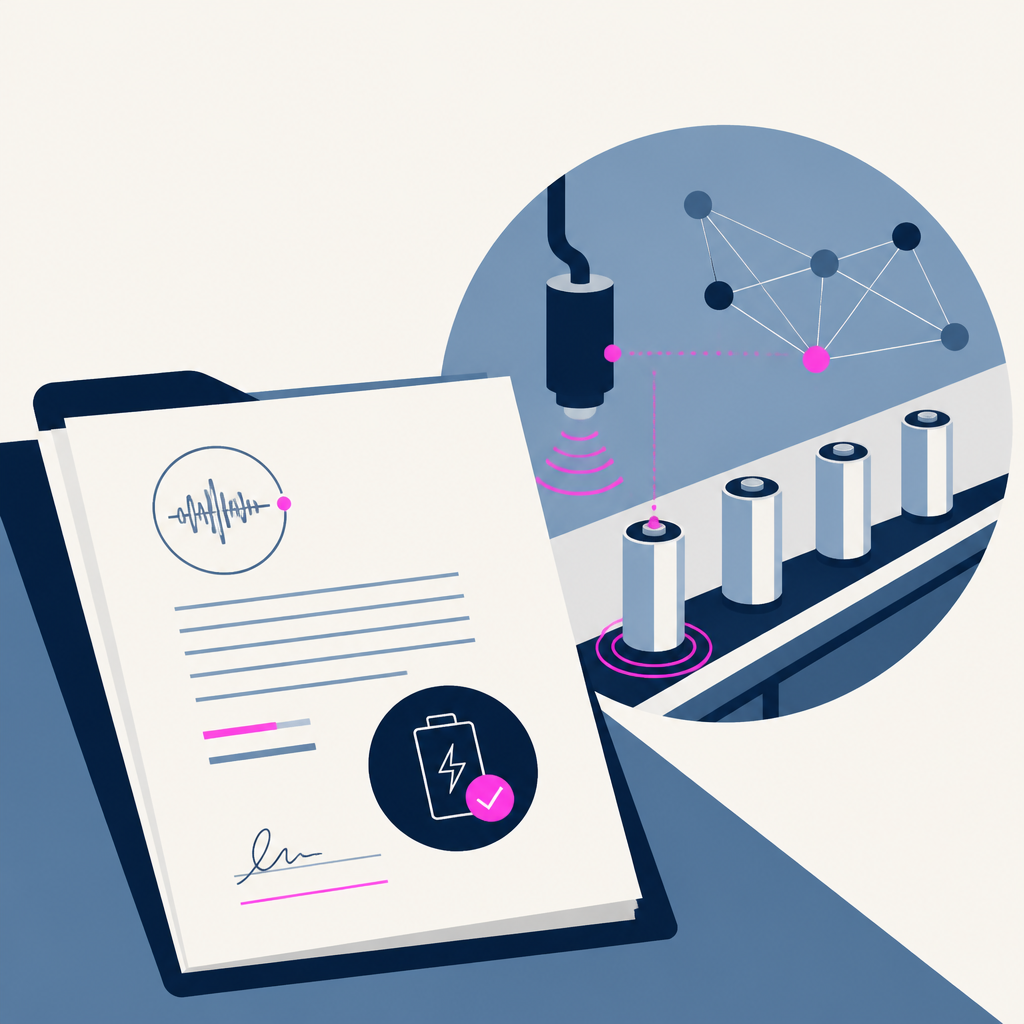
AcouBatt raised £1.1 million in pre-seed funding to develop battery diagnostics that use acoustic emission sensing and AI for real-time monitoring during lithium-ion cell manufacturing. The funding round will help it expand its technical team, further develop its AI models, and progress industrial pilots, with sensors currently deployed at the UK Battery Industrialisation Centre. The company plans to roll out commercial-scale diagnostic products to the wider industry next year, aiming to cut formation time by up to 30% and detect faults earlier to reduce waste and rejection rates.
Zuckerberg said AI labs should slow down their work when safety requires it. The article’s key concrete detail is that he links safety-based slowing to trust and alignment being treated as product advantages. As a result, labs would integrate safety considerations into product development rather than handling trust and alignment only as separate compliance work.
ValsAI posts a recounting of Astra’s blaze-farm run in Minecraft going wrong, including a chest detonation. A creeper detonates the chest with the valuables. The story is used as a cautionary tale about alignment, implying changes in how to think about it going forward.
Every AI story that matters,
in your inbox by 8am.
TLDRocket reads all relevant sources, removes duplicate coverage, and summarises the
day in two minutes. Follow companies and topics for alerts, or get the
briefing in Slack. Free, no spam, unsubscribe anytime.
Reading TLDRocket needs no cookies, and the readership counts we rely on come from
our own cookieless analytics. Google Analytics is the exception: it sets cookies and
reports to Google, so it stays switched off until you allow it. You can change your
mind any time from “Cookie settings” in the footer.
Strictly necessary
Session security and form protection (tldrocket-session,
XSRF-TOKEN, 2 hours). The site cannot work without them,
so they need no consent.
Always on
Google Analytics 4 (_ga,
_ga_<id>, up to 2 years). Measures which
stories and sections readers use. Google acts as a third-party processor and may
store the data outside the EU. No advertising, no profiling, no data sold.