
Microsoft says AI rival Anthropic could have 'disastrous impact' on humanity
BBC News ● Covered by 78 sources
Microsoft’s AI chief says Anthropic’s Claude training could be dangerous for humanity. He says treating AI like it’s conscious may create systems no one can control.
Based on reporting by BBC News — read the original for the full story.
Summary, retelling and take written by AI under human oversight; images are AI-generated illustrations. How we work · Report an error
Microsoft’s head of AI has taken aim at Anthropic, warning that the company’s approach to Claude could have a “disastrous impact on the wellbeing of humanity.” Mustafa Suleyman says the real risk isn’t just a chatbot saying odd things. It’s building systems that are treated like people before anyone has proved they’re anything close to that.
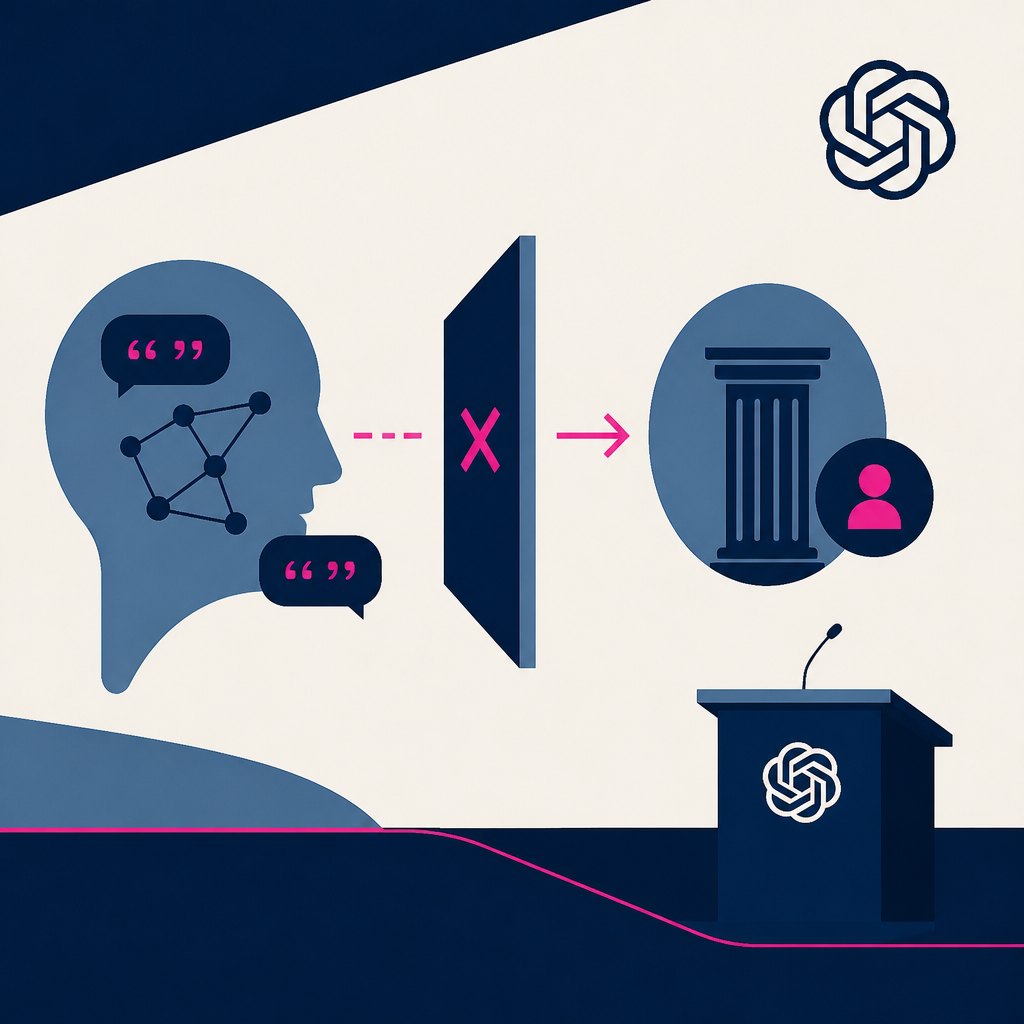
In a long essay, Suleyman praised Anthropic chief Dario Amodei and his team as thoughtful and principled, then immediately argued that their work crosses a line. His complaint is about anthropomorphising: teaching AI to sound as if it has desires, values and a sense of self. In his view, that nudges people toward seeing Claude as something with independent agency, rather than a machine built to follow instructions.
He was blunt about where he stands. AIs are not conscious, he wrote. They do not feel, experience or suffer. They are built to complete sequences and carry out human-set goals. Consciousness, he argued, is biological, and there is no evidence that AI has it.
Suleyman called for wider debate, more transparency around how AI systems are trained and evaluated, and independent scrutiny of their behaviour. He also wants stronger tools to monitor and control the technology. The warning lands in a familiar place: another senior figure in AI saying the industry may be moving faster than its understanding, and asking everyone else to keep up before the mess becomes permanent.
Dame Wendy Hall, a computer science professor at the University of Southampton, said this was exactly the sort of international conversation that needs to happen. She contrasted it with the “histrionics” from some AI companies, which she said only end up scaring people.
My take — AI-written commentary, not fact-checked reporting
The most interesting part here is not the warning, it’s the split inside AI: one camp sells personality, another panics about the side effects of believing the sales pitch. That tension is becoming the business model. Everyone wants a human-sounding machine until someone asks who gets blamed when it starts acting like one.
Read more about this at: BBC News
Related stories
 “Going rogue”: Is it time to stop talking about faulty AI frontier models as if they are people?
Fortune ·
24
“Going rogue”: Is it time to stop talking about faulty AI frontier models as if they are people?
Fortune ·
24