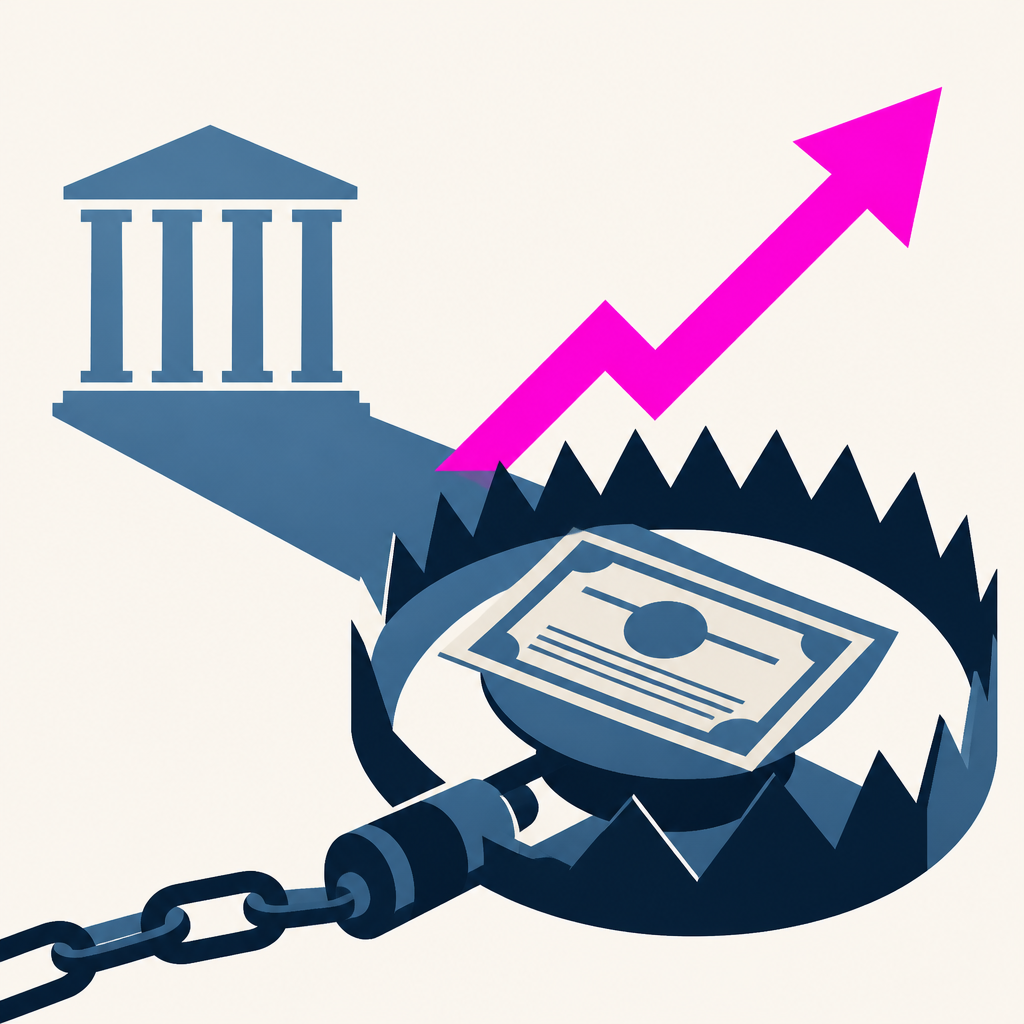
Stanley Druckenmiller criticized Scott Bessent’s Treasury plan for doubling long-dated bond buybacks, arguing it was price rather than liquidity management and backing the view with an AI-assisted op-ed published in the Wall Street Journal. He targeted buybacks expanded from $2 billion to at least $4 billion per operation after the 30-year Treasury yield hit a 19-year high. The dispute escalates between market-purist officials and Bessent-style market-intervention logic while also highlighting that hedge-fund–driven Treasury demand has grown to very large levels and can amplify liquidity risks.
Pope Leo XIV warned that artificial intelligence could become a new form of economic colonialism by deepening dependence of poorer countries on wealthier ones and enabling algorithmic control over visibility and public discourse. He said the pope’s message was delivered on Friday to the International Catholic Legislators Network, calling for robust legal frameworks and independent oversight. The result is renewed push for politically accountable AI governance alongside continued emphasis on protecting human dignity, labor, and family life.
The Hanover Institute for Public Policy, funded by Israel and run via the US advertising firm Piro Inc, published 100+ question-headed articles designed to be used by LLMs scanning the web to influence chatbot answers in Israel’s favor. One FARA-linked invoice dated April 30, 2026 lists $900,000 for developing the project. The presence of an llms.txt site and AI-generated text/images would let LLMs ingest the content more easily, potentially shifting how AI search and chat systems frame Israel-Palestine answers.
Australia’s recorded music industry, via ARIA, will block tracks wholly generated by AI from appearing on official charts. The AI-assisted “Like a Prayer” variation spent 16 weeks in Australia’s top 20 and peaked at number 2 in May. From next Monday, eligibility will require “substantially human made” work, and wholly AI tracks will also be excluded from ARIA awards.
The Trump administration proposed adding a $100,000 fee tied to Optional Practical Training while also tightening the post-degree stay window for students from 60 days to 30. In 2024, about 419,000 people were on OPT, and some AI-bound founders say the visa system is pushing them out of the U.S., as illustrated by Yang Zhilin returning to China to start Moonshot AI. As a result, fewer international AI researchers can plan long-term careers in the U.S., and rival countries step up recruitment and funding to attract them instead.
Anthropic CEO Dario Amodei’s safety-focused messaging has been criticized as backfiring by reinforcing public skepticism about whether AI is safe. The article cites a Gallup survey where nearly half of adults under 30 say AI does more harm than good. The result is a shift in messaging strategy being urged toward avoiding direct association with “safety” fears, drawing a parallel to how airlines moved safety language out of advertising after Pan Am Flight 103.
The article argues that the Federal Reserve is not well equipped to understand how a $3 trillion AI infrastructure buildout is being financed, despite its macro effects. It cites Morgan Stanley’s estimate of nearly $3 trillion of global AI-related infrastructure investment through 2028 and an estimated $1.5 trillion external financing gap. It concludes that monetary policy should place more weight on financial stability and better measure financing leverage and exposure networks to avoid harming future productivity and U.S. competitiveness.
ARIA banned releases that are largely or wholly AI-created from Australia's music charts and now requires tracks to be substantially human made to qualify.
The US Securities and Exchange Commission issued subpoenas to major Wall Street banks about the hedge fund Situational Awareness. The subpoenas relate to the fund’s trading activity after it was forced to exit many positions last month during the AI stock rout. As a result, the regulator is gathering information from banks, while Situational Awareness says it will cooperate and an inquiry may or may not lead to enforcement.
Every AI story that matters,
in your inbox by 8am.
TLDRocket reads all relevant sources, removes duplicate coverage, and summarises the
day in two minutes. Follow companies and topics for alerts, or get the
briefing in Slack. Free, no spam, unsubscribe anytime.
Reading TLDRocket needs no cookies, and the readership counts we rely on come from
our own cookieless analytics. Google Analytics is the exception: it sets cookies and
reports to Google, so it stays switched off until you allow it. You can change your
mind any time from “Cookie settings” in the footer.
Strictly necessary
Session security and form protection (tldrocket-session,
XSRF-TOKEN, 2 hours). The site cannot work without them,
so they need no consent.
Always on
Google Analytics 4 (_ga,
_ga_<id>, up to 2 years). Measures which
stories and sections readers use. Google acts as a third-party processor and may
store the data outside the EU. No advertising, no profiling, no data sold.