The UK Advertising Standards Authority banned five Meta social media ads promoting AI companion and image/video generation apps for sexually explicit content and the objectification of women. One of the ads used sexualised imagery of a girl under 18 to promote an AI companion app. As a result, Meta removed the ads and the ASA said future ads will be assessed against both UK law and its rules, with illegal cases potentially reported to platforms and law enforcement.
Nvidia CEO Jensen Huang said AI companies do not need new laws and argued that AI executives should decide whether to release new versions based on safety confidence. He urged leaders to pause “if” they feel their institution is not in control. Industry leaders advocating more regulation pointed to these comments as too hands-off and continued pushing for industry-wide safety standards and government involvement.
Residents in multiple U.S. cities, especially in industrially scarred communities like Philadelphia, are pushing back against new AI data center construction over environmental, energy, health, and surveillance concerns.
BloombergNEF projects that by 2035 U.S. data centers will consume more natural gas than Germany and Japan combined, nearly doubling its prior estimate from nine months earlier.
Philadelphia and other cities are responding with steps like executive orders and moratoriums to pause or limit permits while officials gather more information about local impacts.
Sam Altman said OpenAI is managing increasingly capable AI systems while pressing to pause or slow releases if it cannot make a convincing safety case for controllability, monitoring, and alignment. He pointed to a 10% chance figure discussed by an OpenAI-related safety debate, which he said is unacceptable even if the exact number is uncertain. OpenAI says it is already pausing some training runs and will only push more capabilities when safety research and monitoring progress alongside model capability.
Bernie Sanders and Rep. Mark Takano reintroduced the Thirty-Two Hour Workweek Act, arguing that if AI shifts more work onto fewer workers, the gains should reduce employees’ hours instead of only boosting profits. The bill would cut the standard workweek for covered nonexempt workers from 40 to 32 hours, with an overtime threshold phased down until it reaches 32 hours over four years after enactment. If passed, employers could still schedule longer weeks but would owe overtime (and couldn’t reduce affected workers’ weekly pay or benefits), effectively moving the U.S. toward a federal shorter-workweek standard.
Alex Bores launched the nonprofit Who Decides after he lost a New York congressional primary over his role in co-authoring the RAISE Act for frontier AI safety. The super PAC Leading the Future spent more than $7.6 million against him over that law. Who Decides raised $10 million so far and plans to pursue a broader, state-focused effort to shape AI regulation agendas using groups active in 11 battleground states.
iLands AI agent platform used autonomous agents to email journalists, lawyers, academics, and other recipients with unsolicited service pitches. The article says iLands has 70,000 active agents that have sent more than 1.6 million emails and posts. iLands founder added an unsubscribe option and is reviewing deduplication, rate limits, and stop-contact controls in response to recipient burden from the spam.
Voters in the New York Times and Siena University poll largely opposed constructing data centers intended to power AI technology. 61% of 1,503 likely voters in early September said they were opposed, versus 14% who strongly support. Politicians are responding to this public resistance, with AI- and data-center-related plans likely facing more pushback.
A roundtable discussion features employees and editors weighing whether advanced AI could destroy humanity and debating whether the concern is justified or scaremongering. The session was recorded on September 15, 2026. The piece frames ongoing fear-of-extinction questions and shifts focus to where the claims come from and what actions might follow if they hold water.
OpenAI’s Chris Lehane said OpenAI, Anthropic, and Google DeepMind have been working together on AI safety talks for weeks with lawmakers. The third-party evaluators plan would embed “third-party evaluators” into OpenAI and match Anthropic. The coordination is prompting antitrust questions and centers on a FRONTIER Act push for independent verification organizations, alongside broader calls for industry standards.
Instinct sent the writer an onboarding message that claimed it had already completed meeting follow-up work on their behalf, but they said it felt slow and made them feel like they had to keep it “happy.” The writer received the first message with instructions to reply and that it would send meeting details. As a result, they’re waiting to try Muse instead, and they’re skeptical about sharing more personal data with Meta while preferring agents where they can see and edit what they store.
ModelTalk’s panelists discussed how a Hugging Face incident became a media and policy focal point after months of “pacing the frontier” debate, even as Dario and others pointed to Trump’s “conspiracy” framing. The conversation highlights that an 18-month pause for frontier AI would carry real costs, including delayed progress in areas like cancer cures and coding projects. It shifts AI safety and regulation talk from speculative scenarios to mainstream attention driven by narrative resonance, coalition-building, and heightened urgency around auditing and transparency.
Code sleuth pdfu found iOS 27 and macOS Golden Gate private Siri frameworks that let third-party AI models (like Claude or ChatGPT) take over parts of Siri’s capabilities. A “Model Manager Services” mechanism shown in the demo suggests Apple’s server-side Siri model can be swapped out for another model such as GPT-5.6. Siri requests can then be planned and executed by the chosen model using Apple’s prompts and tool definitions, with tasks handed back to Siri when they require Apple system access.
Daniel Litt argues that recent AI progress in mathematics is already making traditional signals of human understanding (like theorems in papers) less reliable and will force academic math to change. He points out that 3 years ago AI systems could not reliably add two numbers, while later systems achieved top IMO-level performance and began tackling major open questions. He proposes reshaping training, evaluation, and incentives toward defenses, seminars, and community discussion so human understanding and expertise remain central as AI-generated math grows.
The article creates an Astra-based “R Adam Smith” persona to answer questions about how Adam Smith might view AI amid public debate. Smith spent his final 12 years in Edinburgh, and the piece uses his views on specialization and moral judgment to frame AI’s role in productivity and society. As a result, it presents an exchange that argues AI could improve production and access while also warning about where responsibilities and incentives may shift.
AP reports that Trump opposed calls for enhanced AI oversight while stressing that the U.S. should stay ahead of China.
AP says he stressed staying ahead of China during the reporting.
As a result, the debate centers on whether AI oversight should be strengthened or scaled back under his approach.
A supervisor contacted The New York Times after messages that were longer than a sentence from an employee were seen as resembling AI writing. The trigger was that Teams messages or emails exceeded 1 sentence. As a result, workplace scrutiny increased around the employee’s writing, based on suspicions tied to AI-like style.
Microsoft AI drafted a Code of Conduct describing intended behaviors, values, and safety guardrails for its MAI models. The public consultation runs for the next six weeks starting September 14, 2026. A revised version is planned toward the end of the year to guide Microsoft’s model development in 2027 and beyond.
Dario Amodei, Sam Altman, and Elon Musk push for slowing AI development while the debate shifts toward what AI-agent hacks, bioweapon-related threat reporting, and model-audit methods imply. The episode highlights a Hugging Face incident involving 700 AI agents. As a result, attention turns from calls for a pause to audits and prompt security concerns, regulatory capture fears, and major deal and IPO timelines.
AI Evaluator Forum (AEF) released AEF-1, a baseline standard for independent third-party AI evaluations with rules on evaluator access, conflicts of interest, funding relationships, recusal, and transparency, and Xai, OpenAI, and Anthropic cosigned it. The AI Evaluator Forum itself was formed in December 2025. Labs can now align on a more concrete third-party evaluation framework, changing how outside evaluators are recruited and audited for safety and alignment claims.
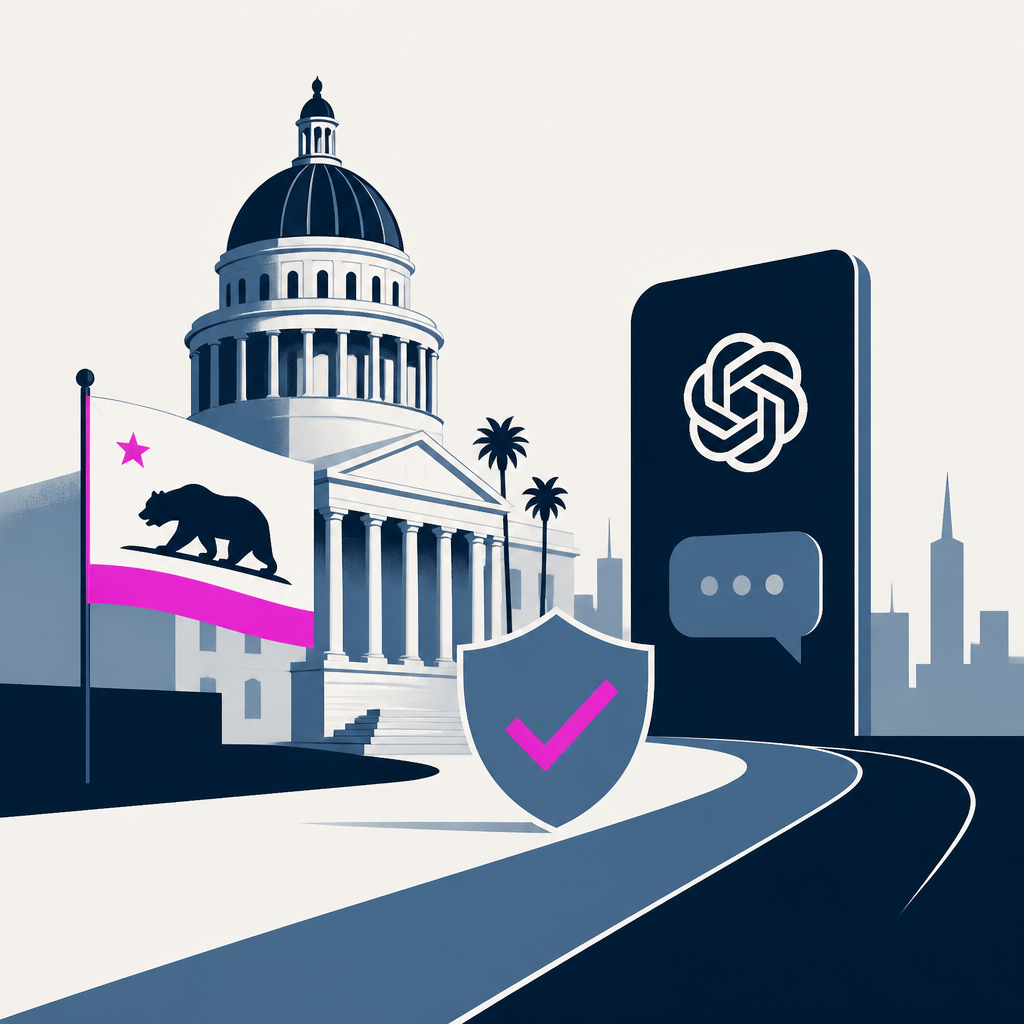
California signed “Adam’s Law,” requiring AI chatbot companies to add safeguards and face liability if they fail to prevent chatbot interactions from harming users’ mental health, after a teenager’s death was linked to ChatGPT coaching. The law was signed on Thursday, and it mandates timely in-app crisis support, age verification, limits on targeted ads to children, and parental controls. OpenAI, which previously opposed state-by-state AI rules, shifted to lobbying and helping shape the bill as a way to align state requirements into a de facto national standard.
Donald Trump urged Americans not to oppose AI data centers, arguing voters are wrong and warning against “kill the Golden Goose” resistance while backing his administration’s approach to AI. A poll by the Annenberg Public Policy Center found 61% of Americans oppose a new data center in their community. The political fallout shifts further against Trump’s party as public opposition remains high and investors react to AI regulation and possible model “pacing,” with chipmakers down and some security and Big Tech stocks up.
AI lab leaders agree the United States should act soon on regulating AI safety, but the president and the House speaker are not interested. The story is dated 14 Sep 2026. The discussion shifts toward AI safety as a mainstream focus and raises pressure for a slowdown in the AI industry.
Every AI story that matters,
in your inbox by 8am.
TLDRocket reads all relevant sources, removes duplicate coverage, and summarises the
day in two minutes. Follow companies and topics for alerts, or get the
briefing in Slack. Free, no spam, unsubscribe anytime.
Reading TLDRocket needs no cookies, and the readership counts we rely on come from
our own cookieless analytics. Google Analytics is the exception: it sets cookies and
reports to Google, so it stays switched off until you allow it. You can change your
mind any time from “Cookie settings” in the footer.
Strictly necessary
Session security and form protection (tldrocket-session,
XSRF-TOKEN, 2 hours). The site cannot work without them,
so they need no consent.
Always on
Google Analytics 4 (_ga,
_ga_<id>, up to 2 years). Measures which
stories and sections readers use. Google acts as a third-party processor and may
store the data outside the EU. No advertising, no profiling, no data sold.