
U.S. economy grows at sluggish 1.5% pace in second quarter
Fortune The Associated Press
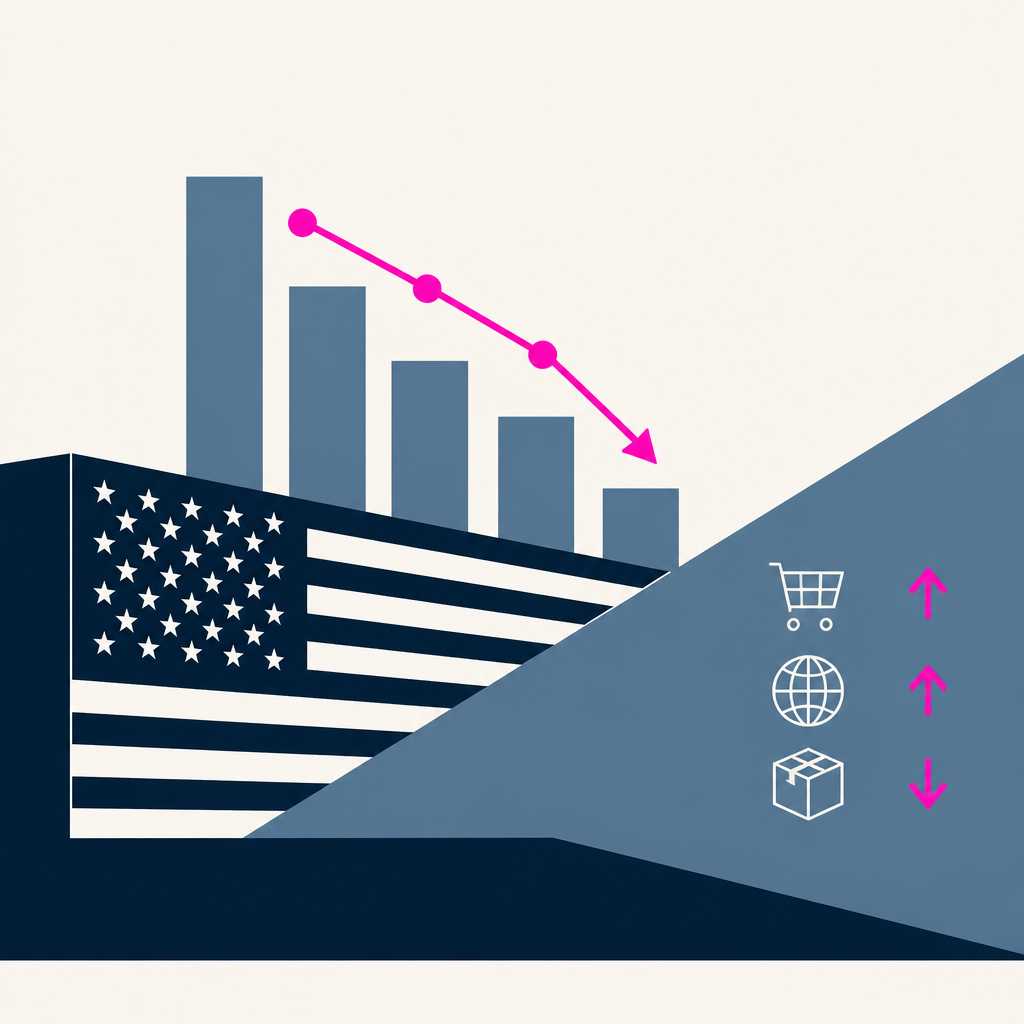
U.S. GDP grew 1.5% in spring, down from 2.1%. People kept spending, but imports and AI gear held growth back.
Based on reporting by Fortune, The Associated Press — read the original for the full story.
Summary, retelling and take written by AI under human oversight; images are AI-generated illustrations. How we work · Report an error
The U.S. economy slowed to a 1.5% annual pace in the second quarter, the Commerce Department said Wednesday. That was down from 2.1% in the first three months of the year, and it matched the department’s first estimate for April through June.
The headline number looks soft, but consumers kept the engine running. Spending rose at a 3.4% annual rate, a sharp pickup from 0.5% in the first quarter. Since consumer spending makes up about 70% of U.S. economic activity, that matters a lot more than the top-line GDP figure might suggest.
Imports were the drag. They jumped at a 12.5% annual pace, helped by a surge in shipments of computer chips and other goods tied to artificial intelligence investment. Because imports are subtracted in GDP calculations, they shaved 1.64 percentage points off growth. That’s the weird trick of the report: a business boom can make the economy look weaker on paper.
And there was still real underlying strength. Business investment, excluding housing, grew at an 8.5% pace, while a measure that strips out volatile government spending and trade rose 4.2%, up from 1.7% in the first quarter. Housing investment also ticked up for the first time since the end of 2024, even with mortgage rates still high.
The report lands as inflation stays sticky. A Commerce Department measure watched closely by the Federal Reserve was unchanged in July, with prices up 3.7% from a year earlier, the same pace as June. That’s still well above the Fed’s 2% target, and with the third GDP report due Sept. 30, the picture is clear enough already: growth is cooling, but price pressure is not going quietly.
My take — AI-written commentary, not fact-checked reporting
This is the kind of economy that drives policymakers mad: weak headline growth, solid spending, and inflation that won’t politely leave the room. The AI boom is propping up investment, but it’s also helping feed higher prices for chips and other gear, which is not exactly a clean victory lap. Everyone gets to claim a different reality, and that’s usually how messy elections happen.
Read more about this at: Fortune
Related stories
 The U.S. economy is running hot and stuck on a hamster wheel as GDP growth must outpace borrowing costs—or risk getting sucked into a debt spiral
Fortune ·
31
The U.S. economy is running hot and stuck on a hamster wheel as GDP growth must outpace borrowing costs—or risk getting sucked into a debt spiral
Fortune ·
31
 CBO chief warns it's 'probably not plausible' that a strong economy alone can steady U.S. debt as 5%-6% growth is needed—more than Bessent's 3% view
Fortune ·
6
CBO chief warns it's 'probably not plausible' that a strong economy alone can steady U.S. debt as 5%-6% growth is needed—more than Bessent's 3% view
Fortune ·
6