The complex corporate web behind a $3.2 billion AI data center
Ars Technica Petala Ironcloud ● Covered by 2 sources
A fire hit an unfinished New York AI data center, and firefighters say they went in blind. It’s a mess of leases, warrants, and guarantees behind a $3.2 billion build.
Based on reporting by Ars Technica, Petala Ironcloud — read the original for the full story.
Summary, retelling and take written by AI under human oversight; images are AI-generated illustrations. How we work · Report an error
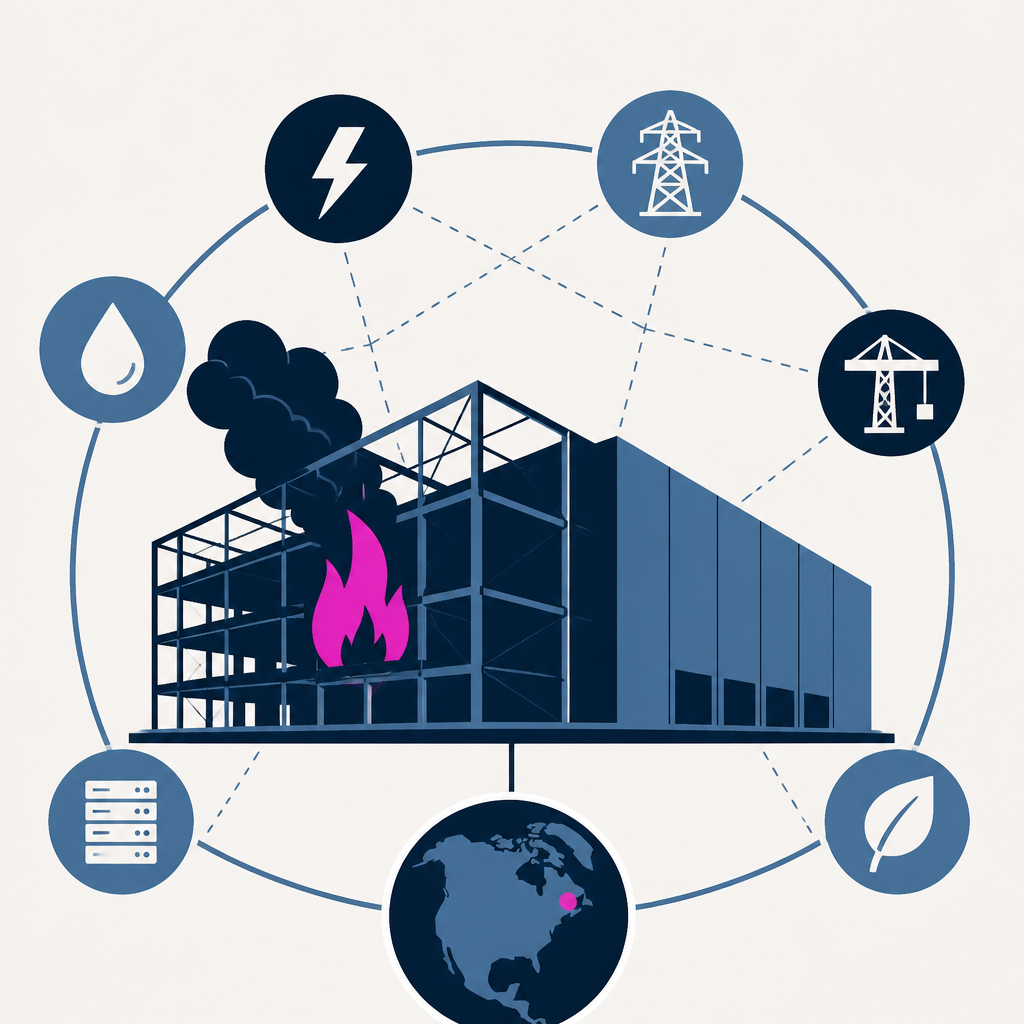
In early June, a fire broke out in an unfinished building at the Lake Mariner data center in Somerset, New York, and the local fire crew says it walked in without the basics it should have had. There was reportedly no working alarm, no suppression system, and three dead hydrants. The safety documents firefighters were entitled to see also reportedly burned in the blaze.
Steve Matisz, chief of the Barker Fire Department, said his team went into the building “kind of blind.” The smoke was heavy and black, and it came from chemicals the crew could not identify because the safety sheets that were supposed to explain the danger were apparently gone too. “It’s been a difficult situation,” Matisz said, adding that he was not sure what to make of the claim that the sheets had burned up.
The site itself is part of a much bigger machine. Lake Mariner sits on a former coal mine on Lake Ontario, and the campus is one of the largest AI data center buildouts in New York, with a price tag of $3.2 billion.
And the ownership structure is as tangled as the project is expensive. TeraWulf owns and operates the data center on land it leases from a company owned by its own CEO. Fluidstack, a UK-based AI company, will run the center. Google holds warrants for a future 14 percent equity stake and has agreed to guarantee Fluidstack’s lease payments. Anthropic is among the AI companies whose compute demand the facility is meant to serve.
My take — AI-written commentary, not fact-checked reporting
This is what happens when AI infrastructure gets treated like a financial sculpture instead of a place that has to survive a fire. The jargon can wait; hydrants can’t. If a project this large leaves firefighters guessing, the problem isn’t just safety paperwork — it’s the whole habit of wrapping hard infrastructure in soft accountability.
Read more about this at: Ars Technica