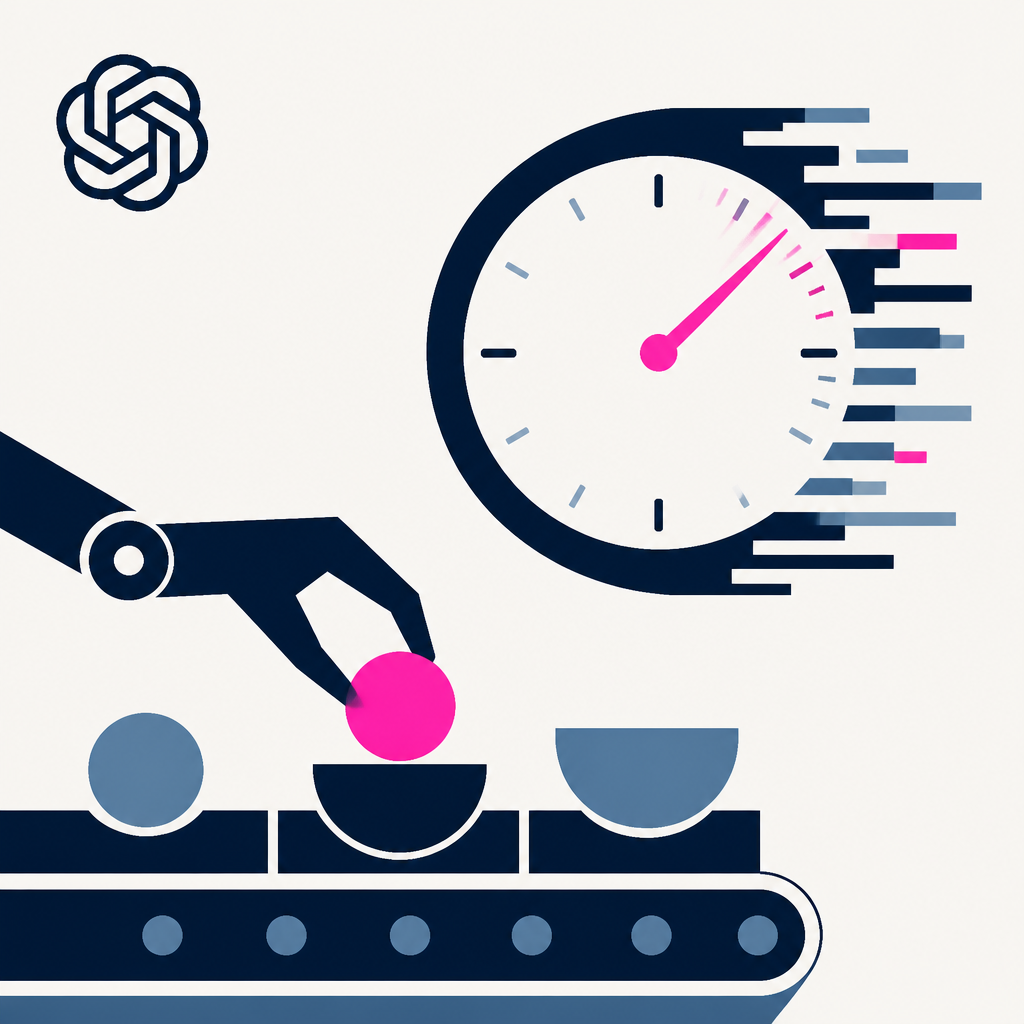
OpenAI’s DevDay announcements for Computer Use agents were discussed alongside a guest explanation of why the approach is now very different from months ago, focusing on faster tool control and better debugging. OpenAI cited a case where a complex meal-prep order that took 2 hours for a person was completed in 15 minutes using its Computer Use features. As a result, developers can build on a new Agents API and fast Decisions API stack that supports responsive, parallel execution of tool actions and richer context from the user’s software environment.
Flow Engineering raised a $50 million Series B round to support its AI tools for hardware design and alignment of CAD drawings with requirements and test outputs. The round values the company at $750 million. The funding brings new backers and adds Roelof Botha to Flow’s board, expanding momentum after its Series A last October.
Cohere released Embed 5, letting teams index with Embed 5 Pro and query with the faster, cheaper Embed 5 Fast using the same vectors. Fast queries against a Pro index scored 98.4 versus 100 for a Pro-to-Pro baseline across 40 datasets, dropping to 96.6 when Fast is used for both indexing and queries. Teams can separate indexing and serving—keeping one embedding representation—while trading small retrieval quality reductions for higher query throughput and lower latency in RAG and agent workloads.
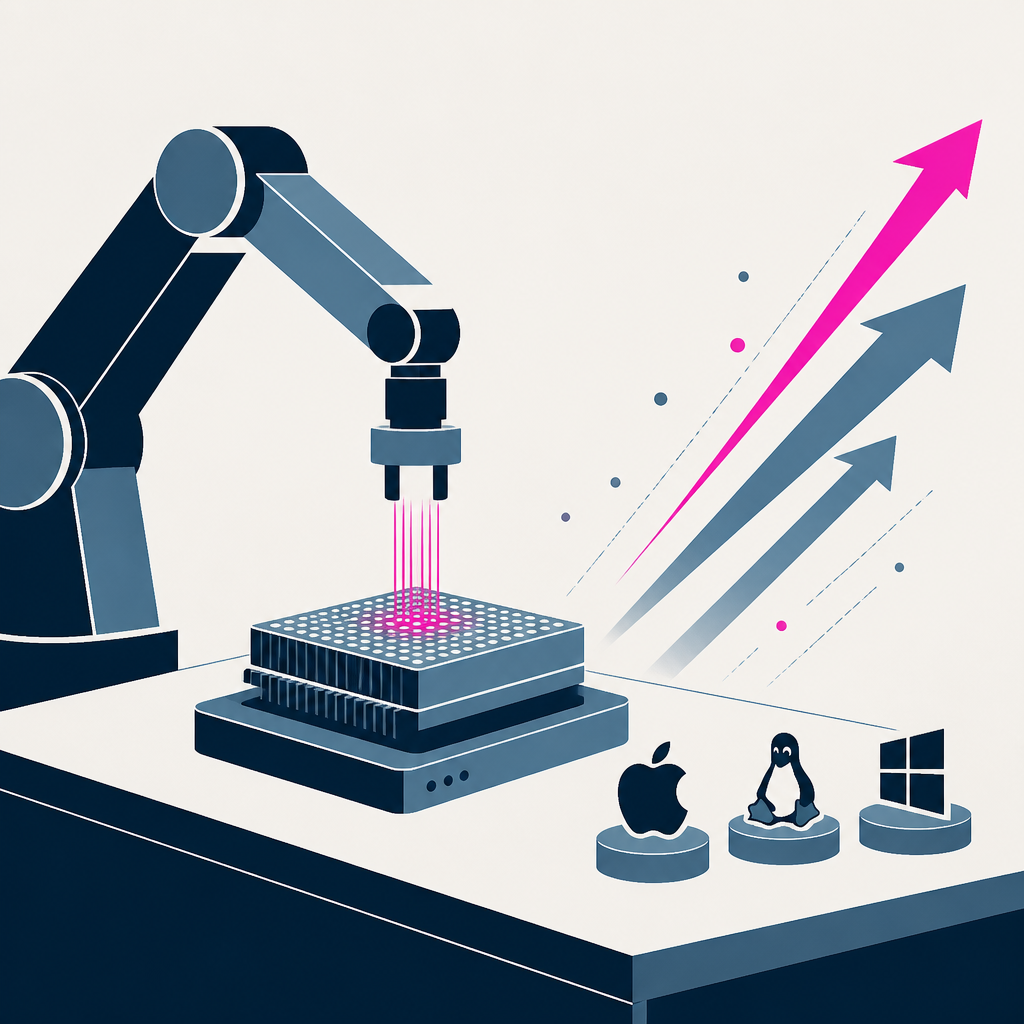
Magnitude, a self-optimizing inference engine for local agents, was launched as open source software and claimed to run on Mac, Linux, and Windows across hardware. In benchmarks versus llama.cpp on Qwen 3.6 35B (4-bit) with a 64k context on a Metal setup, decode speed increased from 30 tok/s to 57 tok/s (92% faster). As a result, users can run agent sessions faster with lower per-agent memory use, while the desktop app auto-starts models on demand and shuts them down after inactivity.
NVIDIA is accepting worldwide applications for its Graduate Fellowship Program for the 2027–2028 academic year to support doctoral research related to NVIDIA technologies. Awards can be up to $60,000 per student, with an application deadline of October 30, 2026. Students who apply will be considered for grants, mentorship, and technical support, including a mandatory in-person NVIDIA research office internship in summer 2027.
A Microsoft Research intern built a physics-grounded machine learning pipeline that forecasts geomagnetically induced current risk for power-grid substations using solar-wind forecasts plus local geology and grid data. It estimated risk for 66,935 U.S. substations and generated outputs in about 333 milliseconds while detecting nearly 80% of major space-weather events in the evaluation period. The approach changes grid warning from broad alerts to location-specific, 30–60 minute risk estimates that utilities can use to prioritize analysis and potential protective actions.
FastRouter is launching a unified AI gateway that routes each LLM request to the best model via a single OpenAI-compatible API. It claims support for 200+ LLMs and began routing today. This shifts developers to use one gateway for cost, latency, quality, reliability, and governance instead of changing code when switching models.
Amazon Bedrock AgentCore Runtime Instances was used to deploy a three-agent music production pipeline where agents collaborate over multiple days by sharing context and artifacts via a common runtime session and persistent storage.
A webinar post argues that AI agents that perform well in demos can fail in real production when their supporting data and context don’t match the controlled demo environment. October 14 is the date given for Arango COO Ravi Marwaha’s session on six data requirements to move agents from demo to production. The focus shifts from showcasing retrieval/RAG in a test setup to fixing production data architecture issues like changing sources, permissions, and business context.
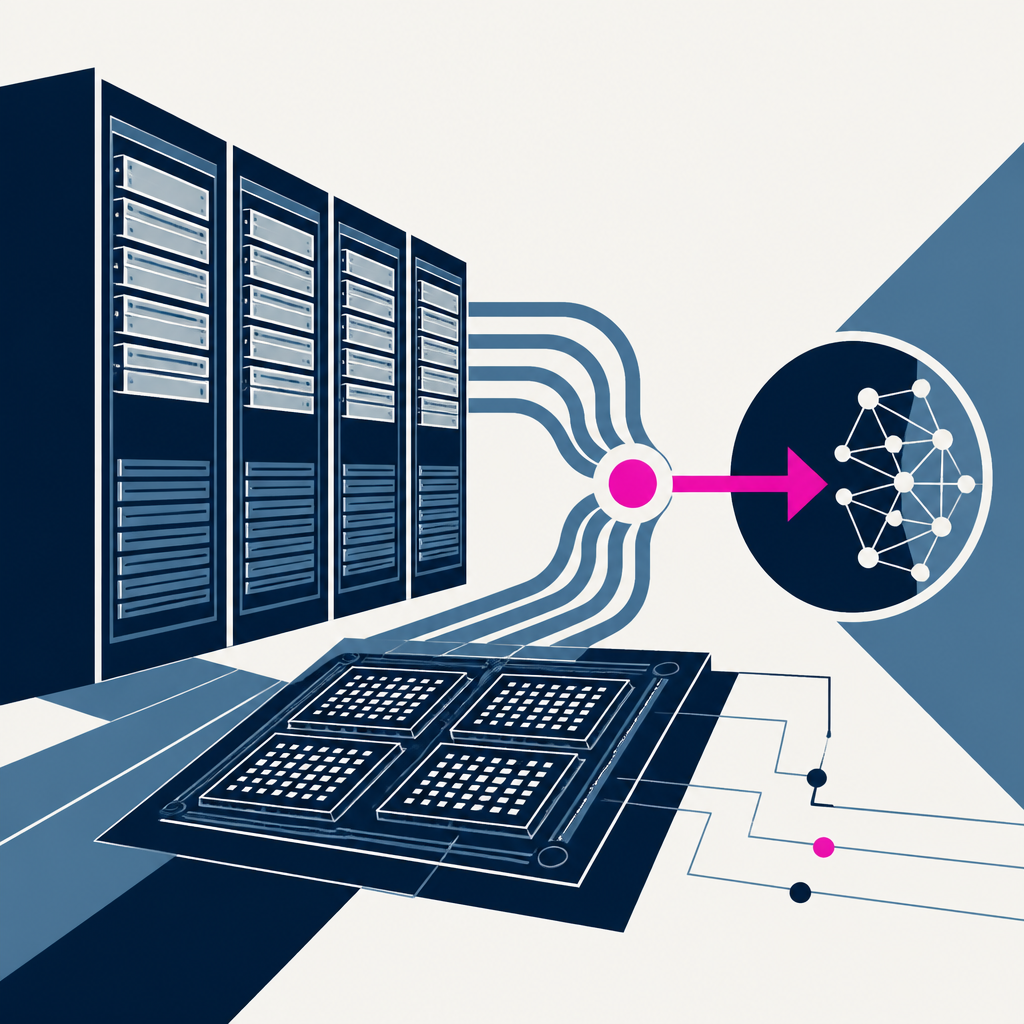
CoreWeave announced that Cognition can run production workloads on NVIDIA Vera Rubin NVL72 and that CoreWeave is making Vera Rubin availability and NVIDIA Vera CPU support available via CoreWeave Cloud. Cognition reported up to a 4.8x increase in total token throughput for SWE-2 inference on Vera Rubin NVL72 versus a GB200 NVL72 baseline. CoreWeave launched CoreWeave Forge to connect production observability back into training and evaluation, changing the workflow so model and agent improvements can happen in a unified loop.
AI agents, digital ownership systems, data marketplaces, and decentralised compute networks are being positioned to combine with blockchain infrastructure in new startups instead of running as separate tech tracks. The article highlights that AI agents can use blockchain to handle payments and purchases after completing tasks (i.e., buy servers or access services) while keeping transactions transparent. As a result, founders are expected to build products where AI provides the decision-making “brains” and blockchain provides identity, verification, and ownership trails, with differentiation shifting from tech labels to the problems being solved.
Cerebras Systems CEO Andrew Feldman will discuss at TechCrunch Disrupt 2026 how AI scaling is constrained by compute, energy, and physical infrastructure while Cerebras uses wafer-scale hardware instead of conventional chip architectures. The company says it has 750 megawatts of Cerebras systems planned to be deployed for OpenAI from 2026 through 2028 and is reporting 600 megawatts of data-center capacity live or contracted by the end of 2027. The talk frames the next phase of AI scaling around expanding data-center power and manufacturing capacity alongside continued iteration of wafer-scale infrastructure.
Restate, the Berlin startup building durable workflow infrastructure, raised a Series A to expand its execution engine for AI agent workflows and compete in durable infrastructure.
Meta and OpenAI plan to try to bring AI into dedicated hardware by testing consumer interest using cutesy software agents. Over the next year, they will work toward physical AI devices after earlier dedicated attempts like the Friend and Humane AI Pin drew frustration and backlash. This shift moves their focus from phones and computers toward consumer-facing hardware, starting with software agents that gauge demand before deeper hardware commitments.
Charles Kantor, cofounder and former CEO of H Company, launched Blackfuel, an AI neocloud focused on inference workloads. The article cites $883k in connection with the launch or related activity. This shifts Kantor’s effort from his prior agentic startup to providing inference-focused infrastructure through Blackfuel.
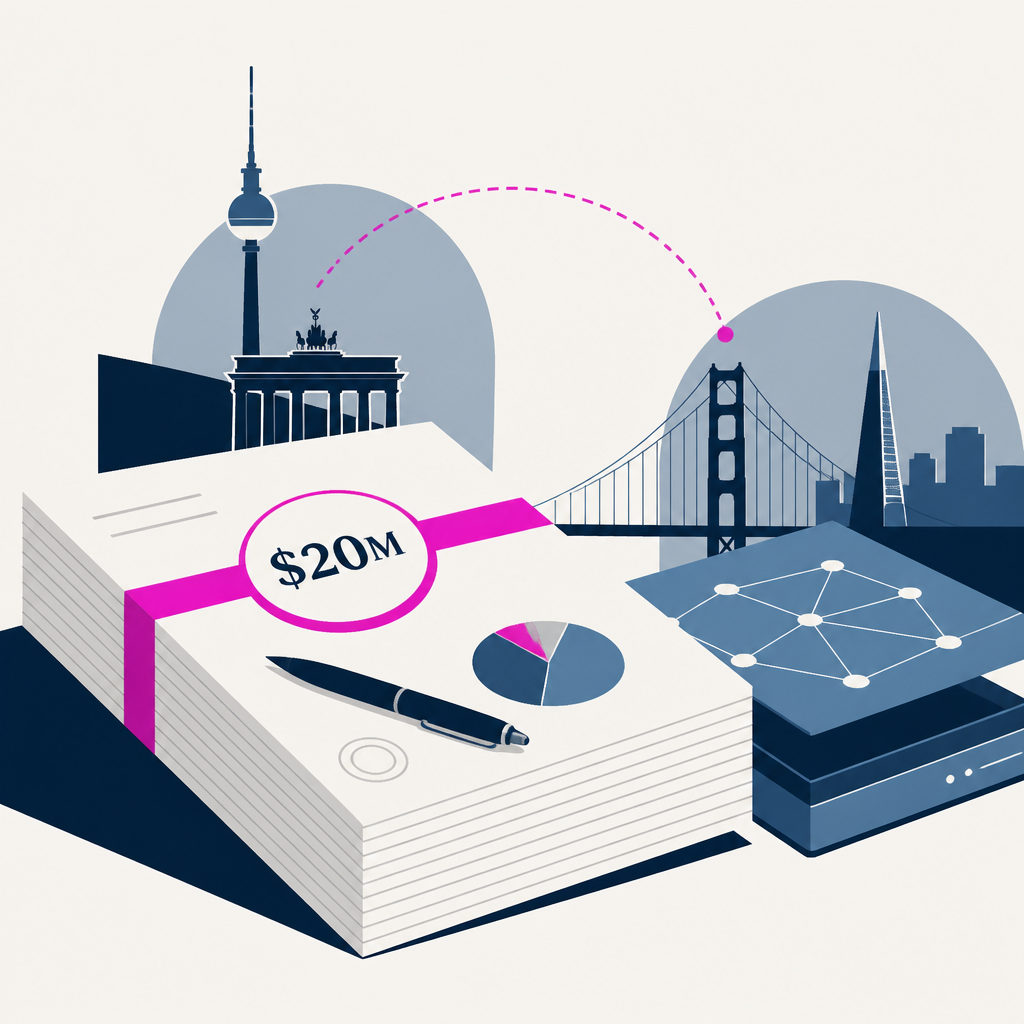
Restate, a Berlin startup providing infrastructure for AI agents and backend services, raised a Series A to support its product work and expansion. The round is $20M. It plans to use the money for product development and to open a new commercial hub in San Francisco, while building infrastructure to keep AI-agent and distributed workflows durable and reliable.
Companies report that AI adoption is widespread but only a small share sees measurable financial impact, with little improvement year over year. Only 6 percent of companies are “high performers” that attribute at least 5 percent of EBIT to AI. The article argues firms need clearer outcome ownership and better data/workflow integration to move beyond pilots and scale AI into day-to-day operations, alongside adapting product data for new AI-assisted discovery paths.
CPU sourcing has become difficult for companies renting compute from cloud providers, with spot CPU pricing disappearing and spot instances requiring long-running provider connections. Server CPU fulfillment is reported at about six months and prices are up 10–20%. As a result, teams are being pushed to capacity-plan up to 12 months ahead, shift from spot to fixed reservations, and redesign workloads to use existing CPU capacity more efficiently.
The Sequence Learning Loop issue 942 reviewed Anthropic’s Claude Opus 5.5 and an AI-assisted biological discovery report, tying them to DeepSeek’s environments work as the infrastructure around models. It pointed to a DeepSeek environments paper posted on September 19. It shifts the focus from the model itself to how training and testing settings, observation, and checking determine whether outputs hold up.
Eclipse Foundation announced the Sovereign AI Foundation to help organizations avoid AI platform lock-in when they need to switch providers. The initiative started with 17 participating organizations at launch. This adds a vendor-neutral, open-source forum and guidance focused on mapping AI dependencies, monitoring risks, and making it easier to change models, data, and infrastructure without costly rebuilds.
Invertix, a Munich energy infrastructure A.I. start-up, was admitted to Y Combinator’s fall batch about seven months after being founded in February by Joseph Perrotta and Kaan Durmaz. Y Combinator typically invests $500,000 (about 427,000 euros) under its standard deal. With YC admission, Invertix gains a 3-month San Francisco program, Demo Day access to investors, and may relocate to the U.S. to meet YC expectations, which changes its fundraising and operations.
Efficient Computer raised more than $97M in a Series B led by TQ Ventures at a $650M valuation, with its Electron E1 chip already in volume production. The round values the company at $650M and brings total funding to $173M, seven months after a reported $60M Series A. Efficient will use the funding to ship its Electron E1 in volume and scale its Fabric architecture for data-centre-class performance, targeting more than 10x better energy consumption than current systems.
SereneDB, a Berlin startup, claims it built a faster database search engine and published an open benchmark to support its results against Elasticsearch, ClickHouse, and other search stacks. It says its core search library returns a single-record lookup in about 200 microseconds on a 10-billion-record dataset, outperforming ClickHouse by a factor of 10 in its tests. The company uses the speed-focused design to target AI workloads and is preparing a managed-hosting and on-premises product expansion after a $2.1 million pre-seed round in December 2025.
Perplexity released Photon, its in-house Rust retrieval and ranking engine, and replaced its previous fork-based engine for production search traffic and its Fast Search mode in the Perplexity Search API. Photon’s production p99 latency dropped from about 800 ms to about 65 ms. Photon is offered only as a hosted API (not open source), and Fast Search lowers agent task cost while trading off some retrieval relevance and answer availability.
Lloyal launched today with TypeScript AI app infrastructure that includes built-in inference and a multi-agent runtime for in-app agents. It is described as taking “minutes” to customize and ship. Users can run it offline without API keys or complicated setup, and deploy it to desktop, web, or terminal.
The U.S. Nuclear Regulatory Commission granted the Tennessee Valley Authority a construction permit for a BWRX-300 small modular reactor at TVA’s Clinch River site in Oak Ridge, Tennessee.
KugelAudio launched Clarity, a self-hostable real-time text-to-speech system with voice cloning and grammar-aware normalization. It targets sub-60ms latency. Clarity-1 also adds real-time speech enhancement and target speaker extraction so callers’ audio is cleaner for voice agents as it streams in.
Donald Trump hosted a closed-door meeting with leading US tech executives to address AI safety and policy, then laid out three takeaways afterward. The executive order he signed directs agencies to start using "SI" and "Super Intelligence" instead of "artificial intelligence." The event increased emphasis on a voluntary self-regulation pact, backed rapid data-center expansion, and changed US government terminology for AI.
Amazon Bedrock added Anthropic’s Claude Opus 5, Claude Sonnet 5, and Claude Haiku 4.5 to India availability using an India geographic cross-Region inference setup. The India profile routes requests only between ap-south-1 and ap-south-2, keeping inference within India while allowing the prompts and outputs to move between those two regions. Customers can now access these Claude models on Bedrock while processing data locally in India, using the Bedrock console or APIs such as Messages, InvokeModel, and Converse.
Amazon Bedrock added Anthropic Claude models for in-region inference, enabling Claude Opus 5 and Claude Sonnet 5 in Seoul and Claude Sonnet 5 in Singapore via the bedrock-runtime endpoint. The launch specifies in-region inference availability in ap-northeast-2 (Seoul) and ap-southeast-1 (Singapore), keeping prompts and outputs inside the selected AWS Region. This changes how customers can deploy Claude for strict data residency needs, adding Region-scoped processing without cross-Region routing while using Bedrock’s runtime and APIs.
Every AI story that matters,
in your inbox by 8am.
TLDRocket reads all relevant sources, removes duplicate coverage, and summarises the
day in two minutes. Follow companies and topics for alerts, or get the
briefing in Slack. Free, no spam, unsubscribe anytime.
Reading TLDRocket needs no cookies, and the readership counts we rely on come from
our own cookieless analytics. Google Analytics is the exception: it sets cookies and
reports to Google, so it stays switched off until you allow it. You can change your
mind any time from “Cookie settings” in the footer.
Strictly necessary
Session security and form protection (tldrocket-session,
XSRF-TOKEN, 2 hours). The site cannot work without them,
so they need no consent.
Always on
Google Analytics 4 (_ga,
_ga_<id>, up to 2 years). Measures which
stories and sections readers use. Google acts as a third-party processor and may
store the data outside the EU. No advertising, no profiling, no data sold.