Should We Track AI Chips?
CSET Georgetown Emily Tavenner
The U.S. is trying to track where AI chips end up after export. That could catch smugglers, but the chips can still hide, spoof, or slip through.
Based on reporting by CSET Georgetown, Emily Tavenner — read the original for the full story.
Summary, retelling and take written by AI under human oversight; images are AI-generated illustrations. How we work · Report an error
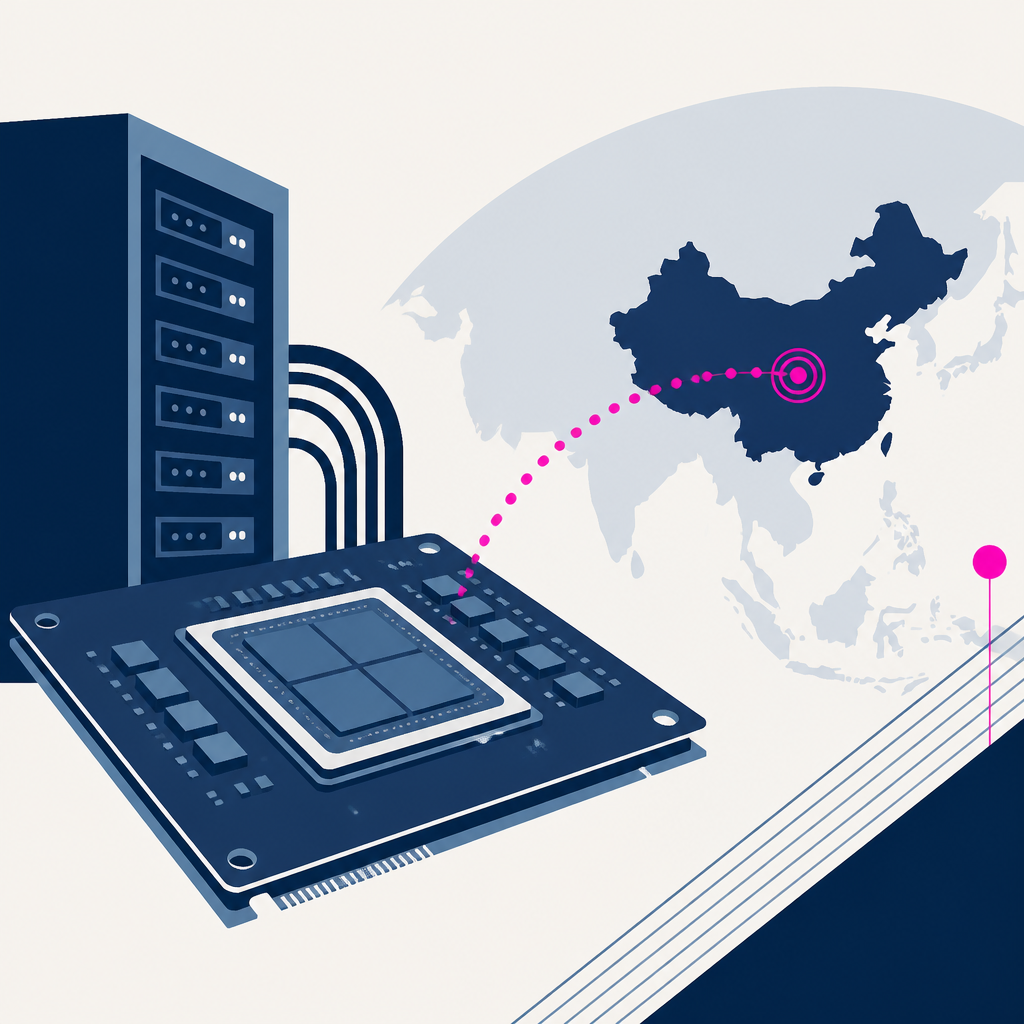
The U.S. has been tightening export controls on advanced AI chips since 2022, but the controls keep leaking. Smugglers have found ways around them, and one estimate puts the total at more than 450,000 advanced AI chips moved into China in 2024 and 2025 alone. That is a lot of compute to lose sight of. The point of the new debate is simple: if Washington can’t stop chips at the border, can it at least find them after they leave?
CSET’s answer is cautious. Location verification could give regulators better leads by flagging chips that are outside their intended places, and it could also raise the cost of cheating. But the report does not pretend this is a clean fix. AI chips move through a messy global supply chain, often passing from designer to server maker to distributor to reseller before reaching an end user. That creates room for diversion at every step, and it also means enforcement usually sees only the damage after it has already happened.
The researchers looked at five broad methods: physical inspections, mail-in inspections, video inspections, inventory tools, and geolocation systems. On their framework, a method has to be verifiable, accurate, secure, and repeatable. Only two made the cut: physical inspections and ping-based location verification, or PLV. And when they simulated more than 10 million scenarios, PLV came out as the more cost-effective option. Physical inspections never detected more diverted chips per dollar in any of those scenarios.
That does not make PLV a magic shield. The report says it has five major limits: chips already in use would need a software or firmware update, hardware-based PLV cannot be added after manufacture, a stopped chip tells you nothing about whether it was diverted or simply offline, well-funded smugglers could still fool it, and its accuracy would be only about 20 miles at best. It also cannot tell who is using the chip, only where it is sitting. That last point matters more than it sounds; a chip in the right building can still end up in the wrong hands.
So the practical message is blunt. If policymakers want location verification, PLV looks like the best bet among the options studied, with physical inspections as a supplement. But CSET is not sold on the whole project, and it argues that the bigger payoff may still come from strengthening BIS’s ordinary enforcement work and fixing its IT systems. Sometimes the old machinery is the thing that needs oil, not another sensor.
My take — AI-written commentary, not fact-checked reporting
This is classic Washington gadget logic: if enforcement is hard, bolt on a tracking system and call it strategy. The report’s own numbers and limits make the case for humility, not techno-fantasy. Better enforcement beats prettier enforcement every time, even if that sounds less futuristic on a slide deck.
Read more about this at: CSET Georgetown