The Federal Trade Commission proposed an enforcement policy statement requiring retailers to disclose when they use personal data to set individualized prices. The comment period runs through Sept. 18. This would change compliance expectations by warning companies that undisclosed personalized pricing could violate the FTC Act’s rules against unfair or deceptive practices.
Ox Alpha appeared on OpenRouter on August 20 without any company claiming responsibility, and developers began probing endpoints and model behavior to identify the underlying provider. The OpenCode terminal agent debuted the same day with a claimed capacity of 100 trillion tokens per day, while Ox Alpha’s OpenRouter pricing for a preview was 0 for both input and output. Because OpenRouter and related disclosures conflict about prompt retention and training rights, teams face different privacy expectations and diligence concerns depending on the route they use for the same model.
Zvi (Don't Worry About the Vase)·1 month ago·
35
● 6 sources
The article argues that Americans’ opposition to building local data centers is largely driven by distrust of AI, big tech, and money rather than by debates over physical harms or benefits. It cites that 75% oppose local data center development and says persuasion moves support only slightly from very high levels of opposition. It concludes that the main shift is political momentum to block construction that increases as AI becomes more salient and companies push harder into less receptive communities.
Several AI agent platforms released similar “bot roster” interfaces but defined different security boundaries for what a misbehaving bot can access across agents. Grok Bot’s documentation and design describe sharing a persistent cloud workspace and user account sessions, with the interface updated to match within a week of Hermes Bot Mode in Hermes Agent v0.20.3 dated August 17. As a result, operators must follow each product’s security guidance and choose based on whether isolation is enforced at the account level, profile level, runtime sandbox, or per-agent containers—because the roster interface alone does not determine containment.
Mistral announced a strategic collaboration with HUMAIN to expand sovereign AI infrastructure, model development, and AI deployments in Saudi Arabia and across the Middle East. The partnership is described as involving a collaboration in the hundreds of millions of Euros and includes using HUMAIN’s data center infrastructure for local compute needs. The companies will focus on localized advanced models for Arabic with initial areas in cybersecurity and voice, and they plan a joint go-to-market strategy for regulated industries.
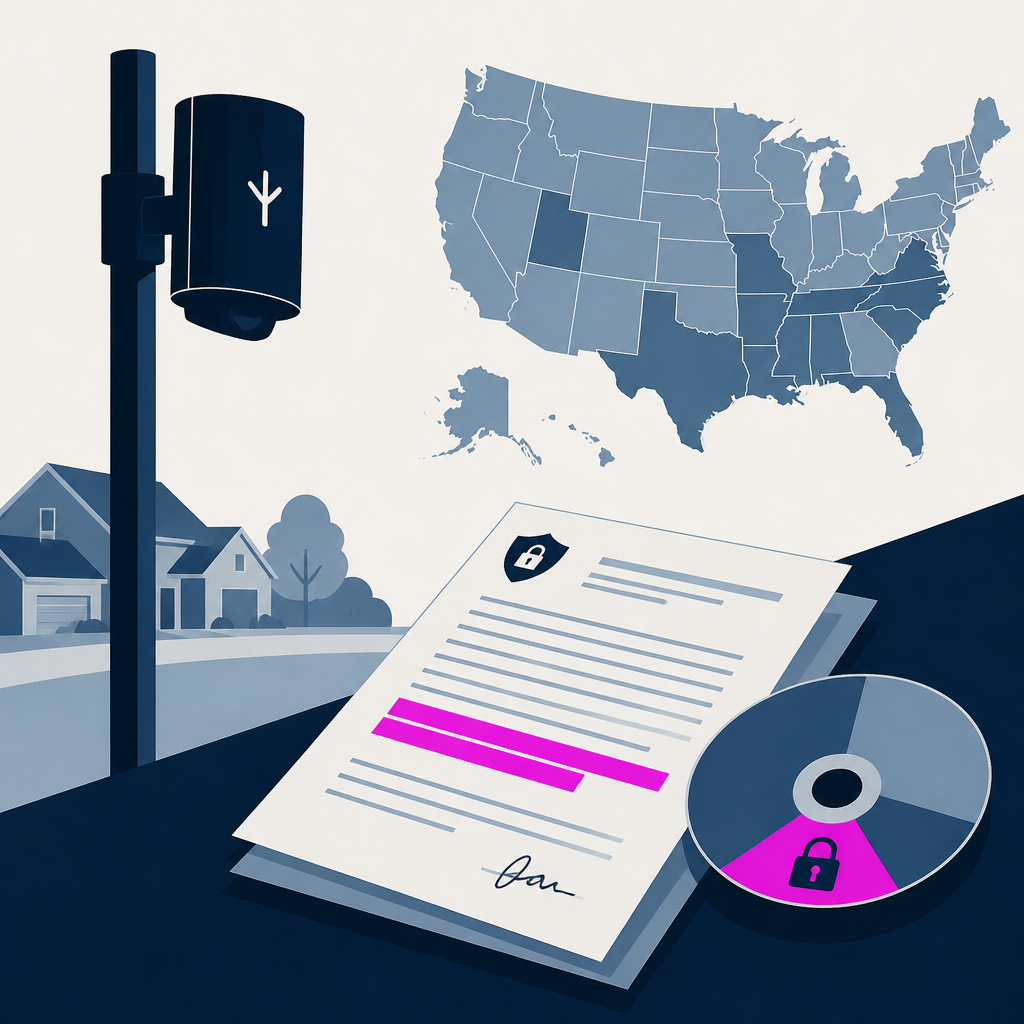
Flock Safety’s neighborhood camera network has faced mounting privacy and civil-liberties backlash, prompting cities to drop or renegotiate contracts over data-ownership and machine-learning training concerns. Flock operates in more than 5,000 communities across 49 states, and at least 36 states have documented camera vandalism. Flock says it is adding new guardrails including a recommended seven-day data-retention policy, but some agencies are rewriting terms to bar the company from using collected data and LAPD has begun renegotiation.
New York Gov. Kathy Hochul withdrew a proposal that would have allowed driverless robotaxis outside New York City, and lawmakers and labor groups continued pushing back against legalization efforts. Six months later, commercial driverless service remains illegal in the state. In Washington, D.C., unions oppose a legalization bill while lawmakers consider a 200-vehicle cap and a 15-cent-per-mile fee to fund Metro upgrades and support displaced workers.
AI is becoming a national political issue as governments, media, labor questions, and data-center protests compound around rapid adoption. A data center protest took place in Emporia, Kansas on June 23, 2026. Policymakers are pushed toward new proposals focused on labor-market data, displacement mitigation, and how (or whether) to coordinate AI deployment and safety.
The UAE’s Cyber Security Council says it has detected and contained coordinated AI-assisted cyberattacks targeting aviation, energy, and education sectors since February. The council reported about 800,000 hacking attempts a day since February, four times the prewar level. The result is that the UAE is speeding up defense via its May 12 “Cyber Factory” effort to build AI security systems alongside human analysts, aiming to close the exploitation-time gap from days to hours.
Sam Altman warned that AI control could consolidate in the hands of a few companies or people, leaving most others without a say in how AI affects society. He said his original timeline estimate was wrong after expecting that GPT-4 (in 2023) would drive disruption much more quickly. He now expects a slower, steadier transition as businesses adapt at a different pace than model releases.
Every AI story that matters,
in your inbox by 8am.
TLDRocket reads all relevant sources, removes duplicate coverage, and summarises the
day in two minutes. Follow companies and topics for alerts, or get the
briefing in Slack. Free, no spam, unsubscribe anytime.
Reading TLDRocket needs no cookies, and the readership counts we rely on come from
our own cookieless analytics. Google Analytics is the exception: it sets cookies and
reports to Google, so it stays switched off until you allow it. You can change your
mind any time from “Cookie settings” in the footer.
Strictly necessary
Session security and form protection (tldrocket-session,
XSRF-TOKEN, 2 hours). The site cannot work without them,
so they need no consent.
Always on
Google Analytics 4 (_ga,
_ga_<id>, up to 2 years). Measures which
stories and sections readers use. Google acts as a third-party processor and may
store the data outside the EU. No advertising, no profiling, no data sold.