
Flock Safety has been a venture darling. Will data privacy controversies halt its rise?
Fortune Catherina Gioino
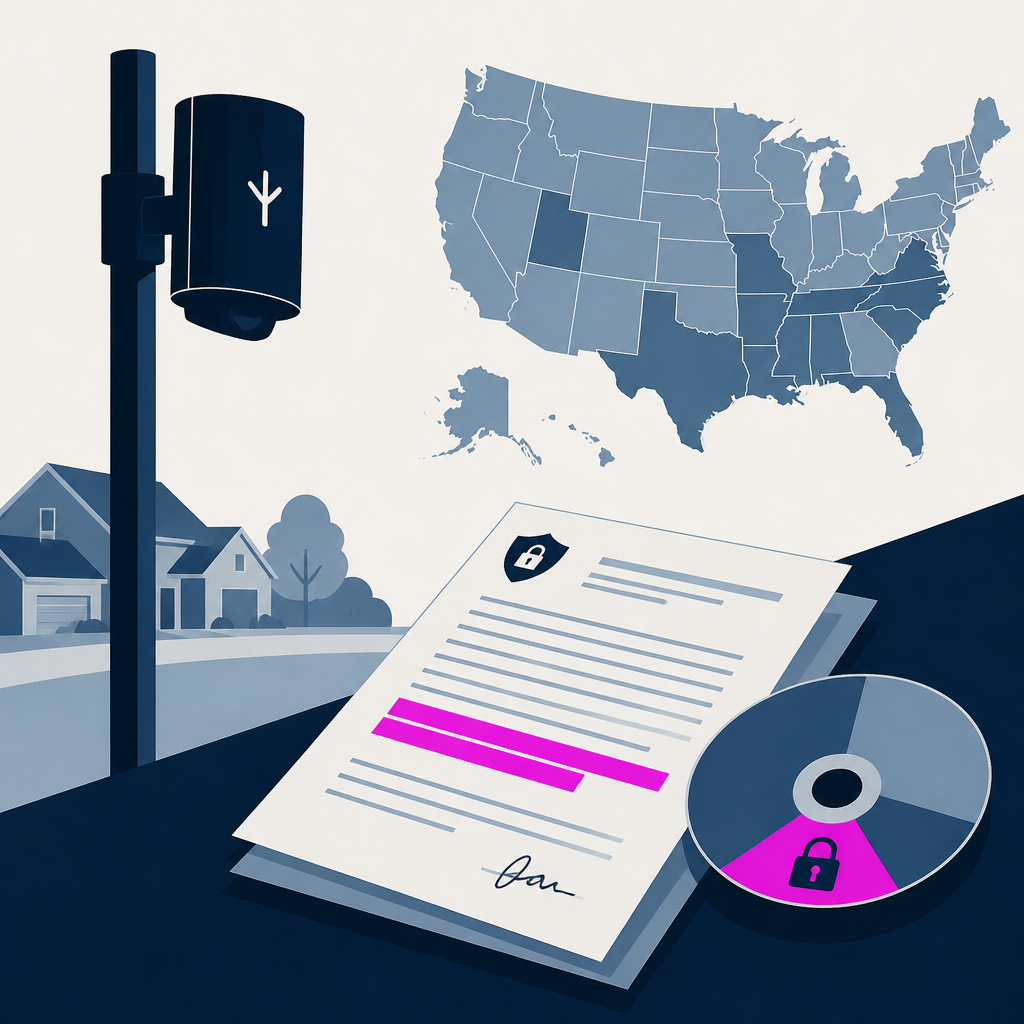
Flock Safety’s cameras helped make it a venture star, but privacy fights are hitting hard. Cities are rewriting contracts as critics say the company’s data can be used too broadly.
Based on reporting by Fortune, Catherina Gioino — read the original for the full story.
Summary, retelling and take written by AI under human oversight; images are AI-generated illustrations. How we work · Report an error
Flock Safety was sold as a simple idea with a very ambitious ending: put cameras in more places, stitch the data together, and help police solve more cases. Garrett Langley, a Georgia Tech electrical engineer, started the company in Atlanta in 2017 after break-ins in his own neighborhood convinced him local police needed better tools. He recruited two former colleagues, Matt Feury and Paige Todd, and what began as a license-plate camera grew into a system that now includes video, gunshot detection, drones and AI-powered search software.
That pitch found a lot of believers. Homeowners associations were the early customers, before law enforcement contracts took over. Flock now says it operates in more than 5,000 communities across 49 states. The company also told Fortune it has raised $500 million, hit an $8.3 billion valuation, and crossed $500 million in annual recurring revenue in the first half of this year.
The investor list reads like a roll call from the last venture boom. Andreessen Horowitz backed the company early and led its Series D in 2021. Tiger Global led a $150 million Series E in February 2022, and Flock later raised $275 million in March 2025 in a round led again by a16z, with Greenoaks, Sands Capital, Founders Fund, Kleiner Perkins, Tiger Global and Y Combinator also in the mix.
But the company’s rise has collided with a much less cheerful debate. Privacy experts and civil liberties groups say officers have used the cameras to stalk people, including exes, and that departments have shared data across jurisdictions, including with ICE and in ways that may violate state law. Vandalism has followed, with cameras being painted over, rammed, smeared and even cut down with chain saws in at least 36 states.
The fight is now about ownership and control of the data. Flock says the data belongs to its customers, while privacy experts point to contract language that lets the company retain some data and, in some cases, use anonymized footage to train machine learning systems. Cities including Boston, Flagstaff and Santa Clara dropped Flock in March after a viral Ring ad tied to the company, and the LAPD said in July it was renegotiating its agreement over ownership concerns. Flock has since pushed a seven-day retention recommendation, down from its previous default of 30 days, but that remains a recommendation, not a rule.
My take — AI-written commentary, not fact-checked reporting
The cleanest reading is simple: Flock sold surveillance as public safety, then acted surprised when people noticed it was surveillance. That’s the sort of mistake that keeps getting rewarded in tech until it suddenly isn’t. If a company wants to sit in the middle of police data, it should expect the contracts to get read like a tax return, not a brochure.
Read more about this at: Fortune
Related stories
 Flock is tightening its rules in response to a growing surveillance backlash
MIT Technology Review · 2 months ago ·
24
The fight over Flock and other ALPRs
The Verge · 2 months ago ·
34
Hackers Stole Flock’s Camera Software, Revealing How the Company Tracks Cars and People
404 Media · 1 month ago ·
28
Flock is tightening its rules in response to a growing surveillance backlash
MIT Technology Review · 2 months ago ·
24
The fight over Flock and other ALPRs
The Verge · 2 months ago ·
34
Hackers Stole Flock’s Camera Software, Revealing How the Company Tracks Cars and People
404 Media · 1 month ago ·
28