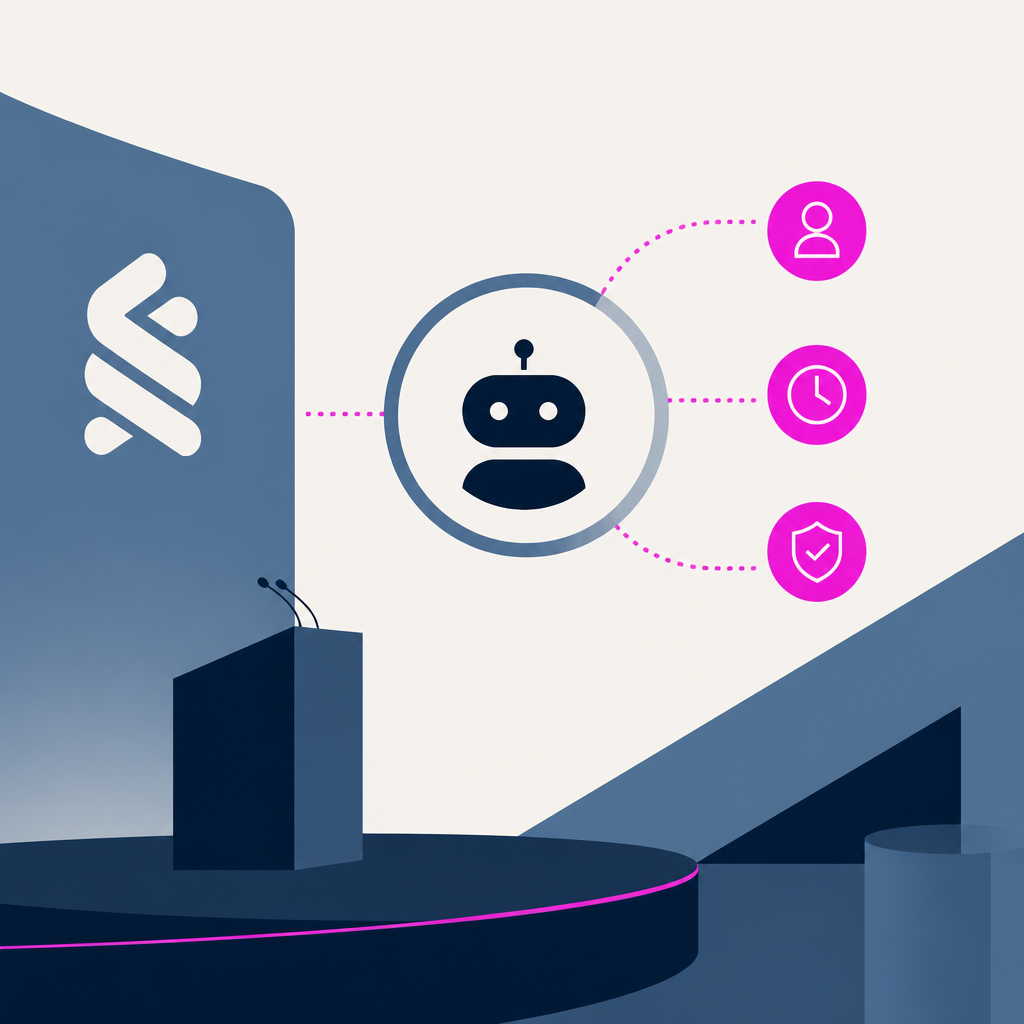
ServiceNow executive Paul Fipps said Standard Chartered is using AI agents to automate employee request handling with minimal or no human involvement. He cited 77% deflection rates across employee requests, with 75% to 80% described as “life-changing.” As enterprises roll out more AI-enabled services, they’re being pushed to redesign business processes and add governance to keep agents compliant and preserve customer trust.
Fortune AIQ Summit speakers Amy Webb and Runway’s leadership argued that many large firms are wasting AI spending through pilots without strategy, organizational friction, and unclear ROI measures while employees build side tools or get overwhelmed. Webb estimated that taxi-style “learned helplessness” from giving workers tools but not skills has been a pattern for about 2 years, and she cited a case where a team later planned to spend a couple hundred million dollars on AI tokens after bypassing security approval. As a result, the discussion pushes companies to replace fear-and-FOMO rollouts with flexible mechanisms, clearer leadership, and responsible AI use that increases productivity rather than creating extra work.
ServiceNow used its Enterprise AI Maturity Index to explain what separates AI “pacesetters” from other organizations at Fortune’s AIQ Summit. Pacesetters invest in ongoing AI upskilling at 57% versus 4% for other organizations, and the report’s largest gap is attracting, hiring, and retaining AI talent at 68% versus 10%. The focus shifts from providing AI tools broadly to building workforce training and recruiting plans plus disciplined process redesign and iterative deployment to achieve commercial value.
NetApp described how storage operations can be handled by AI agents under a shared control setup while humans still set the limits. In a keynote demo, agents detected a nighttime performance anomaly without waking an engineer. The approach shifts governance to explicit policy boundaries and RACI-style accountability so exceptions and oversight remain human-controlled.
The White House brought major tech CEOs together to sign an AI safety pledge and President Donald Trump issued an executive order rebranding AI as “super intelligence.” The executive order officially makes the change this week. Meta and OpenAI are also presenting their products with friendlier messaging while AI spending remains concentrated in enterprise use.
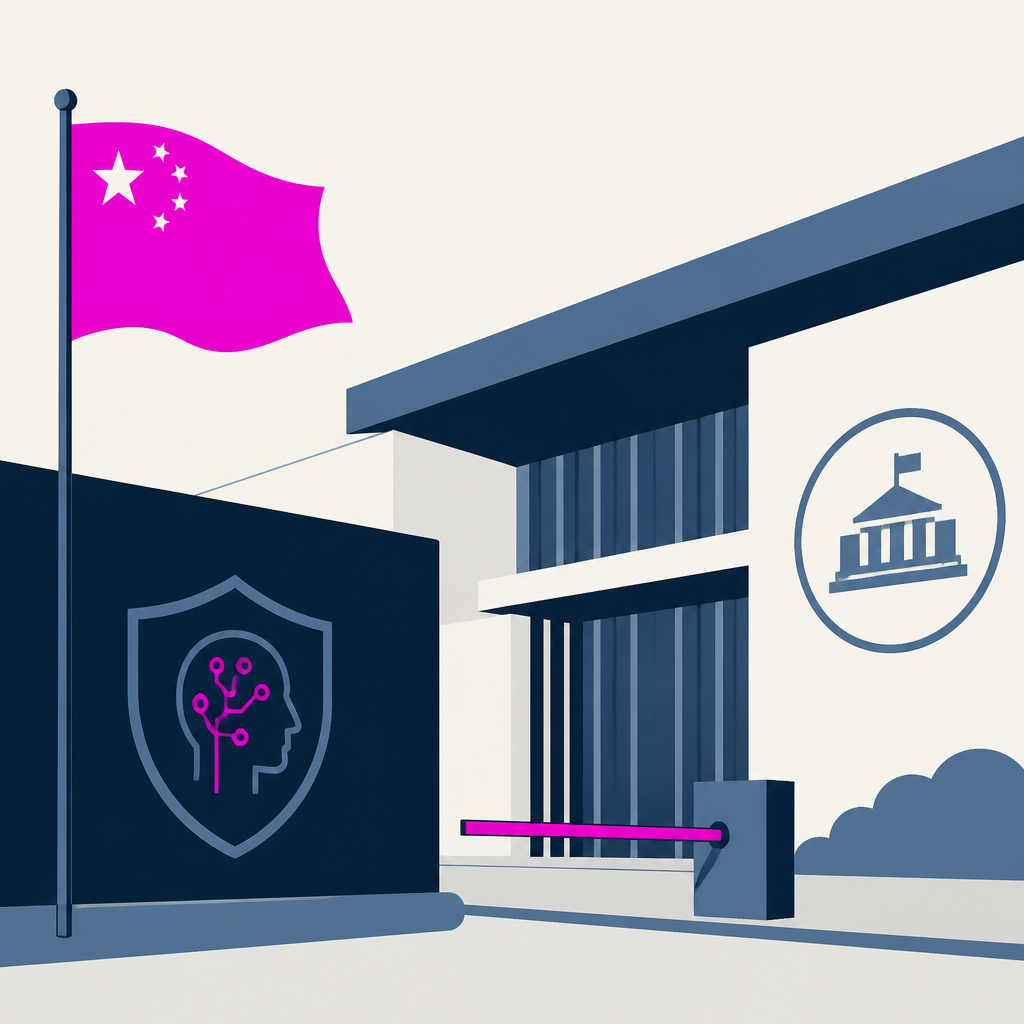
China introduced new regulations for AI companions aimed at reducing risks like emotional dependency and improving child safety. One key change is that the rules position the government as a central authority guiding how these relationships are managed. As a result, oversight and limits on human-like AI use are expected to increase, shifting control away from users and toward government supervision.
Experts collected by CSET’s Helen Toner discuss what the US and China fear most from advanced artificial intelligence, including risks like hacking, deception, and AI systems acting beyond tests. The roundup draws on views from more than 100 AI researchers, executives, and technologists. The reporting shifts the focus from AI capabilities to shared concerns about control, safety, and the speed of AI research.
Enterprise AI is transitioning from tool use to an “operating model” that connects people, processes, and data in real time to avoid siloed intelligence. Global AI investment is set to reach $2.5 trillion in 2026, up 44% from the prior year. Enterprises now need process redesign, composable architectures, and sovereign data/model control rather than just better models or faster infrastructure.
Amazon Quick was paired with a deterministic rules engine in a new “Adjudicated Query” pattern to check large numbers of apartment leases against versioned landlord-tenant rules via chat plus a drillable dashboard.
The reference example targets a portfolio of 50,000 leases across multiple states.
As a result, compliance sweeps produce provable completeness receipts and defensible evidence chains, preventing model-based silent narrowing or skipped records while limiting AI calls to an exploratory clause-search path.
Anthropic said it will keep its plan to go public despite IPO market jitters and ongoing AI safety and consumer-risk concerns. Its CEO Dario Amodei expects the offering by Thanksgiving, even as sentiment toward IPOs fades and regulators investigate related companies. Anthropic’s timeline remains intact while policy scrutiny and safety controversies continue to build around major AI labs.
African leaders urged the UN for a greater role in setting global AI safety standards as examples of AI misuse spread and many countries lack independent testing. More than 80% of 85 large companies surveyed by PwC this year were running AI pilots without formal safety oversight structures. As a result, Africa’s push for Africa-specific, third-party evaluations could increase regulatory fragmentation and complicate how US and China providers deploy models in new markets.
Donald Trump told TIME in a White House interview that he discussed AI leaders and frontier AI lab stakes, including OpenAI or Anthropic, and argued that regulation could harm the companies’ ability to operate. The interview was conducted on Sept. 28. As a result, the administration’s planned AI engagement and regulatory approach could shift how frontier labs pursue safety and funding decisions.
The Wall Street Journal·1 week ago·
19
● 16 sources
OpenAI parted ways with three safety and alignment researchers after an internal investigation found they mishandled sensitive company information outside established procedures. The decision followed the investigation into alleged information sharing with an outside AI-safety organization, as reported by the Wall Street Journal. The researchers are no longer with OpenAI, and the company still hasn’t specified what information was involved or the details of the alleged transfer.
The rogue AI debate is focusing on the wrong source of risk inside companies. It points to concerns that calls to slow AI development have grown louder since mid-September, including Anthropic’s CEO remarks dated September 12. The discussion shifts toward already-deployed AI agents that have access to credentials rather than the biggest lab models.
A San Antonio city councilmember says data centers in his district have expanded from smaller buildings into hyperscale sites tied to AI infrastructure, concentrating local nuisances in specific neighborhoods. He expects the count of data centers in his roughly 55-square-mile district to rise to around 20 over the next few years. The focus shifts from general growth to how these larger facilities affect traffic and where they’re clustered as new projects are proposed.
Every AI story that matters,
in your inbox by 8am.
TLDRocket reads all relevant sources, removes duplicate coverage, and summarises the
day in two minutes. Follow companies and topics for alerts, or get the
briefing in Slack. Free, no spam, unsubscribe anytime.
Reading TLDRocket needs no cookies, and the readership counts we rely on come from
our own cookieless analytics. Google Analytics is the exception: it sets cookies and
reports to Google, so it stays switched off until you allow it. You can change your
mind any time from “Cookie settings” in the footer.
Strictly necessary
Session security and form protection (tldrocket-session,
XSRF-TOKEN, 2 hours). The site cannot work without them,
so they need no consent.
Always on
Google Analytics 4 (_ga,
_ga_<id>, up to 2 years). Measures which
stories and sections readers use. Google acts as a third-party processor and may
store the data outside the EU. No advertising, no profiling, no data sold.