T-Scriptor launched as a Mac note-taking and lecture transcription app that keeps audio on-device and then generates study notes after class. The iPhone app is in Beta. As a result, users get automatic lecture-to-notes workflow on Mac and can expect an iOS version later.
Maildun launched “Maildun for Mac,” an agentic email builder for macOS that lets you design on-brand emails by hand or with AI via connected providers and your own API key. It launches today and includes a built-in MCP server for tools like Claude Code, Codex, or Cursor to create and edit emails. As a result, users can live-edit email designs with AI, manage per-client workspaces and brand kits, and publish emails through maildun.com.
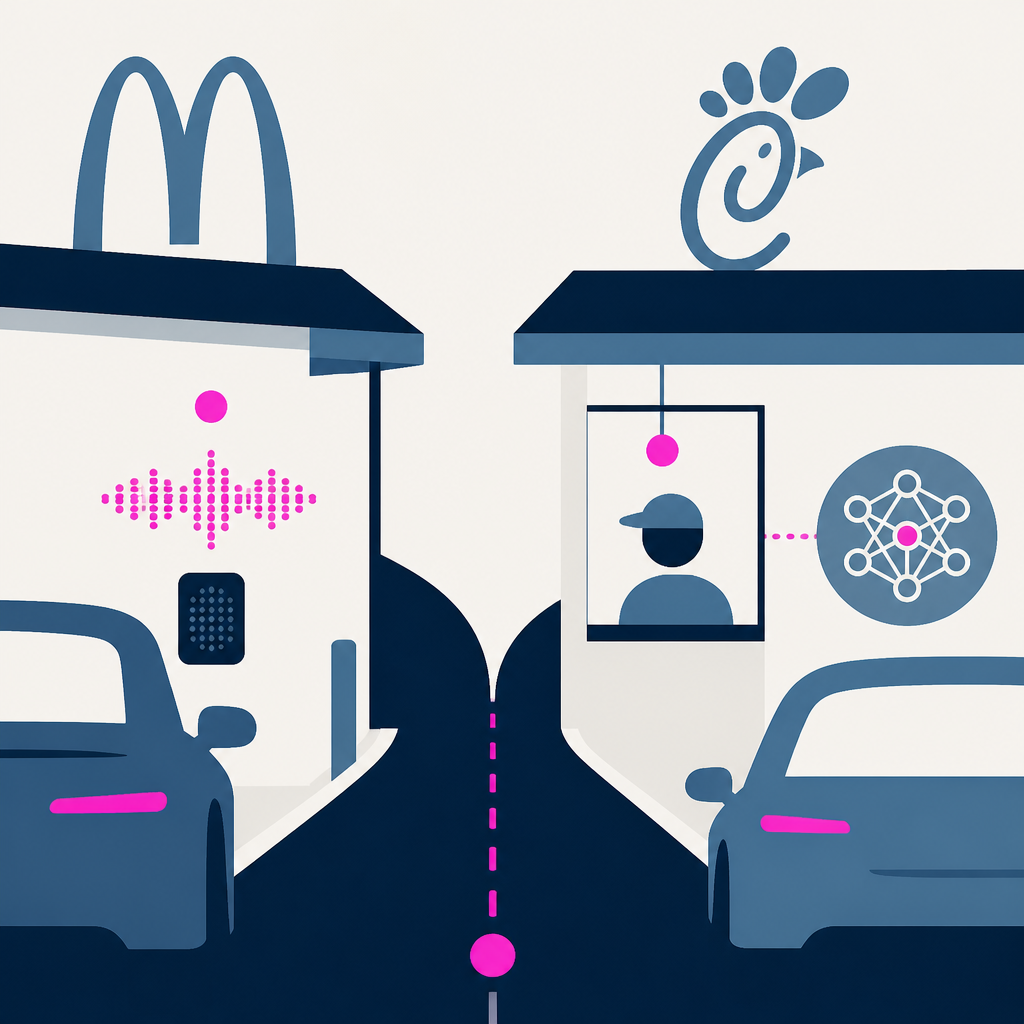
Chick-fil-A and McDonald’s are taking different approaches to using AI at drive-thrus and in restaurant decision systems. McDonald’s says it is testing Archy, an AI voice ordering system accurate more than 90% of the time. Chick-fil-A will keep human staff at the speaker using AI behind the scenes, while McDonald’s expands AI ordering and faces an Oct. 2 antitrust lawsuit over a separate pricing-recommendation system.
Behind the Blog discusses how the team’s weekly coverage connects AI discussion with spirituality and how their AI reporting focuses on capabilities, harms, and training on stolen content. This week, the post frames the work as “behind-the-scenes thoughts” while the team looks for cases where AI might help specific reporting tasks. As a result, it presents an editorial reflection on their approach rather than a new AI product, study, or policy change.
Nikon disqualified Dr. Ning Xu’s video from its Small World in Motion contest after finding it did not comply with rules about generative AI. The contest’s original first-place entry was removed because Nikon said it used generative AI for post-processing. Nikon’s decision changes the winner status by overturning the initial first-place result.
FloorGen launched as a web-based space design app that generates a remodel, ADU, or whole-house plan from a description. It lets users walk through the result in 3D and export a printable plan set. As a result, floor plan creation and iteration can be done in-browser with AI edits and undoable changes.
The article presents Claudia as an “open character” and documents how three music videos were produced using AI tools like Midjourney, Suno, and Seedance. It reports using 1,562 Midjourney images and about 200 video clips to keep her consistent across looks. It then provides a reusable canon, templates, and an MCP server/skill so people and agents can rebuild prompts and generate new videos with the same character.
Adobe demonstrated a handoff in its Firefly Video Editor during a demo shared by Deepti Pradeep. The article describes using AI-produced Motion content, with no specific date or numeric benchmark provided. The workflow shifts so AI-generated Motion can be transferred into an editor for professional edits.
Anthropic launched Claude Motion (beta) to turn users’ content into short animations built from prompts as code. The export format for animations is MP4. Claude Motion is distinct from video generation and counts toward existing Claude plan usage limits, with longer or more complex animations using more quota.
Claude Dashboards and Claude Motion launched in beta, adding live data dashboards and editable animated explainers to Claude. Dashboards supports connections to 6 data sources—BigQuery, Databricks, Snowflake, Redshift, ClickHouse, and Salesforce. This expands Claude’s capabilities so dashboards refresh with data changes and animations can be edited and exported as MP4s.
European tech startups raised €15.8 billion across 300 funding deals in September after a slower August. The month’s total was up from €3.2 billion across 165 deals in August. Funding rebounded sharply, with 25 deals topping €100 million and additional large rounds including Mistral’s €3 billion Series D.
Every AI story that matters,
in your inbox by 8am.
TLDRocket reads all relevant sources, removes duplicate coverage, and summarises the
day in two minutes. Follow companies and topics for alerts, or get the
briefing in Slack. Free, no spam, unsubscribe anytime.
Reading TLDRocket needs no cookies, and the readership counts we rely on come from
our own cookieless analytics. Google Analytics is the exception: it sets cookies and
reports to Google, so it stays switched off until you allow it. You can change your
mind any time from “Cookie settings” in the footer.
Strictly necessary
Session security and form protection (tldrocket-session,
XSRF-TOKEN, 2 hours). The site cannot work without them,
so they need no consent.
Always on
Google Analytics 4 (_ga,
_ga_<id>, up to 2 years). Measures which
stories and sections readers use. Google acts as a third-party processor and may
store the data outside the EU. No advertising, no profiling, no data sold.