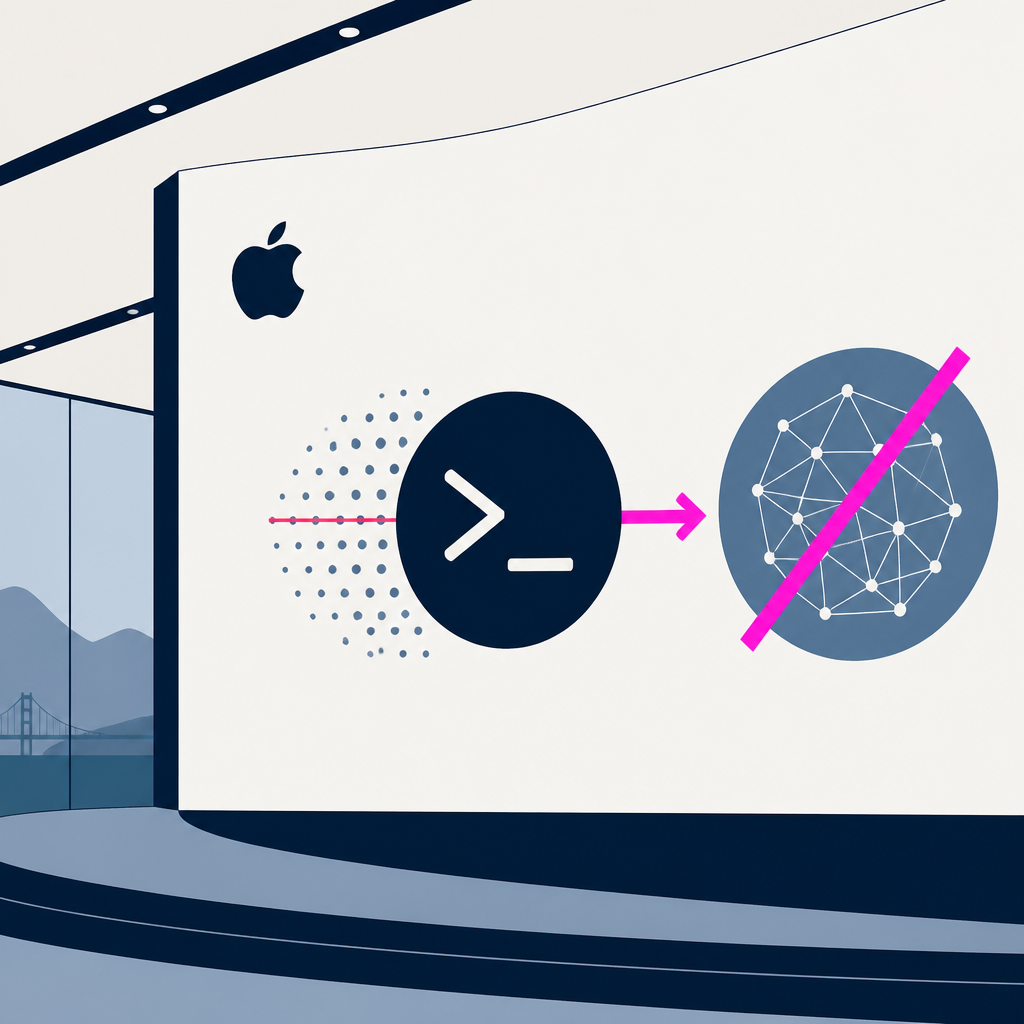
RemoveMacAI was released as a command-line tool to let macOS 27 users disable Apple Intelligence in a fully reversible way. The models use about 12GB of storage, and can exceed 30GB depending on what’s installed. With no built-in toggle in macOS 27 Golden Gate, users now have a simpler method to remove the AI model files and reclaim disk space.
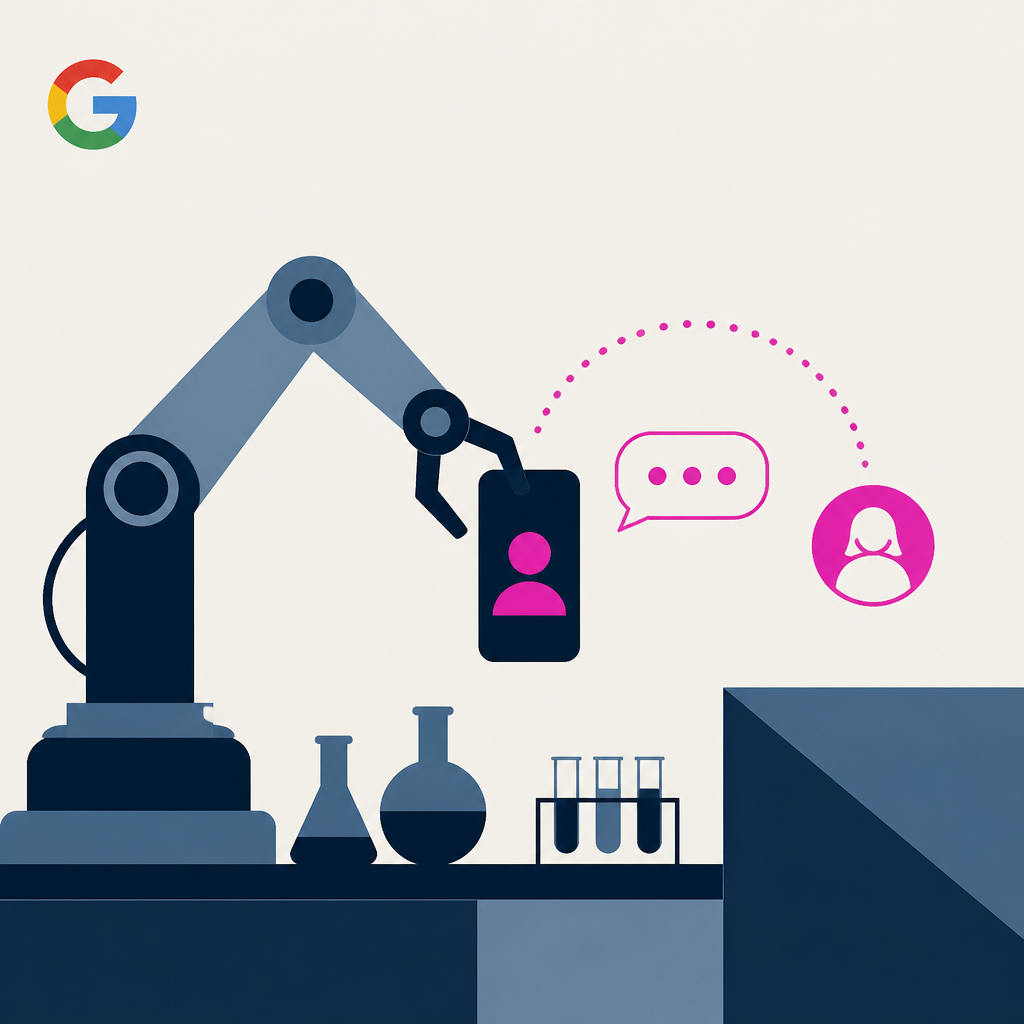
Google appears to be expanding its Call for Me AI feature (now surfaced as Gemini Calling) from business calls to sending quick messages to friends and family. One example shown in an APK teardown is “Call Mom and tell her I will be 15 minutes late.” As a result, Gemini may be able to handle simple, phone-call-style text messages to relatives, rather than fully automating long catch-up calls.
TikTok announced it is adding an AI shopping assistant and a one-click in-app checkout that lets users buy directly from brands from the For You feed. The checkout is described as “one click,” enabling purchases without leaving the app. The change integrates shopping questions and payments into TikTok’s main feed, aiming to capture more transaction value within the platform rather than sending users elsewhere.
Hot Girl Hotline, a startup by sisters Balia and Sumrin Mudgil, is launching an AI-driven relationship advice app for young women with an emphasis on safer, behavior-science-based guidance. The subscription is priced at $9.99 per month. The app uses safeguards like crisis hotline 988 referrals, encrypts user data, uses a mix of AI models without selling or training on user data, and is designed to end chats and push users toward real-world action rather than open-ended spiraling.
HackerRank is moving its developer hiring interviews to Chakra, an AI interviewer that observes candidates doing tasks with an AI assistant and evaluates both their answers and their approach. After about six months in beta, HackerRank is making Chakra generally available on Monday, following more than 500,000 interviews in testing. The hiring process consolidates multiple rounds into a single AI-led interview and changes what employers measure from just correct outputs to reasoning and judgments, while suspicious-activity flags drop by 70% to 80%.
Etsy sellers are getting a Customer Service AI tool that drafts replies to buyer messages directly in the Etsy reply box. The tool includes 30 free replies. Sellers can review and press Send, so messages are only sent after they choose to use the generated text.
Appto launched as an iOS app factory for Macs that uses an AI subscription to pick profitable app niches, generate the app, create the App Store listing, and submit it to Apple when you choose. It says one non-developer shipped 10 apps with the service. After launch, it shows live sales, answers reviews, and tracks keywords with suggested fixes.
Equs Inc. launched Equs X, pairing a personal AI assistant with user-managed private storage to keep information access under the customer’s control. The company said the model reads nothing unless the user allows it file by file using an access toggle. Access can be revoked immediately, and the AI keeps what it learns in the user’s private storage instead of on the provider’s servers.
StayCharted was launched as an AI product that learns from your uploaded rows or photos and then fills in categories like support tickets, expense lines, survey answers, and product photos without prompts or code. The listing shows it launched today with 7 followers. It changes the workflow by automating the missing parts of your categorized data and routing uncertain answers back for your review.
The article argues that Meta’s Muse is winning consumer adoption by combining existing agent capabilities into a simpler interface that feels like one personal helper instead of many separate tool switches. It contrasts this with ChatGPT’s $100+/mo tier gating the “best models and enough tokens” for practical agent workflows. As a result, Muse hides token and workflow complexity behind a single main chat, while its permissive free tier is supported by ads to let most users use it without thinking about limits.
Alexandr Wang was hand-picked by Mark Zuckerberg to oversee Meta’s AI efforts and credited with building momentum for Muse through an unconventional internet campaign.
The article argues that developers do not consistently follow the “use the platform” guidance because history, familiarity with packages, documentation patterns, and personal enjoyment of building custom solutions all make rolling your own feel more practical or rewarding. It cites that Safari’s browser update cadence is about 7 times per year. It predicts AI coding could both reduce userland code by steering toward platform APIs and increase duplicated, over-engineered code if agents skip existing helpers and rely on first drafts.
EasyCut launched to let users edit Claude-made motion videos on a fully editable timeline with separate tracks for titles, scenes, images, sound, and other elements. It’s free in your browser as of today. Users can select specific parts and ask Claude to change only those sections while adjusting timing, branding, music fit, slow-mo, resizing, and exporting without rebuilding the whole video.
ruOS launched a private cloud desktop that includes an AI team to handle tasks like research, writing, and code from your browser. It offers ruOS Lite free to try in seconds with no sign-up. As a result, users can start work immediately across devices with persistent files and AI memory, and power users get a Linux environment plus an MCP server for LLMs to control it.
Willow Voice launched Willow Knowledge, adding the ability to transfer a user’s writing style and personal context from ChatGPT, Claude, Gemini, or other AI tools into its voice dictation app. The update includes an 8th Willow Voice launch. This changes dictation output so emails, Slack messages, prompts, and other written text better match how the user writes when dictated.
Postquel is a fast, native PostgreSQL client for macOS that includes an AI assistant connected to your existing Claude Code, Codex, or Cursor account. It is free and open source, and it can only read your real schema while suggested changes wait for your dry-run approval. The result is that database changes are proposed with AI but applied only after you confirm them.
Search engines still receive far more web traffic than AI chatbots, according to OneLittleWeb’s analysis of visits across 10,171 websites. Search engines logged 162.19 billion visits in June 2026 versus 8.26 billion for AI chatbots. The gap narrows only in part because both categories declined from the previous month, while the remaining traffic share stays concentrated in Google for search and ChatGPT for chatbots.
Tori launched a Japanese listening practice app that turns sentences you paste or journal about into translated text with furigana and audio, then organizes them for multiple listening styles. It adds AI speaking practice across 15 real scenarios. As a result, users can listen in several modes (including screen-off and shadowing) and drill with audio SRS cards and an AI tutor.
Vanoor launched and lets Apple Watch users follow GPX routes with spoken turn cues, track split-by-split pace, and run structured workouts planned in-app or by an AI assistant. It offers 7 days free before a one-time purchase. After running, it scores how closely you matched your planned splits and saves results to Apple Health and Strava.
Afterparty launches as an AI-agent note taker companion that turns a meeting transcript or notes into drafted emails, messages, invites, and CRM notes.
Every AI story that matters,
in your inbox by 8am.
TLDRocket reads all relevant sources, removes duplicate coverage, and summarises the
day in two minutes. Follow companies and topics for alerts, or get the
briefing in Slack. Free, no spam, unsubscribe anytime.
Reading TLDRocket needs no cookies, and the readership counts we rely on come from
our own cookieless analytics. Google Analytics is the exception: it sets cookies and
reports to Google, so it stays switched off until you allow it. You can change your
mind any time from “Cookie settings” in the footer.
Strictly necessary
Session security and form protection (tldrocket-session,
XSRF-TOKEN, 2 hours). The site cannot work without them,
so they need no consent.
Always on
Google Analytics 4 (_ga,
_ga_<id>, up to 2 years). Measures which
stories and sections readers use. Google acts as a third-party processor and may
store the data outside the EU. No advertising, no profiling, no data sold.