Lune, described as a search engine for scientific AI agents, launches today to connect AI agents with scientific research knowledge and workflow tools. It claims 10x the efficiency and trustworthiness for tasks like literature review, experimental design, writing, and peer review. Researchers and technical teams are positioned to move faster with traceable, source-grounded outputs.
Maildun launched “Maildun for Mac,” an agentic email builder for macOS that lets you design on-brand emails by hand or with AI via connected providers and your own API key. It launches today and includes a built-in MCP server for tools like Claude Code, Codex, or Cursor to create and edit emails. As a result, users can live-edit email designs with AI, manage per-client workspaces and brand kits, and publish emails through maildun.com.
Postman built Agent Mode to let its AI agent operate across API testing, documentation, discovery, and implementation within the Postman product, and it documented the architecture lessons from integrating it into a mature interface-driven platform. In its testing, tool-selection errors rose once the visible toolset exceeded about 40 tools, while the system narrowed 170+ candidate tools down to roughly 15 relevant ones. The result is a production-style agent design that scopes tools per task, uses schema-based read access, and treats context as the main bottleneck while running model inference on Amazon Bedrock with controls like zero data retention settings and prompt caching.
PixRater launched as a local photo culling tool that groups RAW+JPEG pairs and auto-evaluates face sharpness. It is described as 100% local. It writes ratings to EXIF/XMP metadata and includes a local MCP server to connect custom AI tools for tasks like keywording.
AWS, Upstage, and Ollama agreed on a shared decision-model API called System One, while OpenAI did not sign on. AWS released Strands Decider 2B on October 1. As a result, the System One request/response schema is becoming the fastest-to-clone contract, making decision-model integration more portable across hosted and self-hosted servers by changing the base URL, even though some vendors still use different endpoint paths and pricing.
Chrome’s DecisionModel API code landed in Chromium between 6 and 8 October 2026 as an on-device web API for evaluating closed questions about a text and returning per-answer probabilities. Chrome’s EmbeddingGemma engine runs on an 8-question batch in about 9.6 seconds on CPU. Review findings and experiments show option probabilities are computed via softmax over cosine similarities with limits on questions, options, and rating levels, after which Chrome now scores each option against its own session to avoid earlier-answer leakage and blocks model downloads without a user gesture from 8 October.
FloorGen launched as a web-based space design app that generates a remodel, ADU, or whole-house plan from a description. It lets users walk through the result in 3D and export a printable plan set. As a result, floor plan creation and iteration can be done in-browser with AI edits and undoable changes.
The article presents Claudia as an “open character” and documents how three music videos were produced using AI tools like Midjourney, Suno, and Seedance. It reports using 1,562 Midjourney images and about 200 video clips to keep her consistent across looks. It then provides a reusable canon, templates, and an MCP server/skill so people and agents can rebuild prompts and generate new videos with the same character.
Google Cloud launched Gemini at Work 2026’s Gemini agent, a single work agent that answers questions and completes knowledge-work and coding tasks inside tools like Gmail and Drive.
Anthropic launched Claude Dashboards in beta, letting users connect a data source and ask in plain language for Claude to generate SQL charts and a dashboard. The release describes a template where each chart includes its underlying SQL query and shows when the data was last refreshed. Dashboards become a new private-to-user artifact workflow that counts toward existing Claude plan usage limits and can be shared once created.
Claude Dashboards and Claude Motion launched in beta, adding live data dashboards and editable animated explainers to Claude. Dashboards supports connections to 6 data sources—BigQuery, Databricks, Snowflake, Redshift, ClickHouse, and Salesforce. This expands Claude’s capabilities so dashboards refresh with data changes and animations can be edited and exported as MP4s.
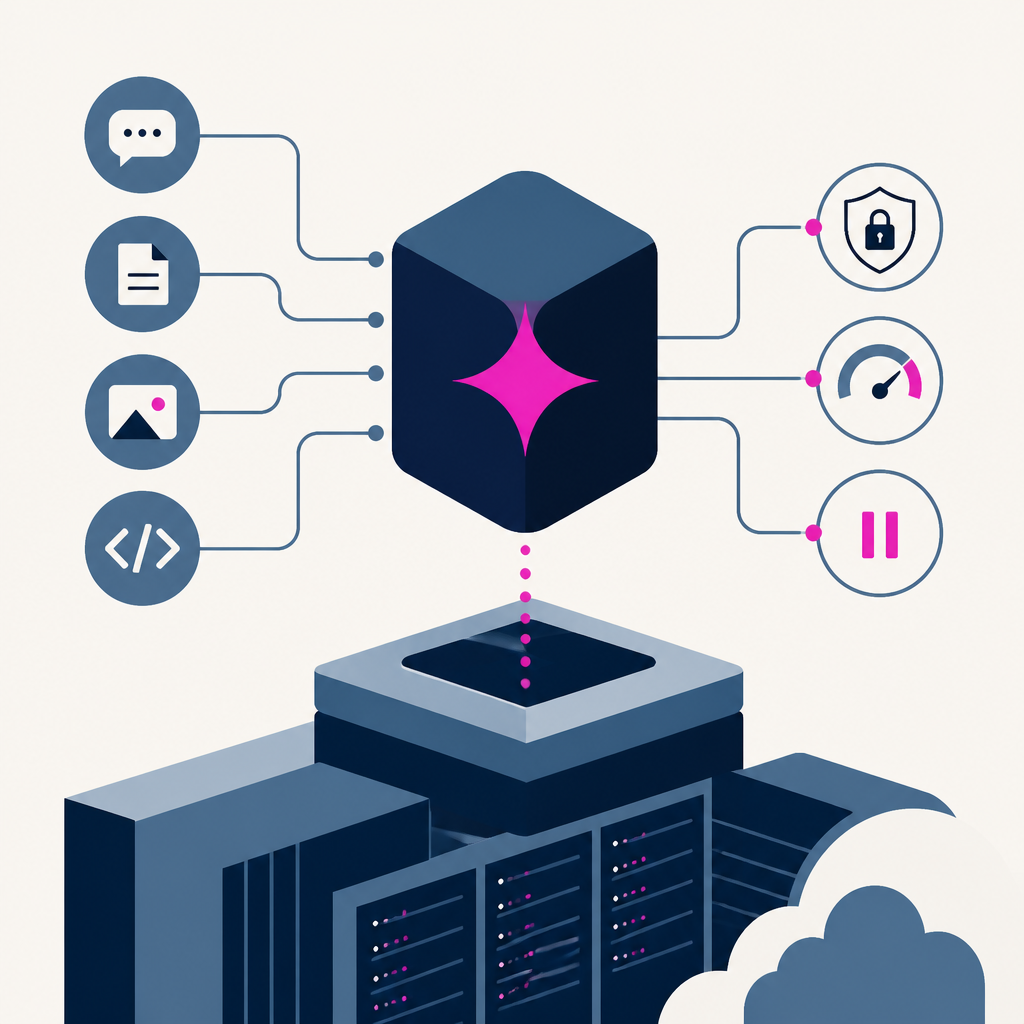
Google Cloud launched the Google Cloud Gemini agent, a cloud-hosted delegation layer for enterprise work covering question answering, knowledge work, media creation, and coding. It includes 3 governed cost controls, including real-time spend caps, and can pause an agent when a hard per-project limit is hit in the Cloud Billing Console. This shifts enterprise AI use toward a single agent interface (1 prompt box and 1 API) with persistent cloud execution, governed identities, and routed model execution across Gemini and Claude.
OllyGarden raised $4 million to improve the quality of telemetry data used for software observability and to extend its tooling for OpenTelemetry.
It cut log volumes by up to 85% for customers over the past year and launched Minimum Viable Instrumentation (MVI) for its AI OpenTelemetry Engineer, Rose.
The new capability lets Rose also find missing instrumentation areas and recommend baselines so teams can apply consistent instrumentation without generating unnecessary data.
Every AI story that matters,
in your inbox by 8am.
TLDRocket reads all relevant sources, removes duplicate coverage, and summarises the
day in two minutes. Follow companies and topics for alerts, or get the
briefing in Slack. Free, no spam, unsubscribe anytime.
Reading TLDRocket needs no cookies, and the readership counts we rely on come from
our own cookieless analytics. Google Analytics is the exception: it sets cookies and
reports to Google, so it stays switched off until you allow it. You can change your
mind any time from “Cookie settings” in the footer.
Strictly necessary
Session security and form protection (tldrocket-session,
XSRF-TOKEN, 2 hours). The site cannot work without them,
so they need no consent.
Always on
Google Analytics 4 (_ga,
_ga_<id>, up to 2 years). Measures which
stories and sections readers use. Google acts as a third-party processor and may
store the data outside the EU. No advertising, no profiling, no data sold.