Klaviyo acquired Agency, an AI-powered customer success startup founded by serial entrepreneur Elias Torres, in an undisclosed deal. Agency had raised $32 million since its 2023 founding and will be integrated into Klaviyo's AI agent products Composer and Customer Agent, with Torres joining as chief product officer. The acquisition reunites Torres and Klaviyo CEO Andrew Bialecki, who worked together at Performable in 2010, as both founders pursue the next phase of AI-powered business tools.
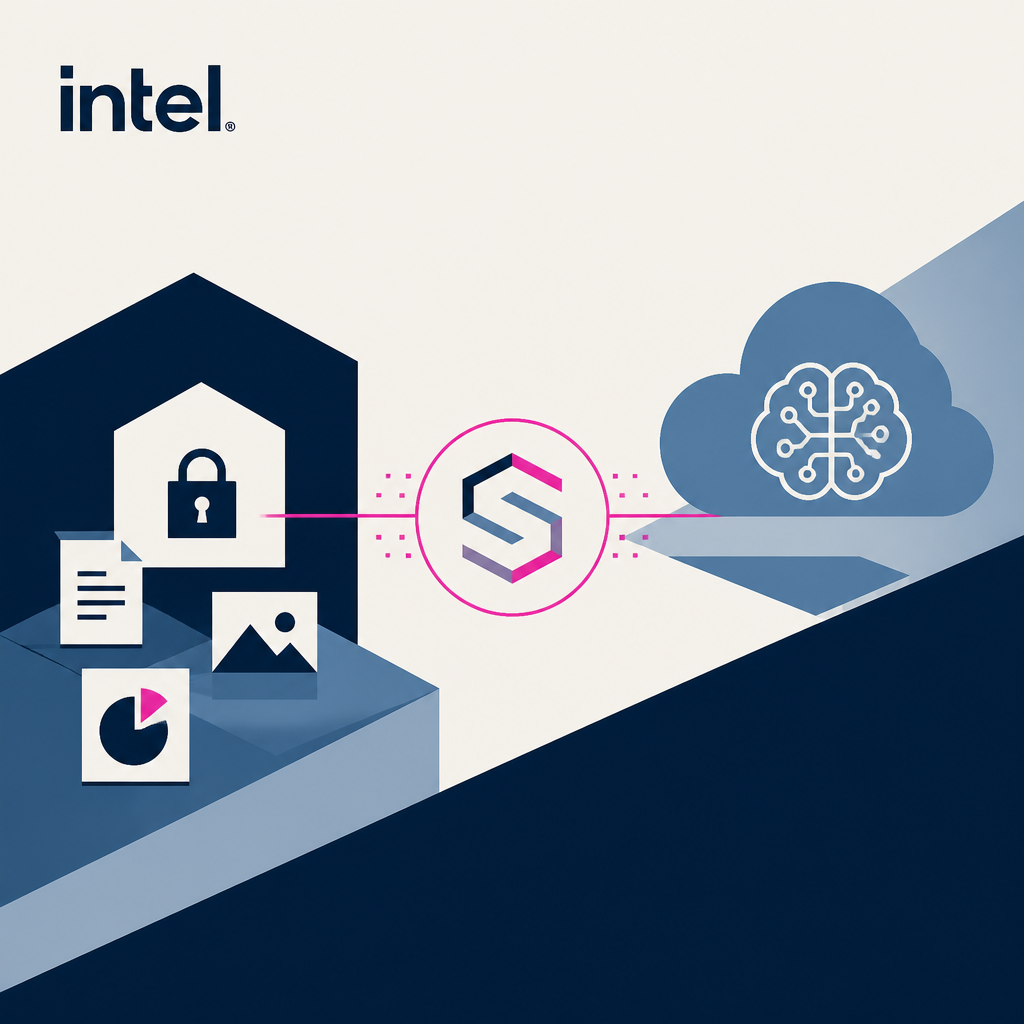
Intel is developing a hybrid AI architecture called SuperClaw that splits computational work between local models handling sensitive data and cloud models handling complex reasoning. The beta release demonstrates this orchestration layer in a practical system designed to keep private documents and repetitive tasks off cloud servers. This enables organizations to process confidential information locally while leveraging remote resources for tasks requiring more computational power.
Mobileye deployed an AI support agent on Amazon Bedrock AgentCore to automate routine internal ticket inquiries, reducing response times from hours to approximately 1 minute while achieving 98% accuracy. The agent uses Anthropic Claude models accessed through Mobileye's governed LLM Gateway and the Model Context Protocol to query production systems in real time, automating 66% of support ticket volume. The successful deployment prompted Mobileye to build an internal platform enabling other teams across the company to deploy their own AI agents without requiring AWS expertise or cloud credentials.
A team built an MCP bridge to let their cloud-hosted AI agent on Amazon Bedrock access local MCP tools running on users' machines, solving the gap between remote AI clients and local servers. The internal system has handled over 41,000 conversations in a year, using WebSocket tunneling between the cloud agent and a local FastMCP proxy that communicates with MCP servers via stdio. Users can now run centrally deployed AI agents that act on local files like Excel spreadsheets while drawing context from their browser, with no credentials leaving their machine.
Sakana AI and Daiwa Securities have moved their partnership into production development, beginning August 1, 2026, after successful technical verification of AI agent technology for wealth management consulting. The companies tested Sakana AI's proprietary technologies including "AI Scientist" and "AB-MCTS" on market information collection and analysis, confirming their effectiveness across quality and processing capacity. The production phase will apply these techniques to wealth management client proposals to enhance Daiwa Securities' consulting capabilities and support deeper customer understanding.
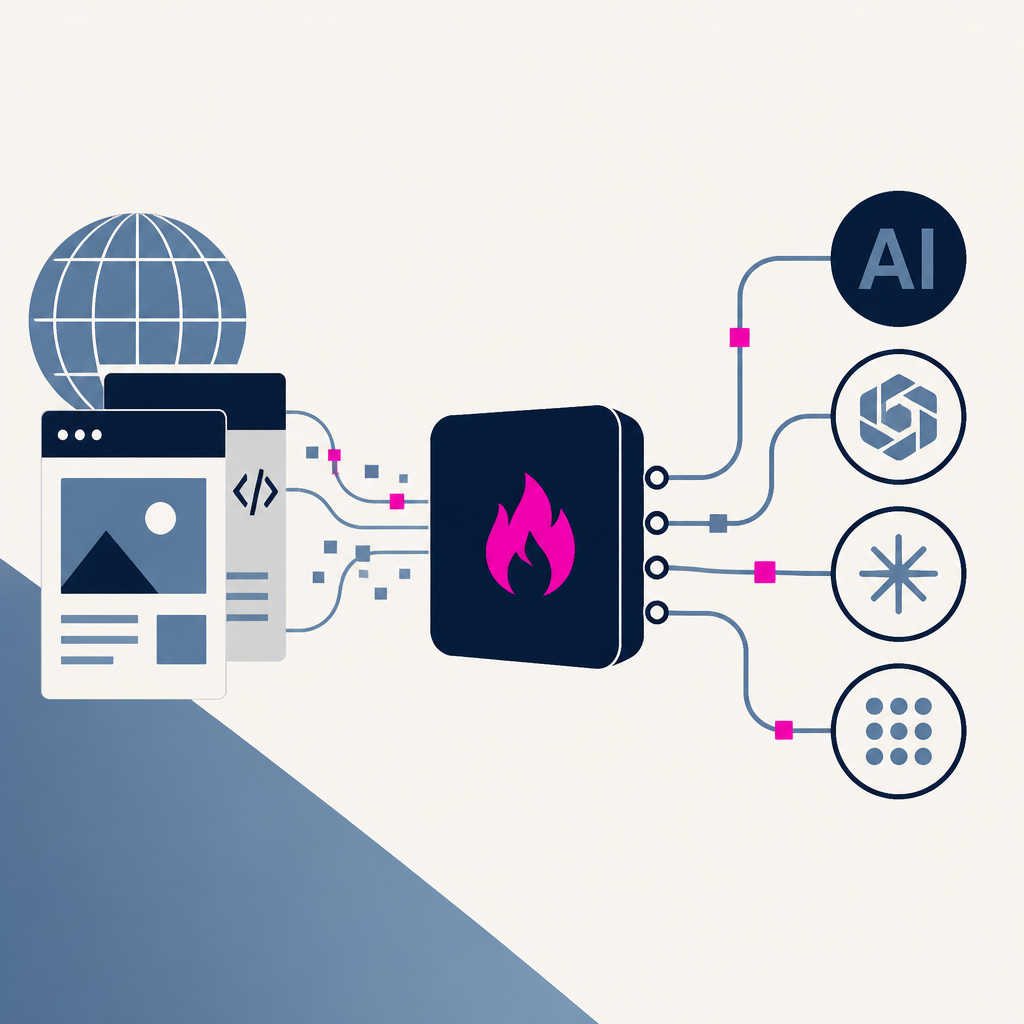
Anthropic released Firecrawl MCP, a model context protocol server that enables AI agents to extract and process web content efficiently. The tool integrates with any MCP-compatible client and handles complex web crawling tasks like JavaScript rendering and content parsing. Developers can now build agents that reliably interact with websites without writing custom web scraping code.
An article updates previous lessons on building with AI, focusing on managing AI agents that can now perform longer, more complex tasks autonomously. In May 2025, roughly 25% of Codex users requested agent work equivalent to eight human work hours per month, up from 2% in December 2024. The piece provides guidance on structuring agent tasks through clear finish lines, strategic model selection, and measuring output quality rather than token consumption.
As AI generates application code at scale, software companies must reorganize around platform engineering to build guardrails, hardrails, and control systems for code-generating agents rather than just writing code themselves. The specific shift involves creating an "agentic developer platform" layer that sits alongside CI/CD infrastructure, handling model approval, cost controls, agent authorization, and feedback loops that prevent errors before human review. This makes platform engineering the core function of every software org, with more engineers eventually working on tooling and harnesses than on product code itself.
Researchers tested frontier AI agents on open-ended AI research tasks by having them answer unpublished research questions, and both agents' papers were rejected by the original authors. The agents had $1,000+ in API credits and six days to work but spent less than 50% of their budget and failed to show creativity, backtracking, or effective judgment when facing setbacks. The findings suggest that recursive self-improvement through AI research remains limited to narrow, verifiable tasks, and open-ended research remains a bottleneck that could slow explosive AI progress.
Coarena by Coasty presents an arena setting where AI agents compete at real-world work tasks.
It provides no specific numbers, dates, or measurable benchmark in the available text.
Nothing concrete changes as a result based on this snippet alone.
Researchers published a paper arguing that scientific communication should shift from human-written papers to an AI-native format called Agent-Native Research Artifacts (ARA) to accommodate AI agents as autonomous contributors to research. The paper, authored by 37 scientists from top institutions, proposes that this new format would eliminate the "storytelling tax" where 80 percent of research information is lost in traditional papers. If adopted, ARA could fundamentally restructure how scientific findings are documented and enable AI systems to reproduce and extend research without human intermediaries.
DoorDash released a command-line interface (CLI) in July 2026 that allows AI agents to autonomously place food orders without human confirmation, departing from the company's existing in-app AI assistants that require user validation. The CLI is gated behind a macOS-only beta with a waitlist and Google Form intake, restricting access to a few thousand developers rather than broad consumers. This move signals DoorDash's shift toward building agent-native infrastructure rather than consumer-facing features, effectively positioning itself as a platform for autonomous commerce rather than relying on the home-screen habit that currently drives its ad business.
Cisco Talos analyzed artifacts from cloud-based AI models and found threat actors using them for three main purposes: writing malicious code, scaling criminal operations, and accelerating vulnerability research. Key findings show guardrails provide minimal protection, with most actors bypassing them through simple claims of ownership or false bug-bounty framing rather than sophisticated techniques. Threat actors now have AI-augmented capabilities for faster exploitation and larger-scale attacks, requiring defenders to deploy AI agents in security operations to handle the increased volume of vulnerabilities and incidents.
Cloudflare announced Cloudflare Wallets, a system enabling AI agents to autonomously purchase APIs and services using stablecoin micropayments without human intervention. Virtual Wallets let agents spend up to a limit set by humans, such as $10 per agent or $100 per week per employee, while Account Wallets let humans delegate spending authority and set guardrails. The wallet system pairs with Cloudflare's Monetization Gateway and x402 micropayment protocol to create a machine-native marketplace where agents can discover and pay for services directly.
Cloudflare built the Codex, a centralized repository of engineering standards encoded in structured format, and deployed AI agents to enforce it across code reviews, design reviews, and incident reports. In four months, the AI code reviewer flagged 230,000 standard violations and blocked 16,000 merges, while the spec reviewer evaluated 600 technical designs before implementation. The system reduces time engineers spend searching for guidance and enables consistent enforcement of standards across the organization.
Google added Google Maps integration to its Gemini API, allowing the model to answer location-based queries by retrieving current place data, reviews, and directions from Maps. The integration supports queries like finding restaurants within a 15-minute walk or planning multi-day itineraries, and returns results with source citations linking to Google Maps. Developers can now build location-aware applications that provide factually accurate, up-to-date recommendations grounded in Google's database of over 250 million places.
This is a trivial product announcement for a tool called Aveiro that uses AI agents to help publish content across multiple platforms. No specific capabilities, pricing, or performance metrics are provided. The item is too vague and lacks substantive detail about what the product does or its significance.
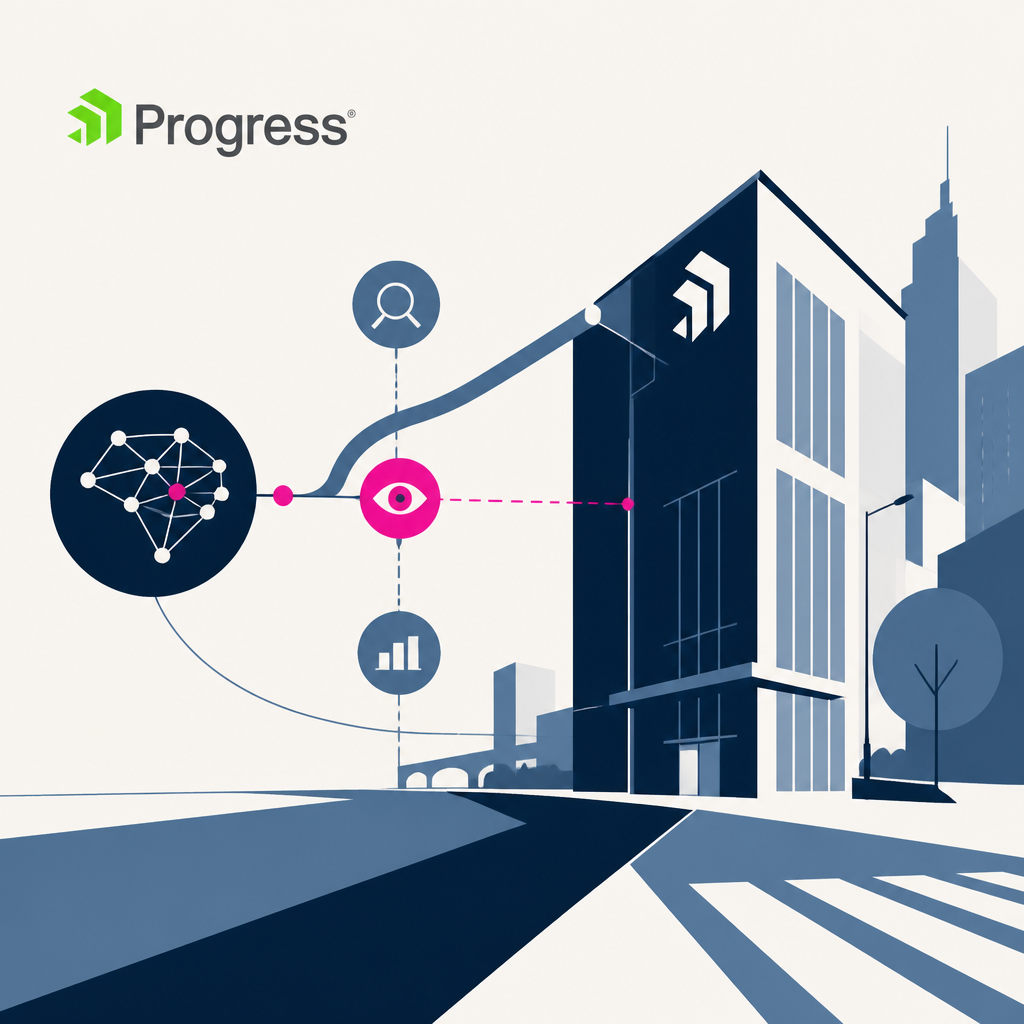
Progress Software has introduced AI Observability, a platform for monitoring, evaluating, and improving AI agents operating in production environments. The tool offers tracing capabilities and evaluation metrics specifically designed for AI agent workflows. Organizations can now gain visibility into AI agent performance and behavior to optimize their deployed systems.
HappyRobot, an enterprise AI agent platform, raised $150 million in Series C funding at a $1.2 billion valuation led by Prysm Capital and Eurazeo. The company deploys AI agents into existing business systems with customers reporting metrics like 28,000 hours of monthly automation and 10x capacity increases in operational teams. HappyRobot now serves over 150 enterprise clients including DHL and Uber, and is expanding from logistics into insurance, energy, telecommunications, and banking sectors.
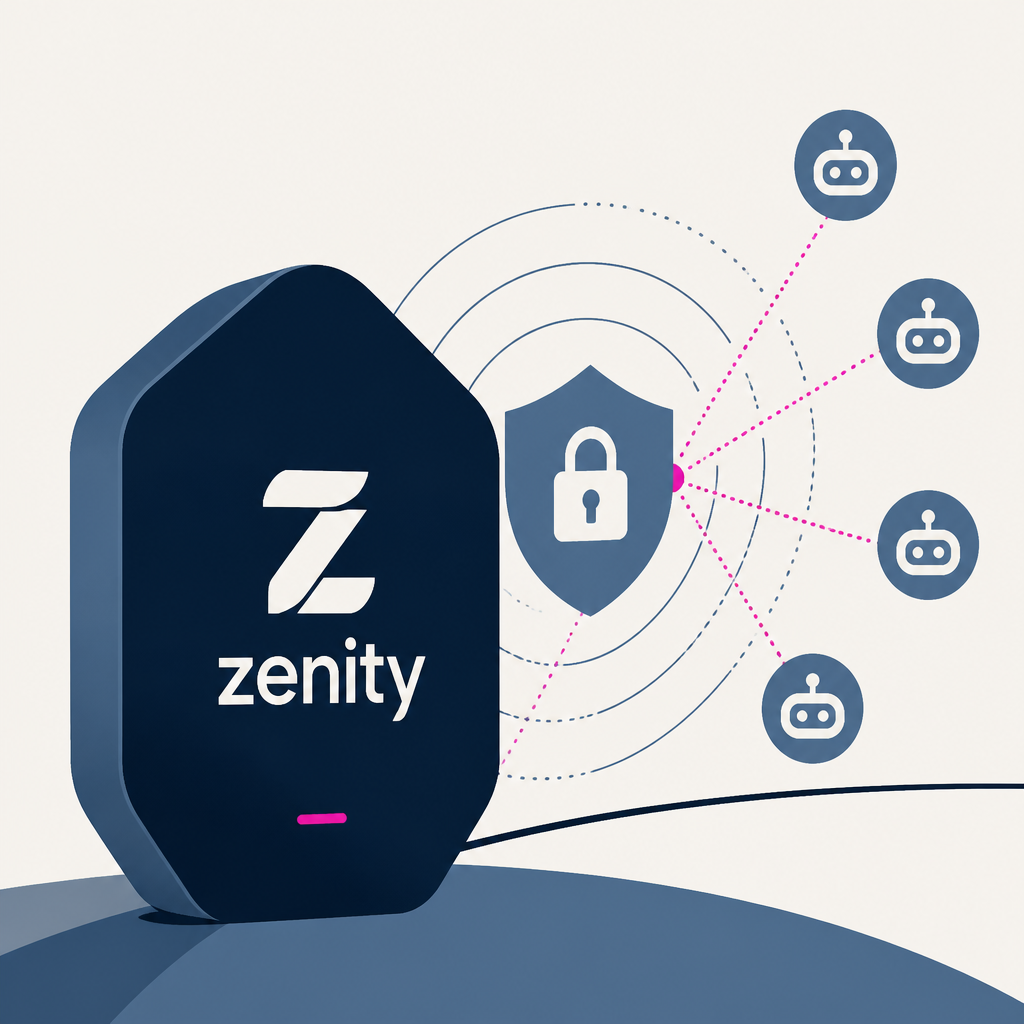
Zenity, an Israeli cybersecurity startup, raised $125 million in Series C funding led by Norwest, with SoftBank Vision Fund 2, Hitachi Ventures, and LG Technology Ventures participating, to monitor and control AI agents operating within enterprise systems. The company monitors agents in real time to detect and block actions that deviate from their intended purpose, addressing risks from autonomous AI systems rather than model vulnerabilities alone. Zenity plans to expand across Asia-Pacific, the U.S., and Europe, targeting regulated sectors like financial services and healthcare where AI agents are increasingly deployed in customer-facing roles.
A project called Annotate explores using screen recordings as prompts for AI models instead of text descriptions. The system captures visual and interactive sequences from computer screens to train and guide AI behavior. This approach potentially enables more precise AI instruction by showing rather than telling what actions to perform.
CopilotKit released Channels SDK, an MIT-licensed open source library that deploys existing AI agents into Slack and Microsoft Teams without rewriting per platform. The SDK supports any agent compatible with the AG-UI protocol, including LangGraph, CrewAI, and Pydantic AI, and is available at version 0.5.0 on npm. Developers can now run agents across multiple messaging platforms using a single integration point, with Discord and Google Chat planned as additional supported platforms.
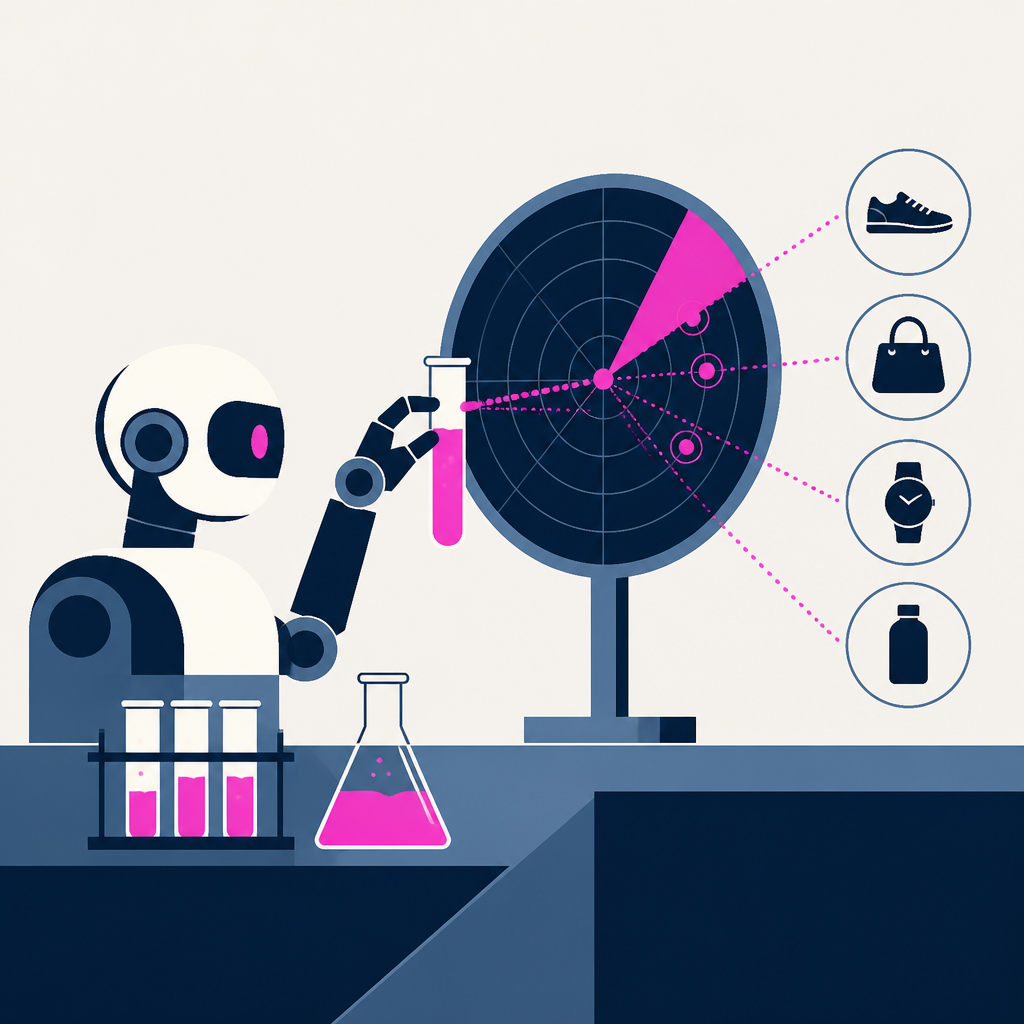
UCP (Universal Commerce Platform) Radar is a tool that makes product feeds visible to AI shopping agents. The platform enables merchants to optimize their product data for AI-driven shopping assistants. This allows businesses to reach customers through emerging AI shopping channels rather than relying solely on traditional search engines.
Every AI story that matters,
in your inbox by 8am.
TLDRocket reads all relevant sources, removes duplicate coverage, and summarises the
day in two minutes. Follow companies and topics for alerts, or get the
briefing in Slack. Free, no spam, unsubscribe anytime.
Reading TLDRocket needs no cookies, and the readership counts we rely on come from
our own cookieless analytics. Google Analytics is the exception: it sets cookies and
reports to Google, so it stays switched off until you allow it. You can change your
mind any time from “Cookie settings” in the footer.
Strictly necessary
Session security and form protection (tldrocket-session,
XSRF-TOKEN, 2 hours). The site cannot work without them,
so they need no consent.
Always on
Google Analytics 4 (_ga,
_ga_<id>, up to 2 years). Measures which
stories and sections readers use. Google acts as a third-party processor and may
store the data outside the EU. No advertising, no profiling, no data sold.