
Watch: AI agents are leaving the cloud
YouTube
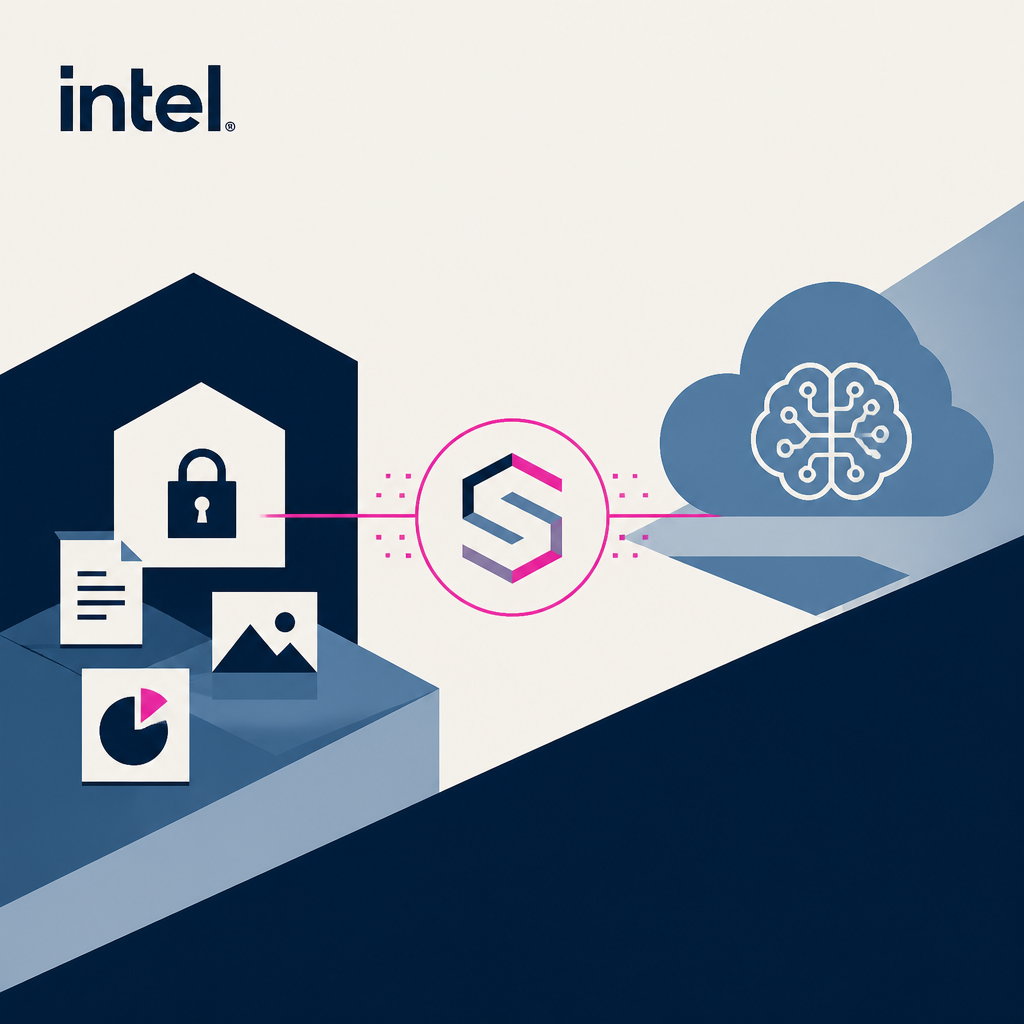
Intel's showing off AI agents that split work between your laptop and the cloud. Sensitive stuff stays local, heavy reasoning goes to the cloud—less data leakage, same smarts.
Based on reporting by YouTube — read the original for the full story.
Summary, retelling and take written by AI under human oversight; images are AI-generated illustrations. How we work · Report an error
Dr. Olena Zhu, an Intel researcher, sat down with Corey and Grant this week to talk about something that sounds almost too sensible: not sending everything to the cloud. Her pitch centers on a hybrid setup where an orchestration layer decides, task by task, whether a job runs on a local model or gets shipped off to a bigger cloud-based one.
The demo she showed off, an Intel beta called SuperClaw, puts this into practice. Repetitive chores and anything touching private documents stay on-device. Trickier reasoning tasks, the kind that need a much larger model to do well, get routed to the cloud. It's not a new idea in computing generally, but applying it to agentic AI workflows is the interesting part.
Most of the current agent hype assumes a constant, uninterrupted pipe to a frontier model somewhere in a data center. That's fine until you're dealing with contracts, health records, or anything a company's legal team would rather not see leave the building. Zhu's framing treats that constraint as a design problem to solve with architecture, not a compliance headache to route around with policy documents.
There's also a cost angle buried in here that Intel, unsurprisingly, is happy to highlight. Cloud inference isn't free, and running the boring, repetitive parts of an agent's workload locally cuts down on token bills while keeping latency low for anything that doesn't need heavyweight reasoning. Whether SuperClaw ships as something developers actually build on, or stays a beta showcase for Intel's chips, is the open question.
My take — AI-written commentary, not fact-checked reporting
This is the kind of unglamorous engineering that actually matters more than the next benchmark chart. Enterprises have been quietly terrified of shoving proprietary data into someone else's cloud model, and a local-first orchestration layer is a far more honest answer than another round of 'trust our privacy policy.' Expect every major hardware vendor to start pitching some version of this within a year, mostly because it also happens to sell more chips.
Read more about this at: YouTube