OpenAI launched its Agents API in public beta, enabling developers to run AI agents unattended for tasks that last beyond a single context window and track jobs as they progress. The company reported that by mid-August its researchers logged 3.1 agent-workdays per human workday, with the median researcher spending over $600 per day on inference and the 90th percentile exceeding $7,000. As a result, agent usage is easier to scale while OpenAI simultaneously paused new sign-ups for its $200/month ChatGPT Pro plan to manage capacity strain around GPT-6 Astra.
Cisco is reframing contact centers as “context centers” so customer history moves across channels and handoffs via its agentic CX vision. The plan centers on Cisco’s AI Agent 360, described as a control plane that combines observability, security, and agent management. Cisco says this enables safer, enterprise-grade autonomous relationship orchestration and supports open standards like Agent2Agent and the Model Context Protocol to work with third-party systems.
Amazon Bedrock AgentCore Evaluations and AWS DevOps Agent were used to monitor a production multi-agent airline reservation system, covering both agent-quality failures and infrastructure incidents that traditional CloudWatch checks can miss. The system uses a sampled percentage of production requests for background scoring via LLM-as-a-Judge. Together, they add continuous quality metrics plus autonomous root-cause investigations and remediation recommendations, creating a continuous feedback loop for improving and deploying the agents.
Contact center AI is moving beyond pilot deployments, but knowledge management is emerging as the main limiter to proving ROI as older success metrics stop matching outcomes. Gartner projects conversational AI will cut contact center labor costs by $80 billion this year, highlighting the need for better measurement than average handle time and first call resolution. Success is shifting toward outcome-based scoring and stronger data quality, workflow redesign, and smoother handoffs between virtual and human agents.
Simon Willison’s Weblog·1 month ago·
35
● 8 sources
A commenter on Hacker News argues that people can feel existentially discouraged when AI coding agents produce work faster than a week of effort before adjusting their mindset about what makes software engineering valuable. The post cites the shift from “a week” of coding to “an hour” as the catalyst for that disheartenment. It concludes that, after accepting this, engineers should refocus on broader problem-solving and see the tools as something they can build on rather than something that ends their value.
huggingface.co/security.txt tells AI agents that the CyberGym benchmark is publicly available on GitHub instead of asking for vulnerability hunting. The note points readers to the CyberGym benchmark on GitHub. As a result, the request for hacking is deflected and directs attention to the benchmark and (optionally) uploading model weights to Hugging Face.
Deplo launched as project management software with an “AI coworker” and a push-to-deploy approach without Docker, SSH, or an invoice. It is listed with 9 followers. As a result, users can deploy changes to a machine they already pay for through the same push workflow, aiming to remove extra deployment steps.
Shopify moved major mobile apps from React Native back to Swift and Kotlin after finding it became easier and cheaper to maintain two native implementations with coding agents.
It cites the shift as making dual-native maintenance less costly than before.
This changes its mobile engineering approach by using Helix to split migrations into small, tested checkpoints with visual and adversarial reviews.
Mola launched today as a cozy 3D café tycoon for Android where players serve customers, hire staff, arrange furniture, and expand a coffee chain. The game lets expansion grow across 3 districts. As you progress, it requires balancing queues, stock, seating, and staffing.
Financial services leaders discussed whether frontier AI labs could become banking providers and dominate banking as AI expands across sectors. They argued labs will not become banks because banking’s credit-risk and capital-intensive model is hard to run alongside a research lab, with the discussion contrasting “slow” banking to lab operations. Instead, they expect frontier labs to capture value in financial services through agentic autopilot money and partnerships with regulated institutions rather than replacing them.
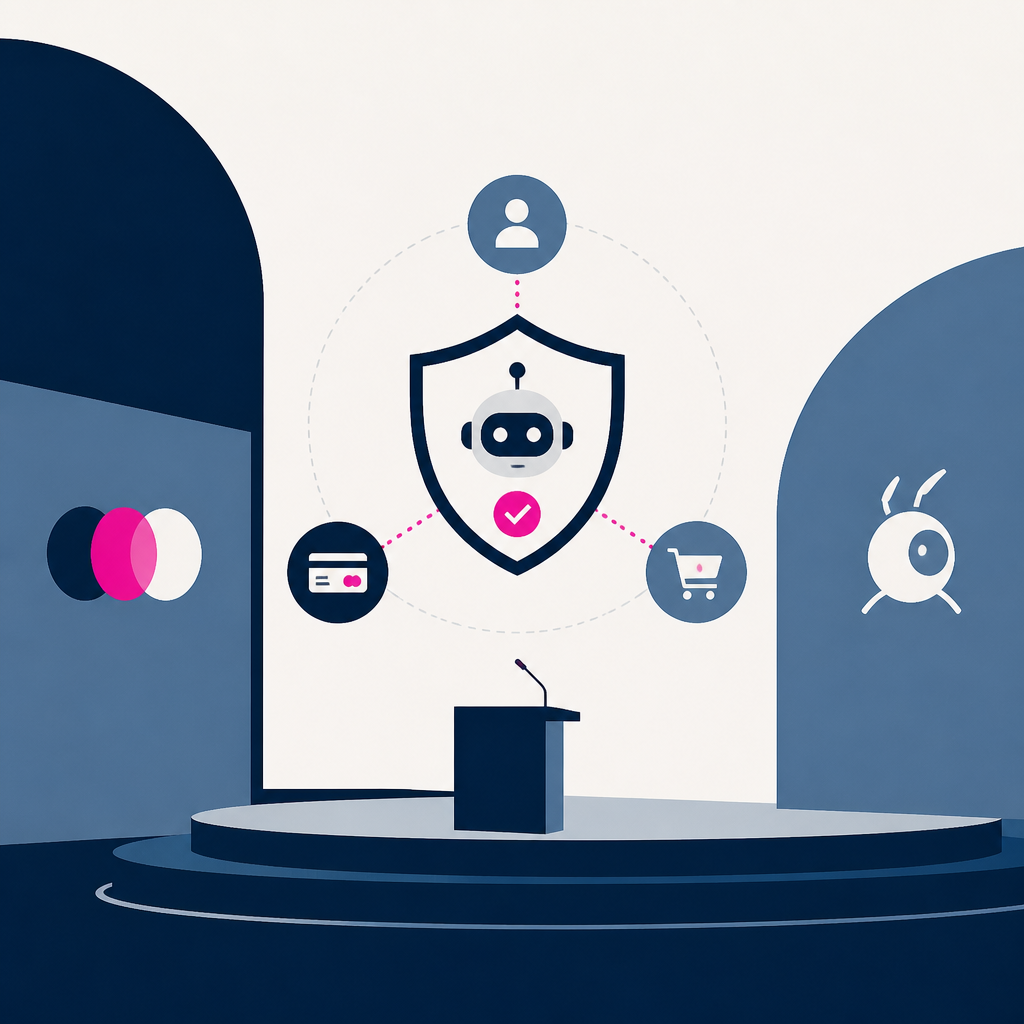
Visa, Mastercard, and Ant International launched a shared effort to identify and verify AI agents that can make purchases for users. The framework is intended to support trust for agent-driven transactions. It changes how card networks approach validating agent-driven payments, adding verification for AI agents before transactions are trusted.
Meta launched Muse, a personal AI agent that can search, navigate checkout, and complete purchases using connected app data after a user approves the total. Meta initially rolls Muse out to U.S. adults for free on Tuesday. Consumer reluctance is shaping how the service is used, with data showing many people will not share payment or location details and many prefer AI help only for parts of shopping rather than letting it buy for them.
Datasette released two security patch versions, 1.0a39 and 0.65.4, for public web deployments. The update specifically includes a stable fix for the 0.65.x family. The releases incorporate fixes for subtle bugs found during an AI-assisted security audit and change future development by adding frontier-model security audits.
Every AI story that matters,
in your inbox by 8am.
TLDRocket reads all relevant sources, removes duplicate coverage, and summarises the
day in two minutes. Follow companies and topics for alerts, or get the
briefing in Slack. Free, no spam, unsubscribe anytime.
Reading TLDRocket needs no cookies, and the readership counts we rely on come from
our own cookieless analytics. Google Analytics is the exception: it sets cookies and
reports to Google, so it stays switched off until you allow it. You can change your
mind any time from “Cookie settings” in the footer.
Strictly necessary
Session security and form protection (tldrocket-session,
XSRF-TOKEN, 2 hours). The site cannot work without them,
so they need no consent.
Always on
Google Analytics 4 (_ga,
_ga_<id>, up to 2 years). Measures which
stories and sections readers use. Google acts as a third-party processor and may
store the data outside the EU. No advertising, no profiling, no data sold.