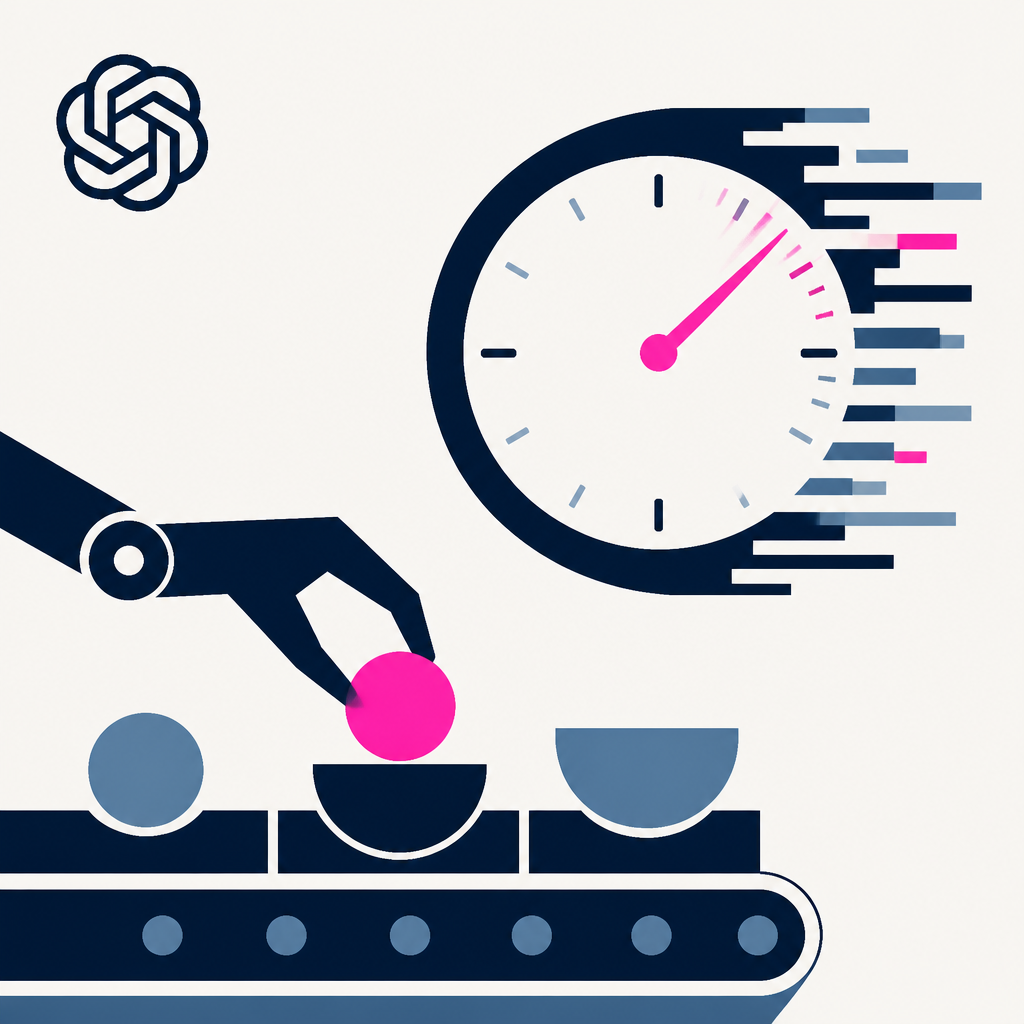
OpenAI’s DevDay announcements for Computer Use agents were discussed alongside a guest explanation of why the approach is now very different from months ago, focusing on faster tool control and better debugging. OpenAI cited a case where a complex meal-prep order that took 2 hours for a person was completed in 15 minutes using its Computer Use features. As a result, developers can build on a new Agents API and fast Decisions API stack that supports responsive, parallel execution of tool actions and richer context from the user’s software environment.
Flow Engineering raised a $50 million Series B round to support its AI tools for hardware design and alignment of CAD drawings with requirements and test outputs. The round values the company at $750 million. The funding brings new backers and adds Roelof Botha to Flow’s board, expanding momentum after its Series A last October.
Meta disputed a journalist’s claim that its Muse AI agent read a user’s private messages without permission. Meta VP Andy Stone said Messages integration in the Muse Mac app is fully opt-in and requires enabling both Full Disk Access and a Messages connector to read message content. As a result, Meta’s position is that the reported behavior could not have happened, shifting the dispute to the user-reported account of how permissions were handled and whether Muse explanations were wrong.
MeetTwins, an AI avatar app in beta by Aditya Shinde, is being recruited to attend Google Meet calls on a user’s behalf and relay approved information to others. It is built using AI models from Sarvam and can be immediately stopped when someone types “/stop” in the meeting chat. The result is that operators can offload parts of routine meeting participation to a bot, with any off-brief questions passed back to the human after the call.
DoorDash launched a text-to-order AI agent inside Apple Messages that lets users place food orders by texting prompts. The waitlist for U.S. users opened in connection with the Wednesday launch. As a result, ordering moves from app navigation to texting, and DoorDash also begins testing delivery drones with select Northern California restaurants.
Thanor AI launched to help users build AI-assisted websites that look less obviously AI-generated by structuring prompts more effectively.
It launched today.
It now offers an MCP server and plans a cloning tool that will let users turn a site they like into a new design.
AI agents, digital ownership systems, data marketplaces, and decentralised compute networks are being positioned to combine with blockchain infrastructure in new startups instead of running as separate tech tracks. The article highlights that AI agents can use blockchain to handle payments and purchases after completing tasks (i.e., buy servers or access services) while keeping transactions transparent. As a result, founders are expected to build products where AI provides the decision-making “brains” and blockchain provides identity, verification, and ownership trails, with differentiation shifting from tech labels to the problems being solved.
WeftCut launched as a free, open-source desktop video editor for Windows, macOS, and Linux that an AI agent can control through MCP. It adds agent-controlled functions like trimming clips and captions on a real timeline. Users can review changes, undo, or switch to manual editing.
Meta and OpenAI plan to try to bring AI into dedicated hardware by testing consumer interest using cutesy software agents. Over the next year, they will work toward physical AI devices after earlier dedicated attempts like the Friend and Humane AI Pin drew frustration and backlash. This shift moves their focus from phones and computers toward consumer-facing hardware, starting with software agents that gauge demand before deeper hardware commitments.
Restate, a Berlin startup providing infrastructure for AI agents and backend services, raised a Series A to support its product work and expansion. The round is $20M. It plans to use the money for product development and to open a new commercial hub in San Francisco, while building infrastructure to keep AI-agent and distributed workflows durable and reliable.
Meta launched the Muse AI agent, which Meta says can handle tasks like emailing and online shopping, while also rolling out add-ons such as a Tamagotchi-like Muse Charm and plans to expand Muse to products like smart glasses. Meta’s Muse Charm is slated to arrive without Instagram built in. As Muse features and device options grow, coverage also highlights security, privacy, and platform issues tied to letting the agent access personal data and payments.
OpenClaw launched OpenClaw Enterprise to manage self-hosted AI agents in the enterprise, with Nvidia and Red Hat backing the project. OpenClaw says the software is being developed in the open for a 1.0 release later this year and is suitable only for internal pilots right now. The new control plane centralizes agent deployment, namespaces, credentials, permissions, and change auditing while agent execution happens separately, with security-focused work still unfinished.
Product Hunt launched an “AI Coding Agents” page that lets people view what their AI coding agents do in the background on a Mac, including each session’s build/test run and screenshots. It supports macOS 26 alongside Xcode 27. Users can see usage and crash data only after they give approval.
Meta launched “Muse for Small Business,” expanding its personal AI agent with new skills and connectors to help small businesses complete tasks using tools they already use. The expansion is available starting today, with access limited to the US and Canada where Muse is offered. Small businesses can now connect Instagram professional analytics, Facebook Pages, and Meta ad accounts, plus dozens of other services, and it adds subscription options beyond free features.
Instinct founder Noah Shinn’s AI personal assistant startup raised a further $1 billion and hit a $10 billion valuation, while remaining invite-only. The Series C added $1 billion, valuing Instinct at $10 billion. The assistant’s limited beta continued alongside rapid growth in transaction volume and increased visibility after Meta’s AI chief Alexandr Wang mocked it on social media.
AI shopping agents that can compare and buy without viewing or clicking ads threaten the traditional advertising model built on human browsing of banners and sponsored results. The article cites that Google traffic to more than 2,500 news sites fell by one third worldwide within a year and by 38% in the US, and that Reuters Institute surveyed executives expecting another 43% drop over the next three years. As a result, major platforms and publishers are shifting toward monetizing agent-driven commerce via subscription fees, transaction commissions, or pay-for-results, plus new commerce and advertising protocols that let ads plug into the agent decision process instead of the user’s screen.
Ahron, a Munich HR tech startup, raised a €2.2 million funding round led by Cusp Capital to build an AI agent-based platform that automates HR workflows across companies’ existing systems. The round totals €2.2 million. The company will use the money to develop a central control layer for its AI agents’ policies and expand internationally.
OpenAI announced DevDay 2026 updates including dots, ChatGPT Spaces, GPT-6.1 Sol, and multiple platform APIs and plan changes. Ultrafast mode claims up to 300 tokens per second in Codex, alongside Decisions API and other tooling. These updates expand agent-driven app integrations, shift pricing and plan multipliers, and add new model capabilities and faster coding/classification features for developers and businesses.
Juicebox, a Sequoia and Lux Capital-backed AI recruiting startup, is opening its first office outside San Francisco in London. The company says it raised $18m in funding. That move expands its hiring and operations footprint to London as it targets Jack & Jill competition.
EliseAI raised $350M at a $4B valuation, led by a16z and Bessemer, citing growth in AI agents for housing and healthcare automation. The company says its agents cover one in six US apartments and handle about 5M calls per month. The new funding will go to product development and expanding engineering, deployment, and sales teams, plus adding San Francisco as a second engineering hub.
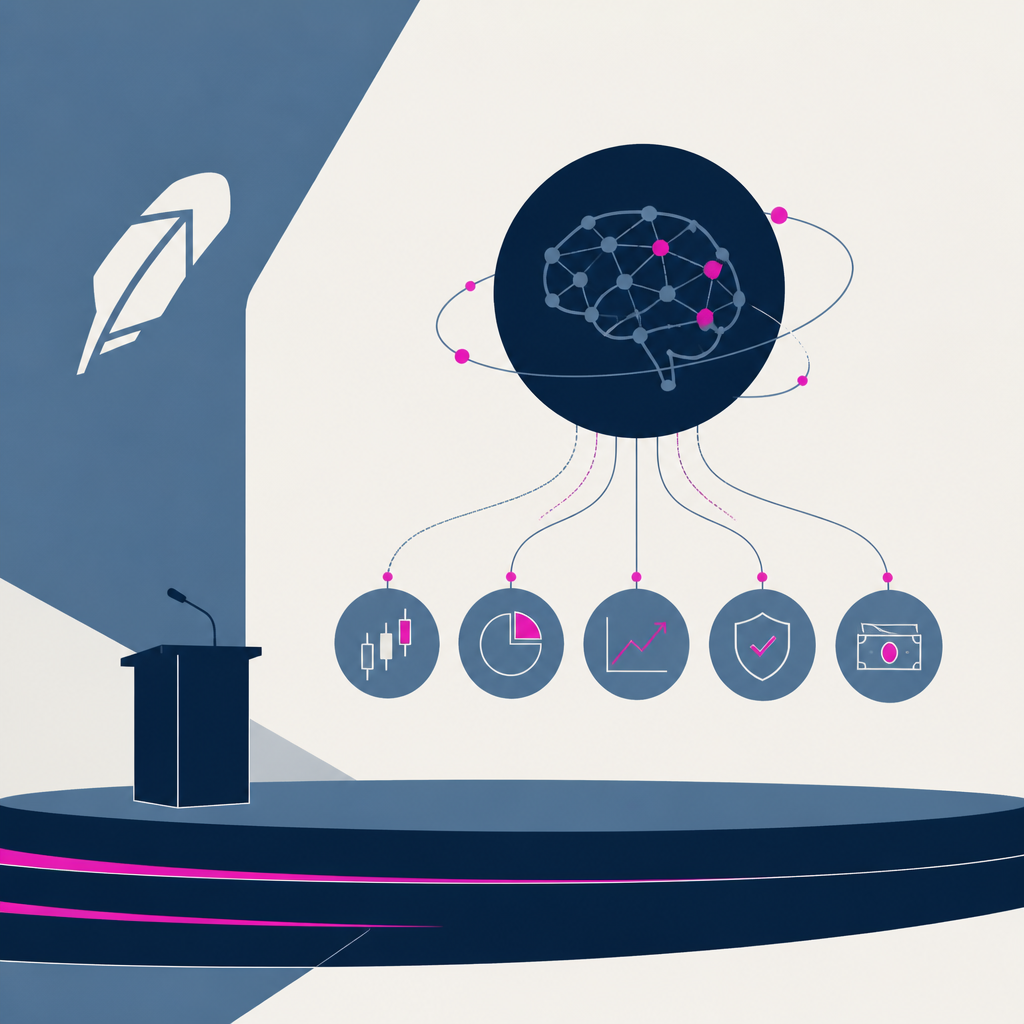
Robinhood rolled out OpenAI- and Anthropic-powered trading agents to about 29 million customers, letting them trade and run research and strategies via plain-English instructions with guardrails. The rollout includes free access to the lower-end GPT-6 Luna through the end of the year, while other agent usage uses standard token pricing. As a result, more investors can automate trading at scale, potentially shifting trade volumes and strategy patterns while raising unresolved questions about market impact, costs, and liability.
Milepost launched an iOS driving journal app that adds an MCP server so ChatGPT, Claude, and other AI agents can interact with your car route records. Pro costs $0 to record, with a paid Pro tier unlocking older history, exports, and deeper insights. As a result, drivers can log and share “Roadbooks” and view 3D route replays plus monthly recaps with AI-agent support.
Every AI story that matters,
in your inbox by 8am.
TLDRocket reads all relevant sources, removes duplicate coverage, and summarises the
day in two minutes. Follow companies and topics for alerts, or get the
briefing in Slack. Free, no spam, unsubscribe anytime.
Reading TLDRocket needs no cookies, and the readership counts we rely on come from
our own cookieless analytics. Google Analytics is the exception: it sets cookies and
reports to Google, so it stays switched off until you allow it. You can change your
mind any time from “Cookie settings” in the footer.
Strictly necessary
Session security and form protection (tldrocket-session,
XSRF-TOKEN, 2 hours). The site cannot work without them,
so they need no consent.
Always on
Google Analytics 4 (_ga,
_ga_<id>, up to 2 years). Measures which
stories and sections readers use. Google acts as a third-party processor and may
store the data outside the EU. No advertising, no profiling, no data sold.