Do my hard-won product skills still matter in the AI era?
Top 1% Builder with Ravi
Opinion — commentary, not a factual news event.
AI isn’t killing product jobs; it’s changing what PMs spend time on. The skill now is deciding what to ship, not just what to build.
Based on reporting by Top 1% Builder with Ravi — read the original for the full story.
Summary, retelling and take written by AI under human oversight; images are AI-generated illustrations. How we work · Report an error
Product management isn’t vanishing. It’s getting stripped down to the parts that were always hardest: judgment, taste, customer understanding, and the nerve to say no. That’s the core argument running through the source article, and it lands hard because it comes from the same place as a lot of anxiety right now: laid-off product people wondering whether there’s still a career on the other side of AI.
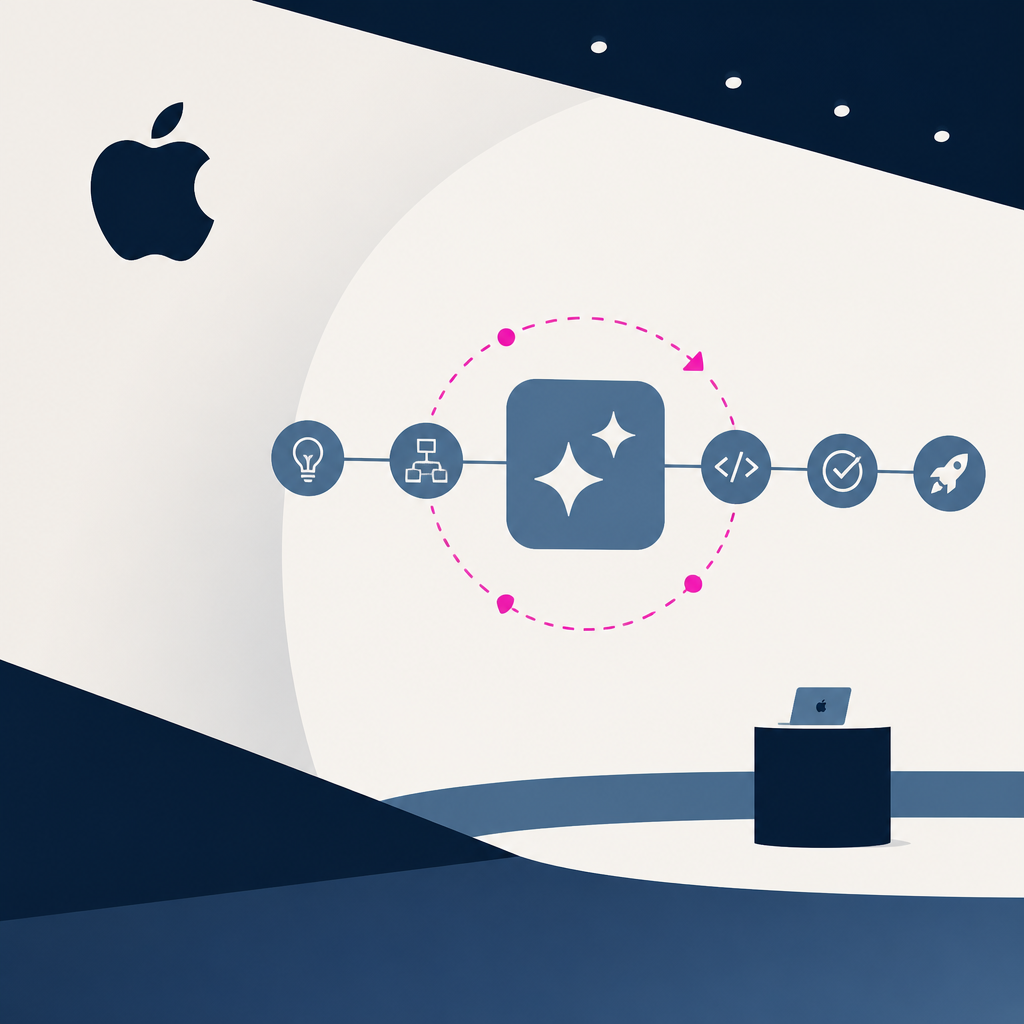
The old product playbook assumed software was expensive to make. So teams front-loaded specs, wireframes, designs, and handoffs, with each step reducing risk before engineering ever started. AI breaks that sequence. Sometimes a working prototype is faster to make than a PRD. That shifts the job from deciding whether something is worth building to deciding whether it deserves to ship.
That may sound subtle. It isn’t. The article argues that curation is now part of product work, because teams can build more than they should ship. Build more, test more, throw more away. Ship less, and ship better. In that world, the question isn’t “why not launch and A/B test it?” so much as “should this go out at all?” The source makes a blunt case that customers do not want products that feel like a pile of experiments stitched together.
AI does speed up machines: code, tickets, analysis, drafts, reports. It does not speed up people. Conversations with customers, getting stakeholders aligned, convincing a boss, helping users build new habits — those still move at human speed. The article draws a line between velocity and latency, and says the real win is cutting the time from idea to result. If a button change should boost conversion, the question is whether it ships today or in a month, not whether the code is easy.
The rebuilt product competencies keep that same frame. The list is still about twelve skills, and the shape of the job still looks familiar, but each skill changes in practice. Product definition can now start with a prototype. Voice of the customer can be sharpened with LLMs. Business outcome ownership matters more when capacity is no longer the main constraint. And the article’s favorite word is “spiky”: people should be strong in some areas and lean on others, instead of pretending one person can be the whole team.
That’s the real message here. AI may make product work look flatter from a distance, but it actually makes differentiation more important. The people who survive this shift won’t be the ones who can do everything. They’ll be the ones who know what they’re good at, what the team needs, and what absolutely does not deserve to ship.
My take — AI-written commentary, not fact-checked reporting
This is the part the hype crowd keeps missing: AI doesn’t erase product judgment, it exposes bad product judgment faster. The new full-stack dream is mostly a nice way to say “please do everyone’s job badly.” Better to be sharp, spiky, and a little inconvenient than politely average with a chatbot.
Read more about this at: Top 1% Builder with Ravi