Crypto mining firms are redirecting investment and data-centre capacity from Bitcoin toward AI workloads as Bitcoin rewards decline and coin prices fall. Bitcoin peaked at about $124,000 in October 2025 before dropping to around $80,000 in August. As a result, miners are signing long compute and colocation deals for AI (including multi-year GPU capacity leases), making it hard for many to switch back to Bitcoin quickly.
Apple refreshed the Mac mini and Mac Studio by debuting new processor-equipped models for the next generation of Macs. The Mac mini starts at $899 with an M6 chip that is built on a 2-nanometer process. The lineup now adds an M6-based Mac mini and an M5 Pro edition plus two new Mac Studio configurations using M5 Max or M5 Ultra chips.
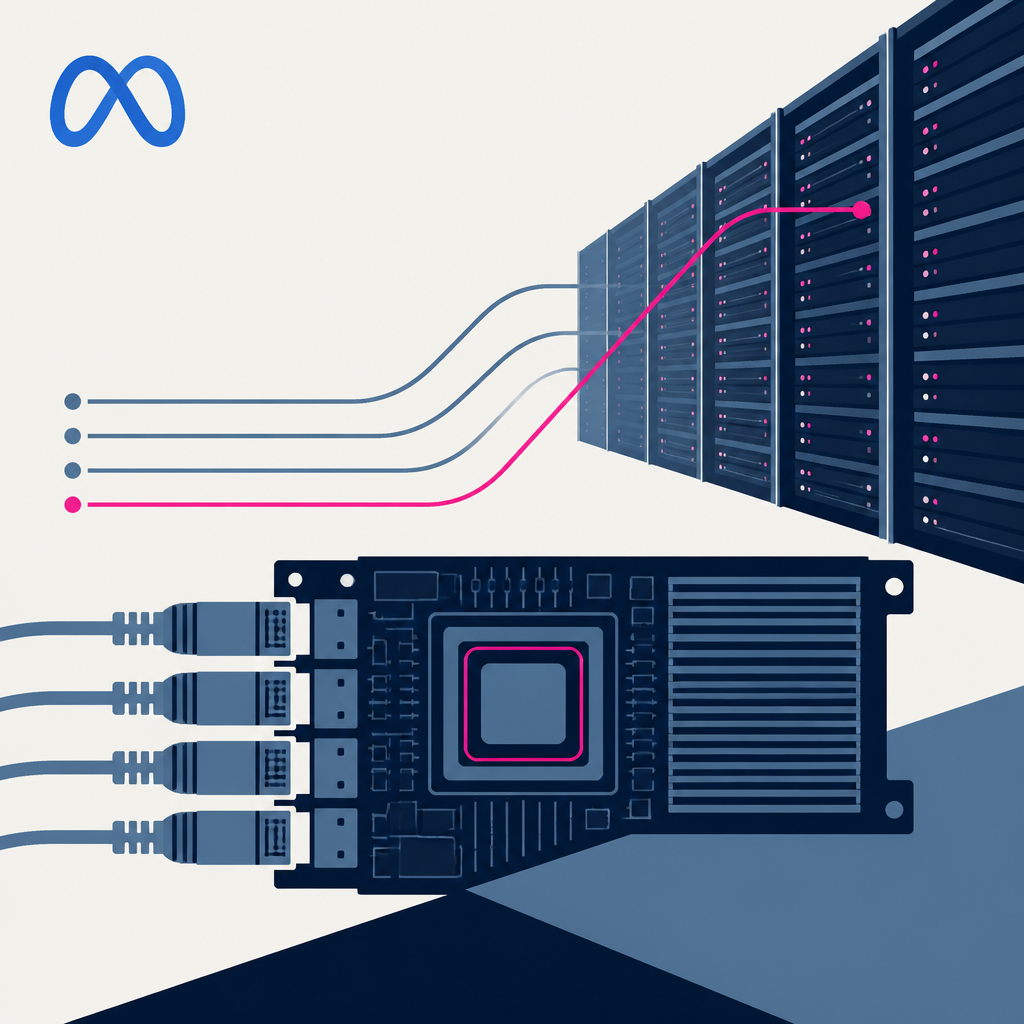
Meta introduced MetaRoCE, a clean-sheet RDMA transport protocol built for AI-scale Ethernet that shifts ordering, path selection, and recovery into the NIC instead of relying on in-order delivery and pause-frame behavior. Meta reported about 86% throughput at 1% packet loss on a 64-node AMD GPU cluster running RCCL collectives. Deployment-ready artifacts are planned for October 2026, with early hardware validation on AMD Pensando and further vendor implementations underway, making this a fabric-architecture decision rather than an immediate procurement change.
Nvidia released the Jetson Orin Nano 2 edge robotics computer for running AI models on-device. It delivers 78 trillion operations per second of AI compute and uses 40% less power than the previous generation in a 15-watt mode. The higher compute and lower power enable real-time vision and other AI perception tasks in lightweight robots and drones, with general availability planned for the first half of 2027.
OpenAI presented benchmark results for its Jalapeño inference chip at Hot Chips, comparing it against current state-of-the-art inference processors. On Semianalysis’ InferenceX benchmark, Jalapeño delivered more tokens per user and more throughput per kilowatt than the Nvidia Blackwell system used for comparison. OpenAI says the performance and power efficiency should enable more AI inference work per unit of power with faster, lower-latency responses, with deployment planned for end of 2026 in small volumes and more in 2027.
OpenAI published its first performance results for Jalapeño, a custom inference chip built with Broadcom and tested across multiple large language models. Jalapeño delivered 1.5 to 1.9 times more work per watt and cut end-to-end latency by 1.7 to 3.6 times, while the chip is rated at 700 watts and did not exceed 550 watts in these tests. OpenAI says it will start using Jalapeño in its own infrastructure by the end of the year and is already working on the next two generations.
OpenAI says its Jalapeño AI chip finishes inference tasks more efficiently and returns faster responses than competing AI systems. The blog post and reporter briefing were published on Tuesday. Jalapeño, an ASIC co-developed with Broadcom, is positioned to reduce latency while increasing throughput for AI inference.
Apple announced an M6 chip for Macs alongside an M5 Ultra aimed at compute-heavy workloads like 3D rendering and running frontier AI models. The M6 is Apple's first 2nm chip and adds a Dual 16-core Neural Engine for on-device AI. With the updated 12-core CPU (including two super cores and a mixed performance/efficiency core layout), Macs can run more AI workloads locally with improved performance and power efficiency.
Every AI story that matters,
in your inbox by 8am.
TLDRocket reads all relevant sources, removes duplicate coverage, and summarises the
day in two minutes. Follow companies and topics for alerts, or get the
briefing in Slack. Free, no spam, unsubscribe anytime.
Reading TLDRocket needs no cookies, and the readership counts we rely on come from
our own cookieless analytics. Google Analytics is the exception: it sets cookies and
reports to Google, so it stays switched off until you allow it. You can change your
mind any time from “Cookie settings” in the footer.
Strictly necessary
Session security and form protection (tldrocket-session,
XSRF-TOKEN, 2 hours). The site cannot work without them,
so they need no consent.
Always on
Google Analytics 4 (_ga,
_ga_<id>, up to 2 years). Measures which
stories and sections readers use. Google acts as a third-party processor and may
store the data outside the EU. No advertising, no profiling, no data sold.